

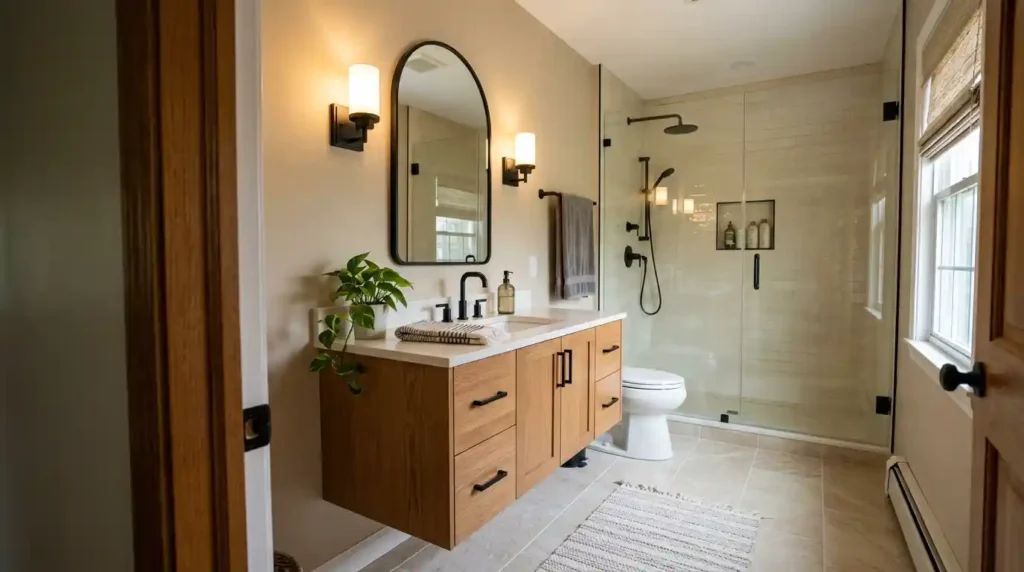
Most bathroom renovation advice online is built for people sitting on $40,000 budgets. I’ve been through two bathroom makeovers in the past three years. One was a full bathroom renovation that came in at $9,800. The other was a weekend bathroom refresh I finished for under $1,200. Those two projects, back to back, taught me things no design blog ever gets into. The money matters less than people think. Where exactly it goes that’s the real question.
One rule I follow now before anything else if the plumbing works, leave it where it is. Relocating pipes in a bathroom renovation blows budgets faster than anything else. A mid-range bathroom remodel that keeps the toilet, shower, and sink in place runs $6,000–$12,000 in most markets. Once you start moving supply lines or drain stacks, $15,000 disappears quickly.
Facelift or Full Gut — Figure This Out Before You Touch Anything
These two are completely different types of renovations. Homeowners are constantly confusing these two and either spend the same amount of money as for a total bathroom remodel when only a facelift was needed, or cut corners when remodeling their bathrooms and don’t understand why it doesn’t last two years.
Facelift stands for surfaces replacement, fixtures replacement the walls stay. The plumbing stays. The layout stays. For a shared bathroom or family bathroom in a middle class home, this approach fixes roughly 80% of what looks wrong. I once watched a $1,400 floating vanity swap do more work than a $6,000 tile job in the same bathroom remodel. The vanity changed the whole room. The tile just changed the floor.
Renovating the entire bathroom is necessary when there is leakage within the shower cubicle behind the walls, there are patches in the sub-floor due to excessive moisture, tiles are damaged beyond repair, and there are issues with the current layout of the bathroom. Not just “feels inconvenient.” Actively fails. Short of those conditions, hold the money back.
Why Two Bathrooms With the Same Budget Look Completely Different
The answer is usually finishes, and most people figure this out after they’ve already bought the wrong ones.
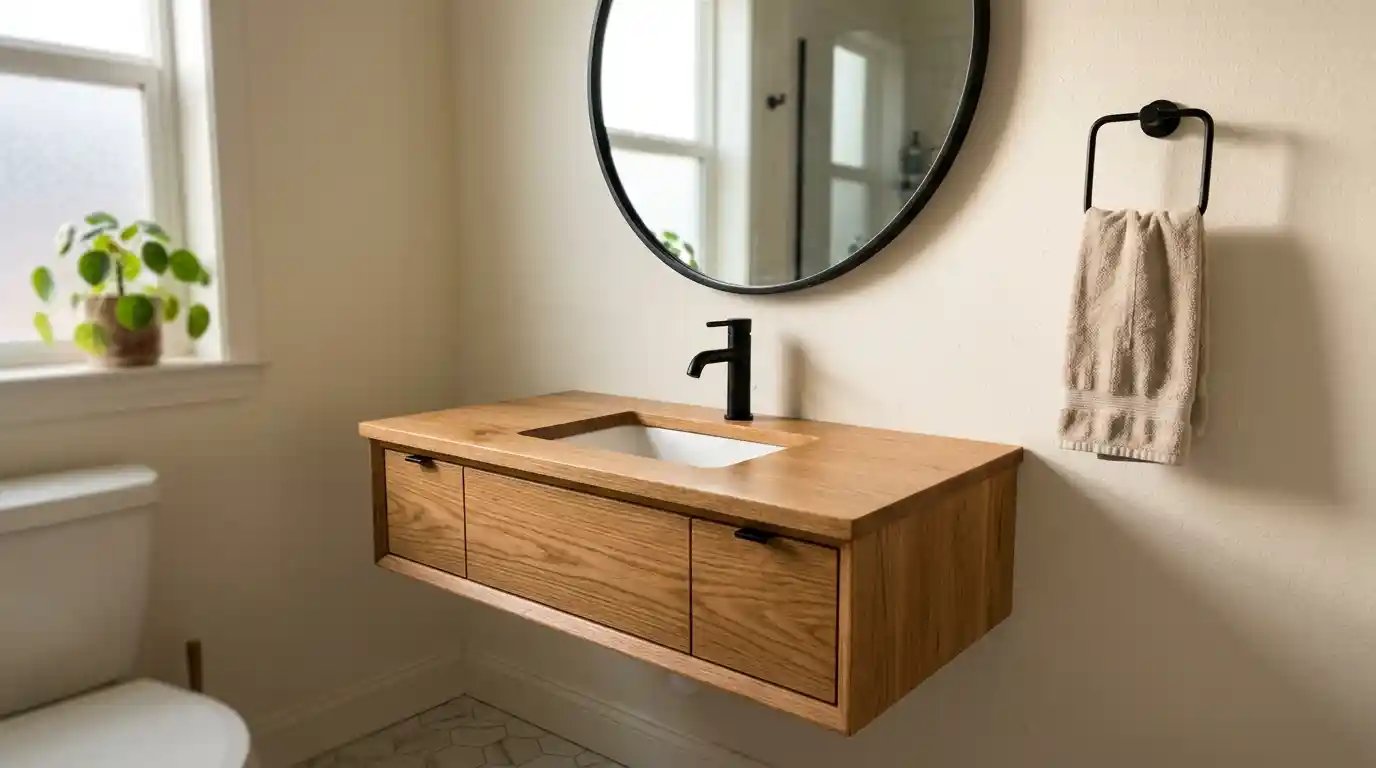
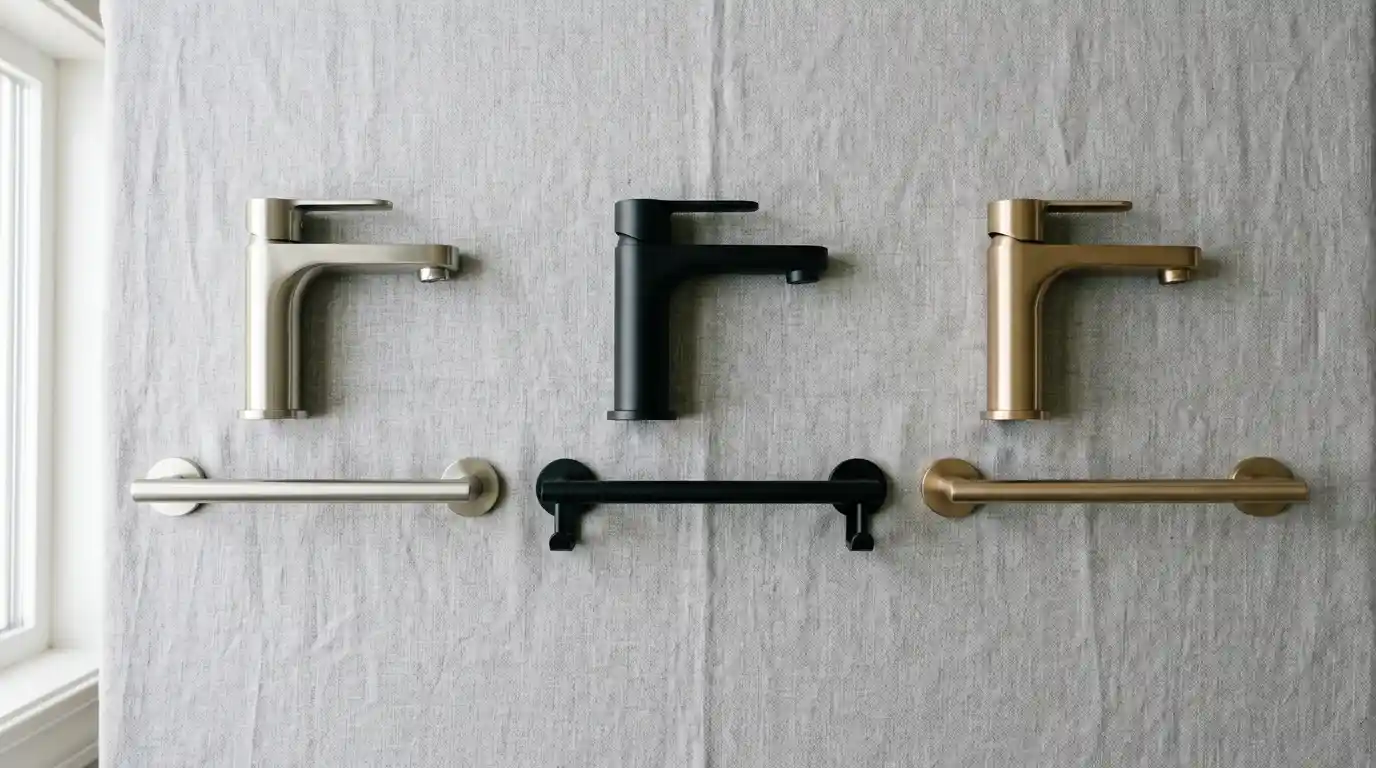
Even a $4,000 bathroom will look like $14,000 bathroom when the finishes are compatible. Matte black fixtures set against warm white walls along with big tiles of porcelain make good pictures and also look expensive in reality. Polished chrome with beige ceramic tiles and a basic vanity mirror will always give the vibe of the year 2003, irrespective of what you paid for each product.Use one kind of finishes throughout the bathroom. Brushed nickel, matte black, and champagne bronze; these are the three popular finishes currently being used in the modern day bathroom. Apply these finishes on faucets, shower fittings, towel bars, rings, and robe hooks. Run that finish across the faucet, shower hardware, towel bar, towel ring, and robe hook. Mixing finishes on purpose is a real design move. Mixing them because you bought things separately over three months is just a mess.
Quartz countertop is what I’d put in a family bathroom over granite countertop every time. Non-porous, no annual sealing, holds up fine against standing water and daily use. Butcher block countertop works in a powder room makeover where the sink sees light use, but I wouldn’t trust it next to a primary bathroom sink used by four people daily.
On tile: subway tile is safe because it actually works. Penny tile and hexagon tile earn their place on floors where you want texture big tiles in the shower area reduce the number of grout joints, making even small bathrooms look larger due to less space being taken up by grout. In case there is a lack of funds, it would be better to purchase an accent tile for only one wall, namely the wall on which the shower head will go. Porcelain tile is used in wet areas not ceramic.
Floating Vanity vs Walk-In Shower — You Usually Have to Pick One
Most middle class bathroom renovation budgets do one anchor upgrade well. Two is possible but you’re cutting corners somewhere if the overall number is mid-range.
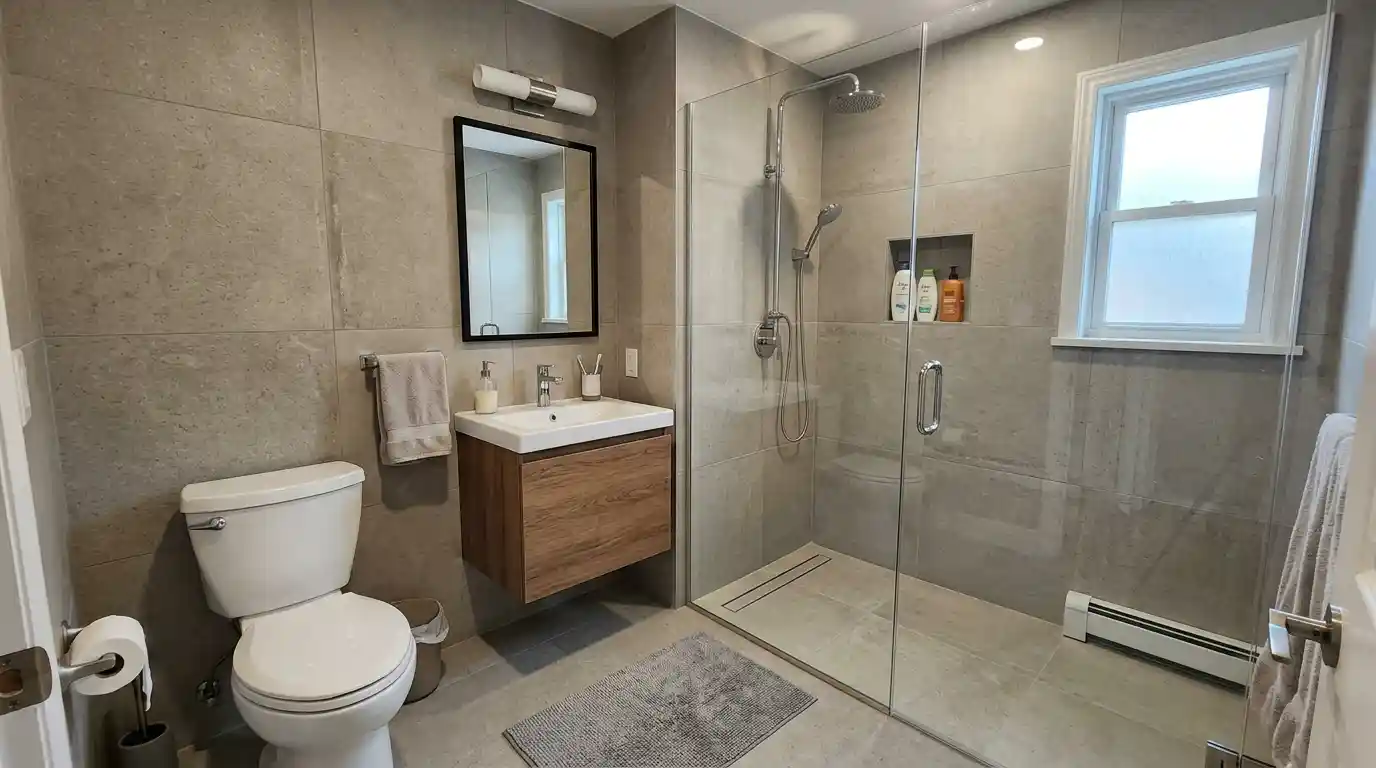
Floating vanity is the smarter spend in a small bathroom. The installation of wall lights leaves the flooring free from obstructions. The space appears larger without taking up any extra space. Double vanity proves logical for master bathroom renovations and bathrooms where two people compete for the use of the mirror. Single vanity in a compact bathroom almost always looks cleaner anyway.
Walk-in shower conversions keep coming up in primary bathroom renovation projects for good reason. A tub-to-shower conversion runs $4,500–$12,000 depending on tile selection and configuration. Curbless shower design is worth paying for if you can it photographs better, it ages better, and it’s easier to clean than a threshold shower. A linear drain runs $200–$400 more than a standard center drain. Not a big number for what it does to how the floor reads.
Worth knowing before you commit to removing the tub: if this bathroom holds the only bathtub in the house and you plan to sell within five years, it will come up. Buyers with kids under ten tend to filter for at least one tub. If there’s a tub-shower combo in a guest bathroom elsewhere, the conversion in the primary bathroom is a non-issue.
Storage Fixes That Cost Almost Nothing and Work Better Than Cabinets
The complaint I hear most from people mid-renovation isn’t about how things look. It’s that there’s nowhere to put shampoo, extra toilet paper, cleaning supplies, or towels. Storage in small bathrooms is genuinely hard to solve after the fact.
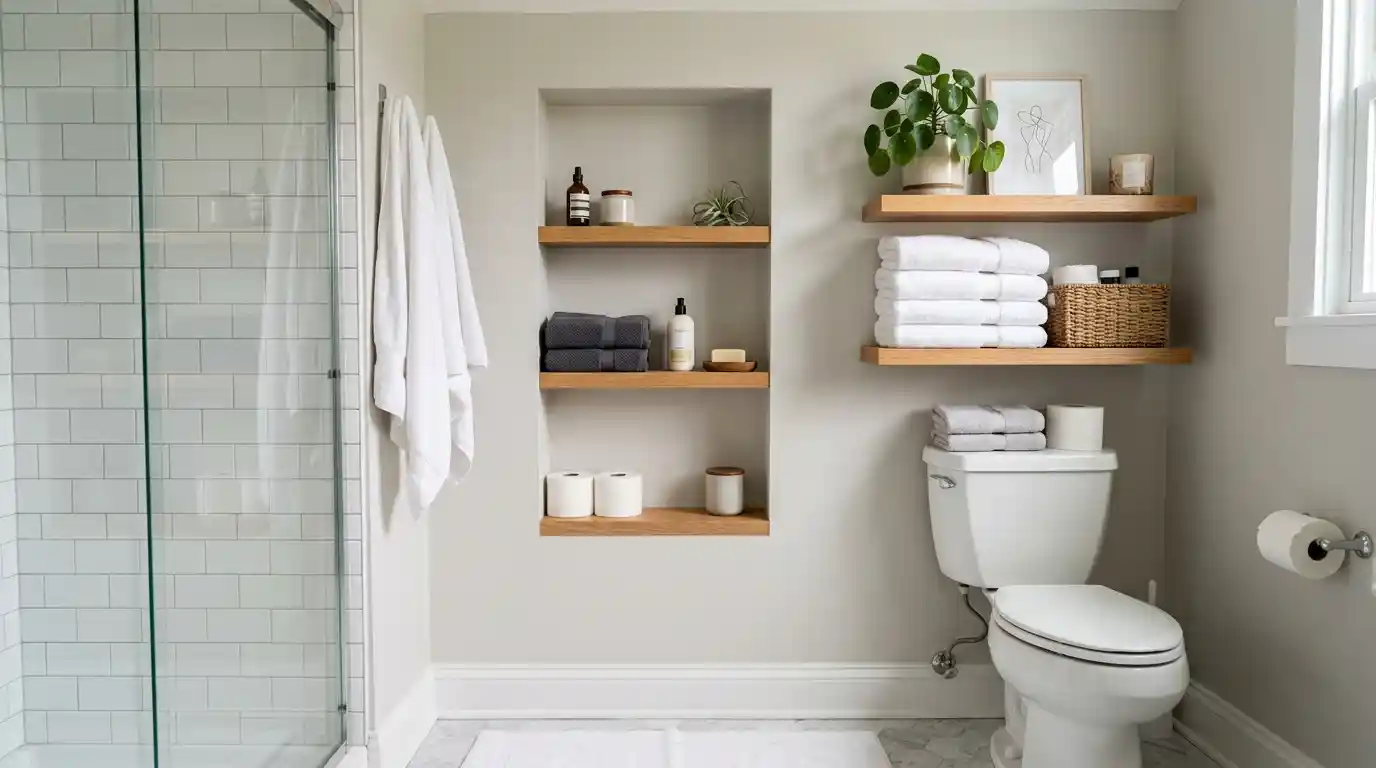
Recessed shelving cut between wall studs is the cleanest storage option in any bathroom renovation. Costs less than most people expect and takes up zero room depth. A shower niche planned before tile installation adds almost nothing to the project cost. Planned after tiling, it means tearing out finished work. Cabinet above vanity instead of a plain mirror – more functional space with no visual volume and same square footage.
Shelving above the toilet may work well in case everything is arranged neatly there. Floor-to-ceiling shelving along one wall increases usable space by up to 30% in a compact bathroom. Corner shelves around the shower accommodate the space that would otherwise remain unused. A towel storage unit mounted inside the vanity cabinet organizes the cleaning supplies with no drilling required.
There is one towel storage solution that is often overlooked – a towel ladder leaning against the wall. This requires no mounting, drilling, or any additional expense for installing anything. This simple accessory accommodates five or six towels and its price is from $30 to $80.
The Lighting Problem Nobody Talks About Until the Bathroom Is Done
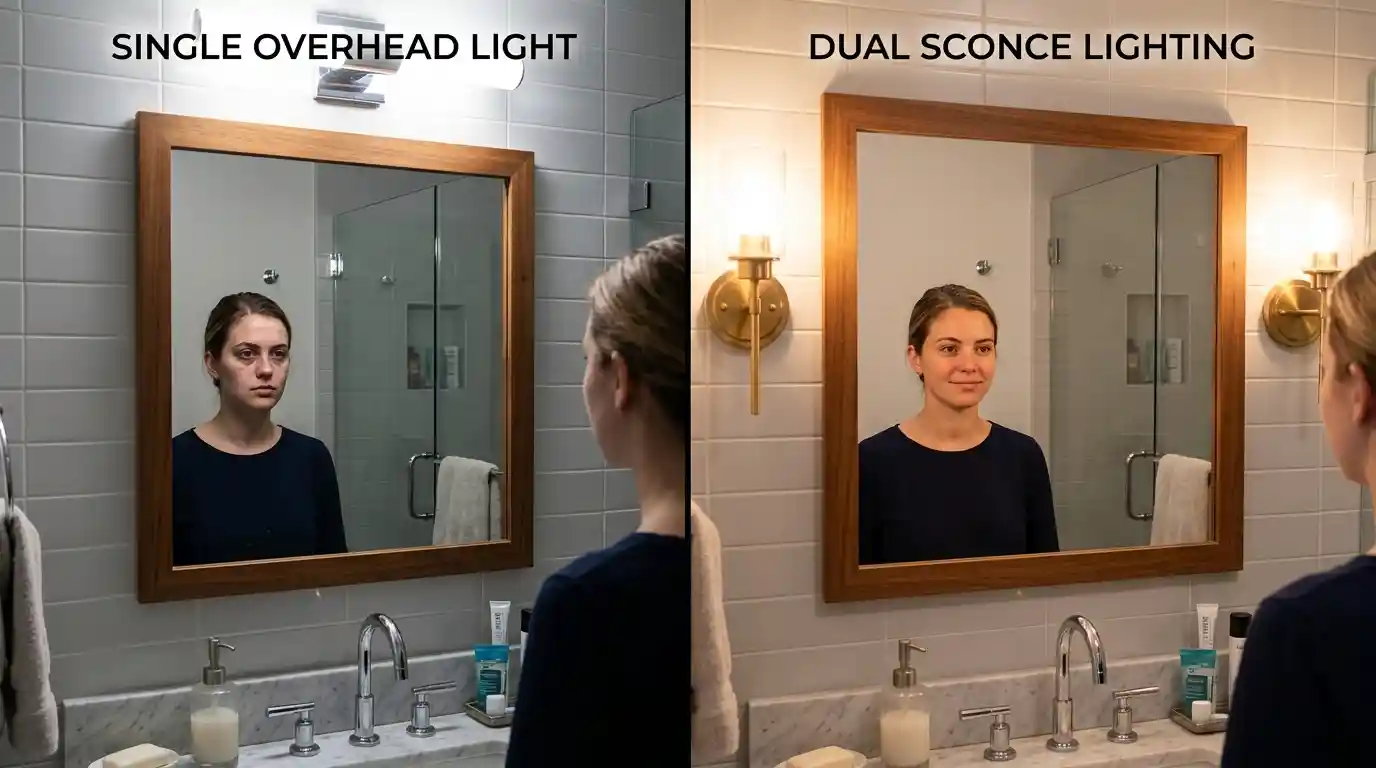
I’ve seen beautiful tile jobs completely killed by one bad vanity fixture. Lighting in a bathroom renovation gets budgeted last and installed fast and it shows.
Single overhead fixture is the most common mistake in a bathroom remodel. Overhead light throws shadows directly onto the face at the mirror. It’s unflattering and it makes the room feel like a utility space. Sconce lighting at eye level on both sides of the mirror is the fix — even light, no shadows, looks intentional. An LED mirror or backlit mirror adds ambient lighting that costs $150–$400 and does a lot of heavy lifting on its own.
Recessed lighting inside a curbless shower, properly waterproofed, makes the shower feel larger. Under-cabinet lighting below a floating vanity costs $80–$150 and reads like a detail from a much more expensive bathroom renovation.
Natural light is worth protecting. A frosted glass window keeps privacy without killing daylight. If the bathroom has a window and the renovation is covering it with a bulky upper cabinet, rethink that cabinet placement.
Heated Floors, Steam Showers, Soaking Tubs — What’s Actually Worth Buying
Radiant floor heating comes up in every spa bathroom conversation. I was skeptical for years. Then I installed it in a 48 sq ft bathroom floor and used it through a full winter. Electric radiant heat runs $8–$15 per square foot installed. On a 50 sq ft bathroom floor that’s $400–$750 in materials. For a cold-climate house, it earns that back in daily comfort faster than most upgrades do.
Heated towel rack not the passive kind that just warms a dry towel, but an active electric model genuinely reduces mildew smell in a family bathroom. Wet towels dry between uses instead of sitting damp. Cost is $100–$400 depending on size. It’s a practical buy, not a luxury one.
Steam shower conversion runs $2,500–$6,000 on top of the base shower remodel cost. For a household that will use it four or five times a week, reasonable. For most households, it gets used twice and becomes a storage shelf. Deep soaking tub in a master bathroom remodel looks incredible in photos. In real life, busy households fill it maybe once a month. Spend that money on radiant heat instead.
Aromatherapy shower fixtures have gotten cheap. A diffuser attachment for a wall-mounted showerhead runs $30–$60. Try that before committing to a full wellness bathroom overhaul.
The Numbers Worth Writing Down Before You Call a Contractor
The national average cost to remodel bathrooms is $9,000. A realistic cost range for remodeling a small bathroom is $3,000 to $15,000. A wall-mounted toilet saves 10-12 inches of floor space. Installing a corner sink saves 12-18 inches of wall space in a tight arrangement. Floor to ceiling storage provides 30% more space utilization in a small bathroom. A floating vanity with wall mount faucets will add $200-$800 extra cost.
Large size tiles (12″x24″ or larger) require a smooth surface. Test the floor surface for any unevenness before ordering the tiles. Out-of-flat floors under large format tile crack grout within a year.
Permit fees for a residential bathroom renovation run $150–$500 in most places. Skipping permits on electrical or plumbing work comes back at the point of sale. Inspectors catch it, buyers catch it, and correcting unpermitted work after the fact costs more than the permit did.
How the Work Actually Goes When You’re Not Watching YouTube and Hoping
Demo, rough-in plumbing and electrical, waterproofing, cement board or moisture-resistant greenboard, tile, fixtures, vanity, accessories. That’s the order. Every bathroom remodel that runs over time and over budget does so because that order breaks down somewhere.
Tile goes in before the shower valve rough-in is confirmed now the tile has to come back out. Vanity arrives before plumbing stub-outs are set in the right position now the plumber comes back for a second visit. These aren’t dramatic failures. They’re scheduling problems that cost $300–$800 each and add days.
On DIY bathroom remodel projects specifically: waterproofing is the one step worth hiring out if you’re doing everything else yourself. Every other mistake in a bathroom renovation is fixable without major damage. A waterproofing failure behind a tiled walk-in shower means pulling the entire installation out, usually two years after the project is done and the smell starts. Pay someone who does this daily.
Three contractor quotes is standard. What most people don’t do is ask the follow-up questions. What’s included in demo? Are permit fees in this number? What happens to the price if the subfloor shows moisture damage when we open the floor up? Those three questions tell you whether a quote is real or an opener.
Conclusion
The thing about bathroom remodel ideas is that the best ones rarely come from a magazine spread or a contractor’s upsell conversation. They come from knowing your actual budget, being honest about how your household uses the space, and making the three or four decisions that genuinely move the needle the tile, the vanity, the lighting, the shower. Everything else is noise. You don’t need a gut renovation to get a bathroom that feels considered and current. A $500 hardware and mirror swap hits different when the lighting is right. A refinished tub behind fresh subway tile looks better than a brand-new tub in a room where nothing else was touched. The middle-class bathroom remodel is not a lesser version of the luxury one it is a smarter version of it, built on tighter decisions and a clearer sense of what actually matters when you walk in there every morning. Start with one thing. Do it right. The rest follows.
Frequently Asked Questions (FAQ’s)
A successful bathroom renovation starts with deciding whether you need a simple facelift or a complete remodel. Keeping the existing plumbing layout, choosing upgrades that improve daily use, and spending carefully on key areas like lighting, vanity, and shower usually gives the best return.
It depends on how you use the space. A floating vanity is often the smarter choice for smaller bathrooms because it creates a more open feel, while a walk-in shower is a better investment when improving accessibility, comfort, or the overall primary bathroom experience.
Use consistent finishes, better lighting, and carefully selected materials instead of upgrading everything. Large-format porcelain tiles, modern fixtures, and a well-designed vanity can make a modest bathroom renovation feel much more high-end.
Not always. If the plumbing, waterproofing, and layout are working properly, a facelift with new fixtures, paint, lighting, and surfaces may solve most appearance issues without the cost of a complete gut renovation.
A typical bathroom renovation can range from around $3,000 for smaller updates to $15,000 or more for major changes, depending on the materials, location, and whether plumbing or structural work is required. Keeping the existing layout is one of the easiest ways to control costs.

7 thoughts on “Bathroom Remodel Ideas: What to Spend, Skip, and Prioritize”