

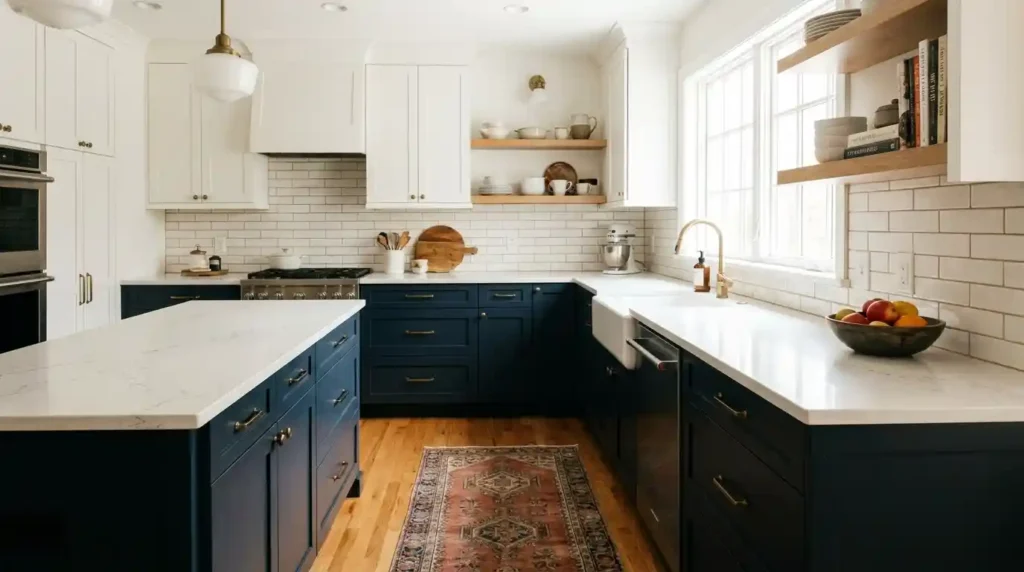
Over the years, I have seen many kitchens, and there is one thing that comes to mind. Cabinets are the ultimate difference-maker when it comes to rooms. They are not just storage, they set the mood, the style and the budget. A poor floor plan or a poor approach to finish a kitchen can leave a kitchen feeling cold and unfinished. But with the right ones, an ordinary kitchen can become something you love!
Start With the Layout Before You Pick a Style
Most people shop for cabinet styles before they nail down their layout. It’s the wrong sequence, and it’s a waste of time. If you’re working with 100 sq. ft. or 170 sq. ft., the setting must be first. The U-shaped kitchen offers the most storage of any kitchen design, including galley and one-wall. But a galley kitchen is compact and efficient for cooking.
Base cabinets are usually 34.5″ high and 24” wide. Once the base plan is confirmed, the cabinet configuration is completed with wall cabinets and corner cabinets. The widths are available from 9 to 36 inches, so most kitchens can accommodate them. More often than not, vertical space in a kitchen is wasted. Long cabinets extend storage, and do not shorten ceilings.
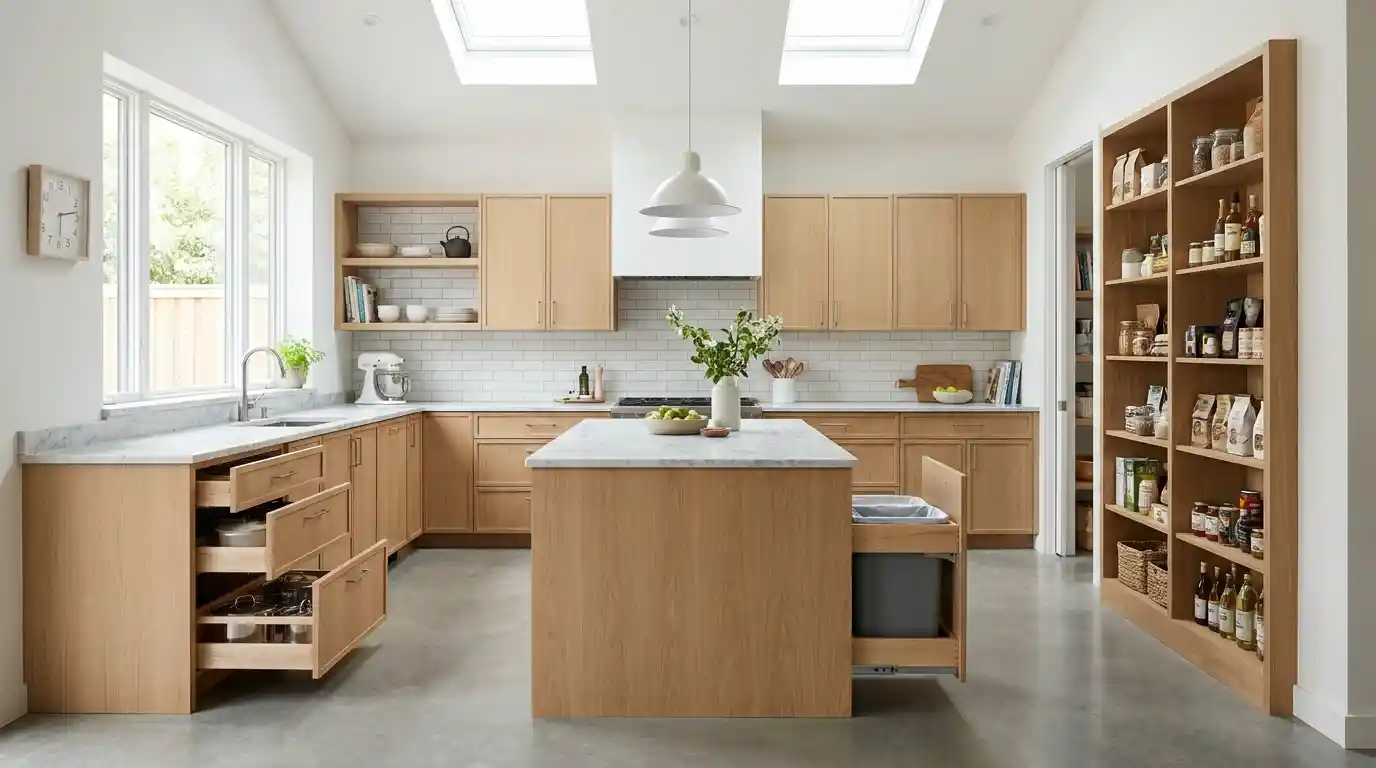
In small kitchens, cabinets which are smaller, 18-24 inches wide, help to maintain a good walkway. Shelves are better for pots and pans than deep drawers – things stay in place in the drawer. A mixer lift inside a base cabinet is one of those small upgrades that earns its keep daily. A pull-out trash cabinet and a dedicated tupperware cabinet clean up clutter faster than any other change. Islands work beautifully in larger kitchens when island dimensions leave at least 42 inches of clearance.
A peninsula is a smarter call for tighter floor plans that still need a prep zone. The sink dishwasher base needs to sit within the cooking zone, not isolated on the opposite wall. The work triangle sink, stove, fridge is an old concept, but it still holds up well. Plan the cabinet configuration around that triangle and food preparation space feels intuitive.
Flat-Panel Slab and Shaker Doors Are Still the Foundation
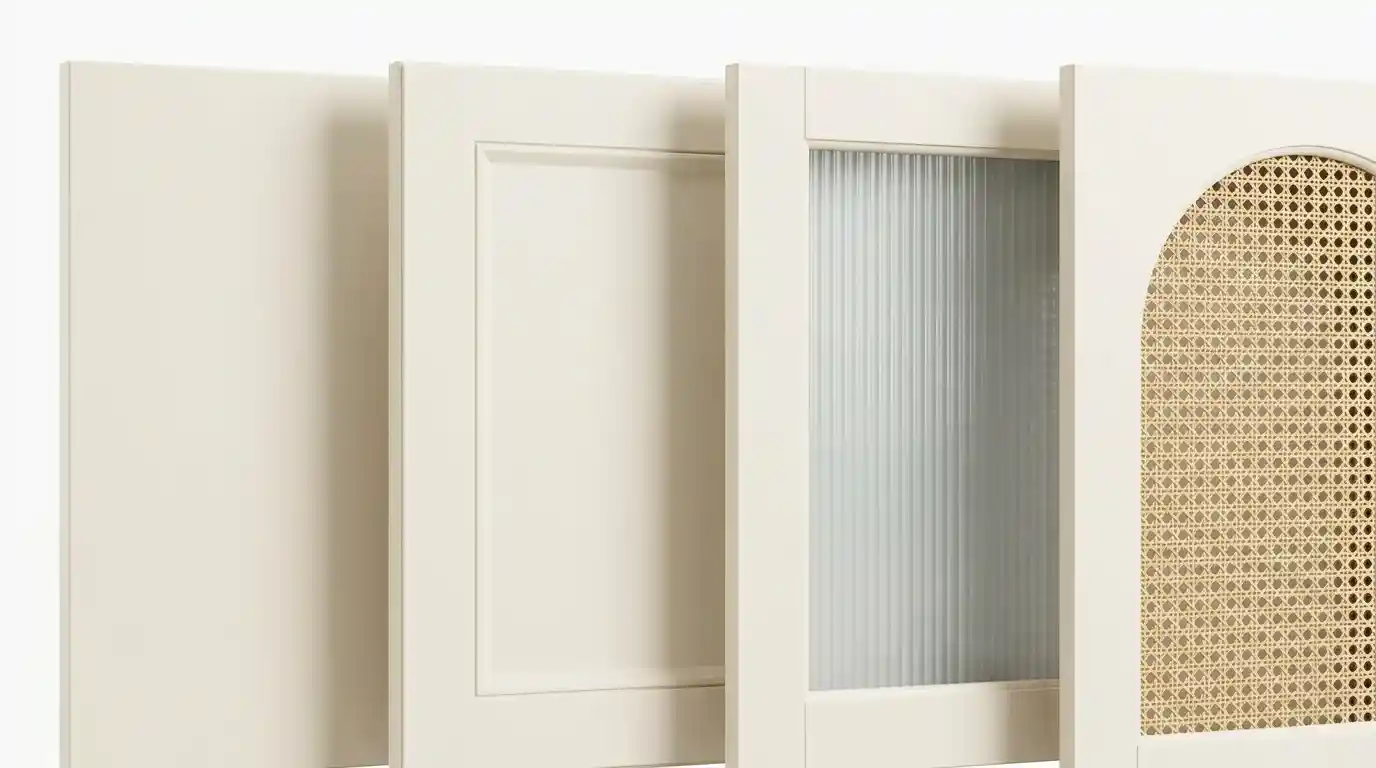
Flat-panel slab cabinets remain the most popular door style for a reason they are clean and timeless. Shaker-style cabinetry is the other workhorse, and it fits into more design directions than almost anything else. Inset Shaker cabinets give a custom, furniture-like quality that standard overlay cannot match. Raised panel cabinet doors bring dimension and work well in traditional or transitional style kitchens. Pyramid panel doors are a niche choice, but they make decorative upper cabinets feel more finished and deliberate.
Handleless kitchen cabinets have a minimalist appeal, but they need a good push-to-open mechanism. Hinged cabinet doors in black cabinets with sleek hardware feel sharp in modern spaces right now. Arched cane-front doors on painted cream cabinetry with cornflower blue accents work in a butler’s pantry. Frosted glass-front cabinets with fluted ribbed reeded glass add texture without making a room feel busy. Half-glass cabinets split the difference between open shelving and solid doors very practically.
Perforated wood sliding cabinet doors suit ombre kitchen cabinets in yellow and orange tones. Accordion cabinet doors solve corner access problems without sacrificing the full cabinet interior. The standard diagonal cabinet is a common corner solution, but it is not the only one.
Color Is Where Most People Play It Too Safe
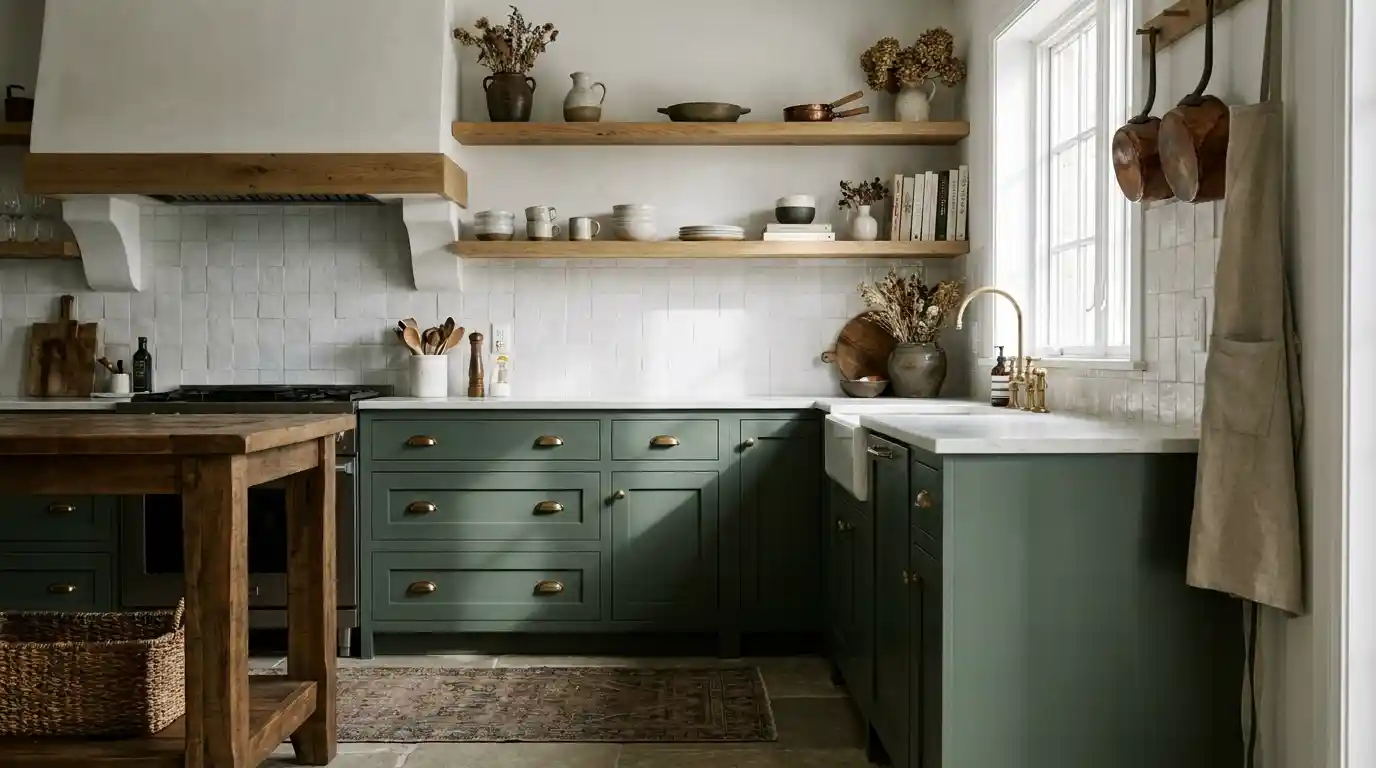
I spent months with pale gray cabinetry before I understood how flat and lifeless neutral-everything can get. Sage green cabinets with a white backsplash have a warmth that pale gray just cannot deliver. Another combination that seems to be very livable is deep green and white walls with subway tile backsplash. Midnight blue cabinets floor-to-ceiling in an extra tall cabinet add a sense of purpose and a touch of drama to a kitchen.
Two-tone kitchen cabinets are a tried and true method to bring contrast without going all out with one powerful shade. A transitional style kitchen can be done with white upper cabinets and midnight blue lower Shaker cabinets. A medium blue cabinetry design, along with the aged brass hardware and matching range hood will unite the space. Using black door knobs and pulls throughout kitchen work in matching blue cabinets in a midcentury modern kitchen.
Benjamin Moore Advance Interior paint has a greater resistance to kitchen wear than regular wall paint. Another cabinet-specific formula that may be worth the extra investment is Sherwin Williams Urethane Enamel. Colors, such as Caliente (a rich red) and Harbor Haze (a muted blue-gray), can transform the ambiance of a kitchen. October Mist, Guilford Green and Antique Jade are in the sweet “green” zone to look great on camera. Weimaraner, Etiquette, and Soft Chamois offer warm neutrals that read cozier than stark white.
Forest Floor and Southern Vine go darker and suit kitchens that already have warm wood tones. Coastal Path, Fennel Seed, and Balsam all lean green without feeling trendy or forced. Char Brown works in a dark monochromatic kitchen where walnut wood cabinetry and matte black surfaces meet. Cloud White is the classic backdrop for almost any colored lower cabinet. Ice Mist and Vapor read almost white but with enough cool tone to feel crisp.
Jet Black, Luxe Black Tar, and Blacktop give black cabinets with different undertones for different light conditions. Westcott Navy and Blue Nose are strong blues for those who want something bolder than Harbor Haze. Newburg Green and Teal push into jewel-tone territory and look good against brass hardware. Steep Cliff Gray, Stone, and Winter Snow cover the neutral Scandi-style end of the spectrum. Sunflower and Pretty in Pink are playful choices for colorful kitchen cabinets in less formal homes.
Finishes matter as much as color. Eggshell, satin, semi-gloss, and high gloss each behave differently under kitchen lighting and cleaning.
Hardware Is Not a Small Decision
Aged brass hardware on warm beige or burgundy cabinets feels collected and personal, not matchy. Polished brass hardware brightens black Shaker cabinets and stops them from reading too heavy. Brass half moon cabinet pulls on white cabinets are a small detail that designers keep reaching for. Traditional brass hardware knobs, pulls, and cup handles still suits kitchens with rich wood tones. Gold metallic accents with maple wood cabinetry and crown molding add warmth without going over the top.
Chrome bar pulls belong with cool-toned pale gray cabinetry in a Scandi-style or Danish-style kitchen. Black cabinet pulls on walnut and black cabinets with a bronze mirror tile kitchen backsplash is a sharp combination. Porcelain knobs on painted cream cabinetry feel vintage and deliberate at the same time. Round recessed cut-outs on white flat-front Scandinavian-style cabinets replace hardware entirely and look very clean.
The Detail Upgrades That Change How a Kitchen Feels
Crown molding at the top of cabinets transitions the upper case into the ceiling properly. Extending upper cabinets to the ceiling removes that gap where dust and awkward decor collect. A fridge surround built from cabinetry makes a standalone refrigerator look like it belongs in the space. Decorative toe kicks arched valance, flush, or tiled with wallpaper tile — finish the base of cabinets properly. Brass inlay joinery on rich wood cabinetry against white walls and pale marble countertops feels artisan and considered.
When there is adequate closed storage in the lower section, open shelving in the upper section works for this section as well. White backsplash tile, white Shaker base cabinets and white open shelving is a popular combination. A monochromatic design direction is complemented by black cabinets with black open shelving against a natural wood paneled wall. Sliding library ladder to cabinetry that spans from floor to ceiling is practical and visually appealing. An organized coffee station cabinet in maple wood cabinetry holds counters in order and helps to organise the morning routine.
Glass inserts on upper cabinet doors work well with reeded, leaded, or tinted glass options. Cane webbing and wire mesh are other insert materials that add texture without full glass. An antique mirror insert turns a standard upper cabinet door into something worth looking at. There’s also repurposed furniture for kitchen cabinetry, such as this vintage hutch and barrister bookcase. If you’re having a new kitchen fitted, then you won’t want to end up with an all-new kitchen; adding an antique piece to the rest of your new cabinets will help to ensure that your kitchen will not look like a showroom.
When behind open shelving or coastal kitchen cabinets, dark gray-blue shiplap walls feel relaxed and comfortable. In a smaller kitchen, a statement range hood lifts the eye up from simple Shaker base cabinetry. In terms of choice of cabinet color, quartz countertops work well for nearly all cabinets, and they are extremely durable and require relatively little maintenance.
Corner Cabinets Deserve More Thought Than They Usually Get
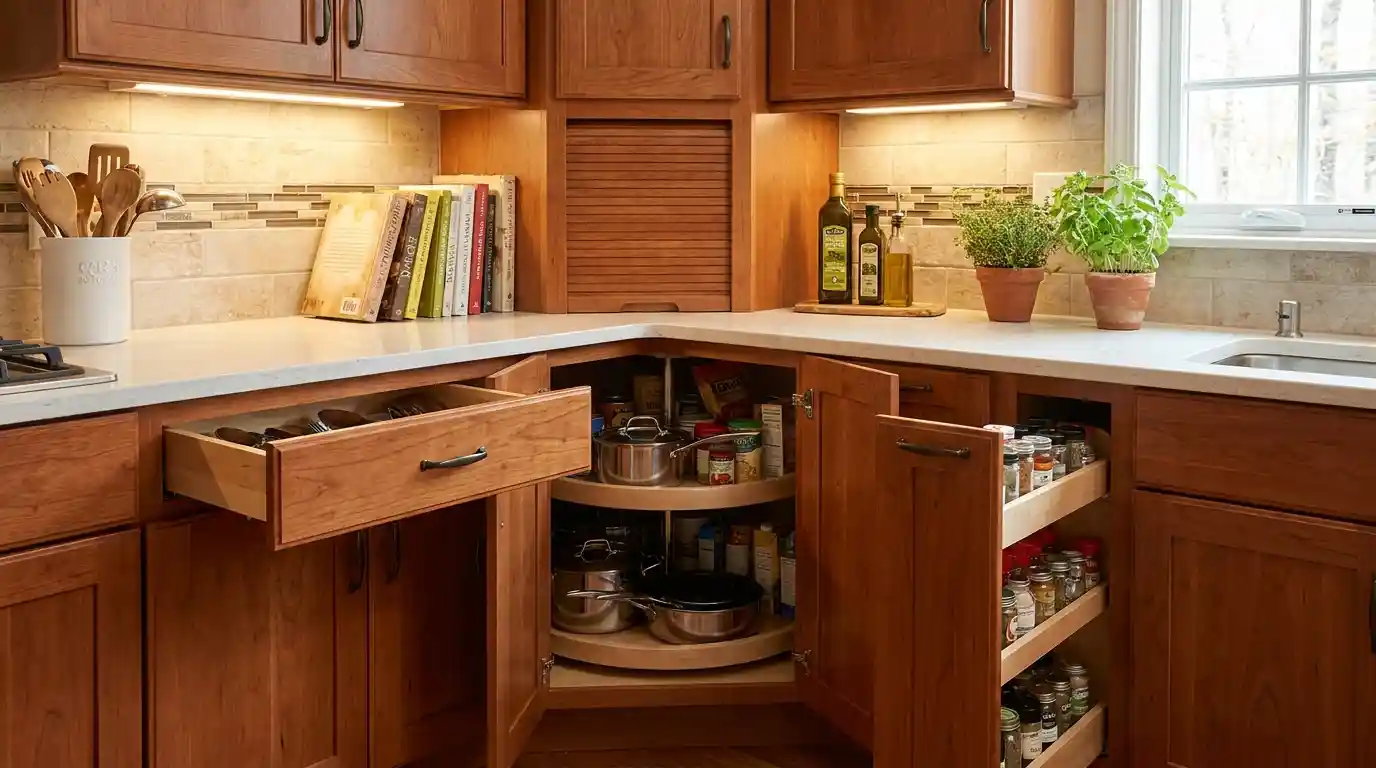
Blind corner cabinets waste more space than any other configuration in the kitchen. A lazy Susan solves the problem for most base corners and keeps items rotating and accessible. Angled drawer cabinets at corners cut into the dead zone more efficiently than a standard diagonal cabinet. Swinging pullout cabinets inside a corner base bring everything to the front with one easy motion. Pullout cabinet drawers with plate and utensil slots work well in upper or lower corner positions.
A narrow spice pullout drawer beside the cooking zone is one of the highest-use storage upgrades available. A built-in wine display inside a corner or base cabinet makes everyday items feel organized. Hidden trash disposal inside a base cabinet keeps counters and floors cleaner consistently. Floor-to-ceiling pantry shelves in a corner use vertical space most kitchens leave completely idle. Glass corner display cabinet doors work when a homeowner actually has things worth displaying.
Open corner shelving and hanging wall racks both suit kitchens where the owner wants visual accessibility. A garage cabinet door on a corner unit tucks appliances away while keeping them reachable.
The Materials That Define the Look
Reclaimed wood cabinets in modern rustic style with reclaimed beechwood texture and warm wood tones. Natural wood cabinetry with honey tones and crown molding pairs well with traditional kitchen decor styles and warm finishes. Dark walnut cabinetry pairs well with white walls and light marble countertops or a light marble backsplash. Broad, moody kitchens look great with walnut and black cabinets, black cabinet pulls and bronze mirror tile backsplash. The grooved cabinets give a surface texture that flat-panel slab doors don’t provide.
High Gloss cabinets reflect light and open a small kitchen. Metallic cabinets in stainless steel, bronze or copper add an industrial touch that will fit into the right setting. For those who value sustainability and repurposed wood paneling is the ideal choice for home owners.
Conclusion
The best kitchen cabinet design ideas are not based on trends, but on knowledge of the space. Everything from layout to colour to hardware to storage must be in harmony before it feels right. I’ve seen kitchens changed by just painting and changing out the hardware, and I’ve seen high dollar renovation projects go wrong when the fundamentals were not addressed. Then build up to function and add style on top of that and it’s a lot easier to make decisions after that.
Frequently Asked Questions (FAQ’s)
Start with the kitchen layout, available space, and storage needs before choosing cabinet colors or door styles. A well-planned cabinet configuration around the sink, stove, and refrigerator makes the kitchen easier to use every day.
Neither style is automatically better. Shaker cabinets suit traditional, transitional, and many modern kitchens, while flat-panel cabinets create a cleaner, more minimalist look.
Use practical storage features such as pull-out trash cabinets, spice pullouts, tall pantry storage, appliance cabinets, and corner organizers. These upgrades make frequently used items easier to reach while reducing countertop clutter.
The best cabinet color depends on the room’s lighting, countertops, walls, and overall style. Green, blue, warm neutrals, black, and white can all work well when they complement the other finishes in the kitchen.
If the layout and cabinets are still functional, painting them and replacing the hardware can create a noticeable change without a complete renovation. Replacement makes more sense when the existing layout, storage, or cabinet condition no longer meets your needs.

14 thoughts on “Kitchen Cabinet Ideas That Actually Work in Real Homes”