


The minute you receive those keys for that dilapidated house, an unusual feeling begins to develop within you. On one hand, you are filled with excitement. Yet on the other hand, fear grips your heart. As you look around your rooms that are bare floorboards, lack any electrical work, have no heating system, old wallpaper and ask yourself. “Where do I begin?”
This is the problem that advice for renovating your house miprenovate is designed to address. Rather than relying on mere ideas or stunning renovation examples. It takes a more practical approach in offering a realistic and comprehensive renovation guide. That many first-time renovators truly need before committing to a large expense. In compiling the finest renovation tips from experienced renovators, expert remodeling contractors, and even organizations. Such as NAHB, this guide shows you how to tackle what may be the biggest challenge in your life.
Why Most Renovations Go Wrong Before They Even Begin
The errors that occur in home renovation are made even before the first wall is knocked down. They occur during the planning process, or perhaps lack thereof.
Individuals become infatuated with the potential of a fixer-upper. And they begin to make decisions based on emotion and without a budget for renovations, a time frame for renovations, or knowledge of the actual cost involved in structural work. Consequently, funds run dry halfway through the project, or even at the finish line of costs, leaving the individual with an incomplete house unsuitable for either living or selling.
This same sensation was echoed by Fiona Duffy from Fifi McGee in her 1930s renovation project in Brighton. They only had an £80,000 budget for their renovation work; no central heating system; and carpets that would disintegrate beneath their feet along with walls that were plastered with outdated wallpaper. Nevertheless, through meticulous planning and intelligent sequencing of their construction activities. They managed to stick to their budget to some extent.
What made them successful was a careful study of all the renovation issues during the planning phase.
Step 1: Finding the Right Property to Renovate
Planning begins before purchasing the property. Be it that you are house hunting or that you know what property you would like to buy. Decisions made at this viewing stage will dictate your course of action throughout your renovation process.
Go for a property that has good bones by virtue of having ample room sizes, good structure, and a possibility of being extended or converted if such a plan is in place. When buying a property especially in autumn or winter. Find out whether heating and electrics have been put in place as well as plumbing systems. Buying a home that lacks these during cold weather can really take a toll on you. Just like it did on Fiona and Neil.
Period features matter too. Chimney breasts, alcoves, original cornice, and stained glass windows add character that is either beautifully authentic or restorable. If a property has had features ripped out, many can be reinstated but factor the cost into your renovation budget from day one.
The single best thing you can do at viewing stage is bring an experienced general contractor with you. Even paying them a small fee for their time is worth it. They will spot structural issues, flag drainage problems, and give you a rough ballpark of the work you want to do before you make an offer. That information is worth far more than the cost of their time.
After the offer is accepted, get a full building survey not a standard Home Buyers Survey. The difference matters enormously. A full building survey gives you the detailed picture of every potential issue: subsidence, damp, drainage, asbestos, and more. Use those findings to negotiate remedial costs off the asking price. Fiona negotiated £23,500 off their original offer using exactly this approach.
Step 2: Building a Realistic Renovation Budget
Budgeting is where most people either save their renovation or doom it. The numbers need to be honest not optimistic.
The NAHB the National Association of Home Builders consistently advises homeowners to set clear priorities before any spending begins. Write a prioritized list of what you need versus what you want. The needs go first. The wants get phased in if the budget allows.
Set a contingency budget of 10 to 20 percent above your total renovation costs. This is non-negotiable. Budget overruns happen on virtually every significant renovation project not because homeowners are careless, but because old buildings hide surprises. The CCTV drainage survey and asbestos survey that Fiona’s surveyor recommended added a small upfront cost but saved thousands by enabling proper budgeting before work began.
Dont Make The Common Mistake
Do not make the common mistake of budgeting only for structural work and first fix while forgetting the finish costs. Lighting, worktops, kitchen cabinets, taps, tiles, sockets, switches, door stops, and skirting boards these are all costs that need to be in the spreadsheet from day one. Experienced renovators watch people run out of money at the decoration stage regularly. It happens because the visible, exciting costs get budgeted and the small, unglamorous ones do not.
Factor in accommodation costs too. Will you live in the property during the renovation, stay with family, or rent elsewhere? Each has financial implications. Families with children especially benefit from budgeting for somewhere comfortable to live while the most disruptive work happens.
Phasing the work is a powerful tool for keeping costs manageable. You do not have to complete everything at once. Completing priority spaces first a functional kitchen renovation and bathroom renovation and returning to less urgent areas later is a legitimate and intelligent approach.

Step 3: Layout Planning Before You Hire Anyone
It is this step where almost all of us fail, and consequently it leads to the costliest regrets that we make afterwards.
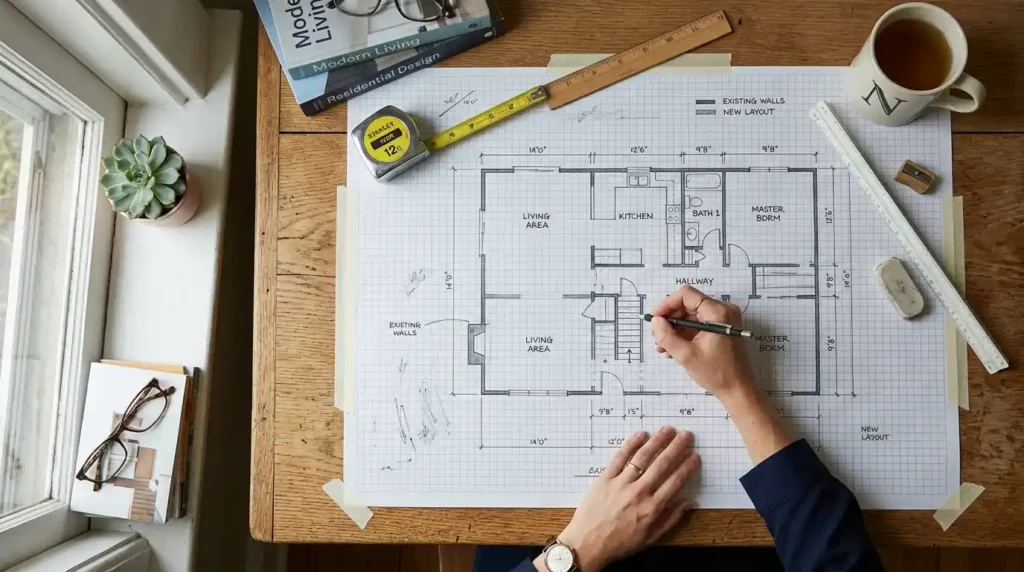
Prior to hiring an architect or inviting any contractors to give out estimates, you must think hard about your plans for the layout of your floors. Make sketches, use software, even make rough drawings using a piece of paper. Whether you use sophisticated software or not does not really matter.
Make your way through all the rooms and consider factors such as traffic flow, natural light, sizes and positions of the furniture, and storage. Consider whether knocking through will be beneficial for your space. Decide upon the possibility of a rear extension or a loft conversion before you get carried away by the idea. Research what has been done in the area before by checking out similar local projects in online properties in your local planning office.
A loft conversion may be an excellent choice if there is enough height of the ceilings in your property. Similarly, a rear extension with bifold doors might suit if the garden floor level is suitable. It is important to find these answers before deciding on a particular solution, rather than after getting involved in it.
Define a clear vision of the interior from the very beginning. Identify a desired style of the house not according to the trends but based on your personal preferences. Avoid spending too much time on Pinterest exploring styles like boho or Scandinavian design. Your new house should represent you and reflect your lifestyle and tastes.
Step 4: Architects, Planning Applications, and Interior Design
Now that your floor plan design is sorted and you have a clear idea of what you are looking for, it is time to seek professional assistance.
Should your interior remodeling project include extensions, loft conversions, or any form of structure alteration, you may require the services of an architect. Select an architect who has a track record of creating similar designs. This way, there is a higher chance that you will be able to maintain your budget.
Submit Your Planning Application
Submit your planning application as soon as possible when your plans are definite. The time required for receiving your plans may differ a lot, depending on location and project. Meanwhile, spend your time wisely by ordering tiles, faucets, kitchen countertops, fittings, kitchen appliances, and lighting. It often happens that finding the right supplier and obtaining the necessary products takes much more time than one expects. This step will relieve you from many troubles during the construction stage of your project.
If your house is a period home, whether it is a Georgian house, Edwardian house, Victorian house, terraced house, or 1930s house, it is important to know what regulations relate to your property before making any changes in the design of its exterior or interior spaces.
Step 5: Finding and Hiring the Right Contractors
This is perhaps the most stressful aspect of any renovation project.
It is important to know that securing quotes from contractors involves more than just choosing the lowest bid. You need to understand the nature of the quotes offered and the methods used by the contractors in problem-solving and communication.
Compare quotes fairly. Ask the same questions of every contractor. Make sure the scope of work in each quote is identical before drawing price comparisons. The NAHB advises homeowners clearly: hiring a professional remodeler is the most reliable way to ensure a project’s success and more than 30 percent of all jobs that professional remodelers perform come from failed DIY projects.
Put Contracts In Place
Put contracts in place before any work begins. A JCT contract for mid to large renovation projects provides both parties with a clear legal framework that protects your investment if things go wrong. Confirm who is liable for what. Check that your contractor is properly insured. Do not skip this step regardless of how well you get on with the people you are hiring.
Be alert for any form of contractor fraud. You can use the services provided by the local home builders association or the contractor directory available through NAHB in the US. Personal referrals of individuals who have undertaken similar renovations in your locality are just as important.

The Room-by-Room Renovation Order That Protects Your Budget
The order in which the work on each particular room is undertaken will have a great influence on the efficiency of your budget spending.
Both Make It Right and Mike Holmes’ advice are consistent when it comes to working from room to room, suggesting that structural repairs should be carried out first, and from the top of the house down.
Begin with the roof, followed by electrics, plumbing, and insulation, which are the unseen systems upon which everything else relies. A stunning new kitchen installed over a leaky drain system will require double the effort and cost to put right than if the issue had been sorted out prior to the installation of the kitchen.
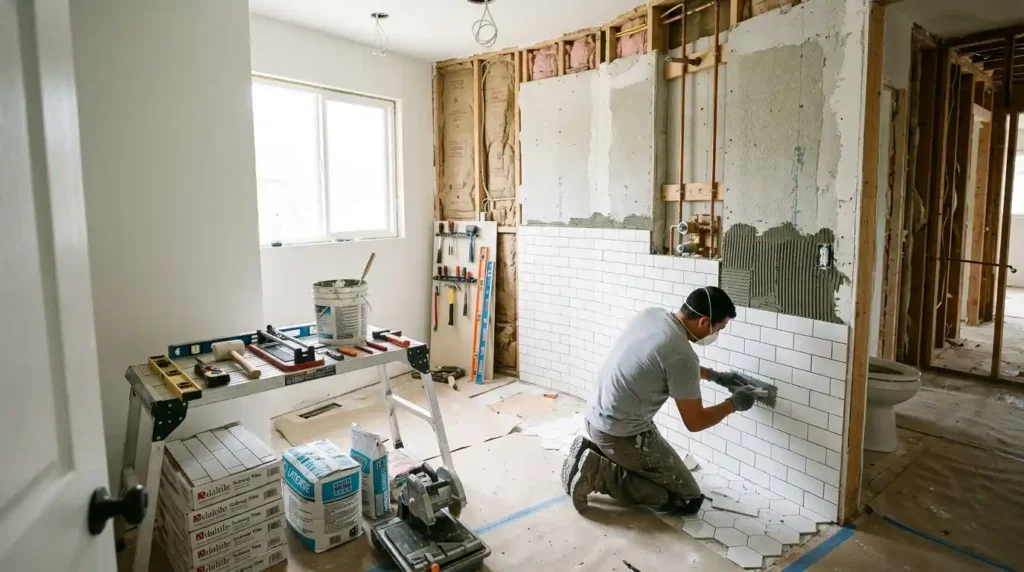
Next comes wet room areas, such as a bathroom renovation, an en-suite renovation, or even the utility room, where plumbing choices affect everything around them. Then comes living space, starting with open plan design, knocking down walls, floorboards, and eventually decoration.
Rooms such as bedroom renovations, hallway spaces, and home offices usually end up last not for any reason other than they are easier to renovate and do not rely on decisions made in the wet room areas or structural spaces.
Common Renovation Mistakes Worth Knowing Before You Start
Every experienced renovator has a list of things they wish they had known earlier. These are the ones that consistently cost people the most.
Not getting a full building survey before purchase is the biggest single mistake. The information it provides shapes every financial decision that follows and the cost of not having it is almost always larger than the survey fee itself.
Underestimating finish costs is the second most common error. The structural work gets done, the build looks great, and then the budget runs out before the kitchen goes in. Budget every known cost from day one including the small ones.
Hiring on price alone without properly vetting contractors leads to the majority of renovation project failures. A cheaper quote that produces poor workmanship, missed deadlines, or abandoned work costs far more to fix than the premium you would have paid for a properly qualified team from the start.
Skipping The Layout Planning Stage
Skipping the layout planning stage and going straight to an architect without knowing what you want is an expensive way to develop your design vision. Architects are most valuable when you give them a clear brief. Arriving without one costs you both money and time.
Ignoring the ceiling price in your area is a longer-term risk that can undermine your renovation ROI entirely. Whether the property is your forever home or an investment property you plan to sell, understanding the resale value ceiling in your specific market shapes how much it makes financial sense to spend.
Conclusion
Home remodeling goes beyond the walls and wiring. It is more than the process of decision-making under duress and lack of complete information within the constraints of an ever-shrinking budget. What sets apart those people who are able to get a house they like at the end of the project with cash to spare is not their ample budget, but the level of planning they did beforehand, questions they asked while making offers, realistic contingency planning, intelligent phasing of the project, and hiring reliable contractors regardless of price.This is precisely the type of individual miprenovate provides house renovation tips for. The first step to having your dream home renovated is doing the initial planning right, because otherwise it will sabotage your whole effort down the line no matter how enthusiastic you are during the actual work. Have the survey done, budget realistically, understand the layout of the house, check out your contractors, and plan on phasing the project if need be.
Frequently Asked Questions (FAQ’s)
Before renovating your house, define your budget, priorities, layout, timeline, and the condition of the property. A full building survey can also reveal structural, drainage, damp, or other problems that may affect the project.
A full building survey is generally more useful for a property that needs significant renovation because it provides a deeper assessment of potential defects. It can uncover issues such as subsidence, damp, drainage problems, and asbestos that may influence your renovation budget.
Keep a contingency fund of around 10–20% above your expected renovation costs. Older properties can reveal hidden problems once work begins, so this reserve helps prevent unexpected expenses from stopping the project.
Compare contractors using the same scope of work instead of simply choosing the cheapest quote. Check their experience, insurance, communication, references, and contract terms before allowing renovation work to begin.
Start with structural repairs and essential systems such as the roof, electrics, plumbing, and insulation before moving on to kitchens, bathrooms, living spaces, and decoration. Completing major structural and wet-area work first reduces the risk of damaging finished rooms or paying twice for the same work.

14 thoughts on “House Renovation Advice Miprenovate by Middle Class Homes: The Complete Step-by-Step Guide”