

The summer I bought my first home, I spent the first three weeks painting the spare bedroom and exactly zero time looking at the roof. By August, a stain appeared on the ceiling of that same bedroom a soft brown ring that started small and grew with every thunderstorm. The flashing around the chimney had been failing quietly since before I moved in, and the summer heat had finished whatever job the winter frost had started. The repair wasn’t catastrophic, but it wasn’t cheap either, and it was entirely preventable. That ceiling stain is why I now run through a proper seasonal checklist every June without fail.
For most middle-class households, the home is the largest financial investment they’ll ever make, and summer is the best window the year offers to protect it. The longer days, the dry weather windows between thunderstorms, and the accessibility of the exterior all make June through August the season for proactive home maintenance not just barbecues and garden furniture. The maintenance checklist summer middle class homes middleclasshomes guides talk about isn’t a luxury routine. It’s the difference between a $150 gutter cleaning and a $1,500 fascia repair six months later. For the kind of practical, no-assumption guidance that fits a real homeowner’s schedule and budget, middleclasshomes net home tips covers the full year of tasks at the same level of honesty
The Exterior Walk That Catches 80% of Summer Problems Before They Start
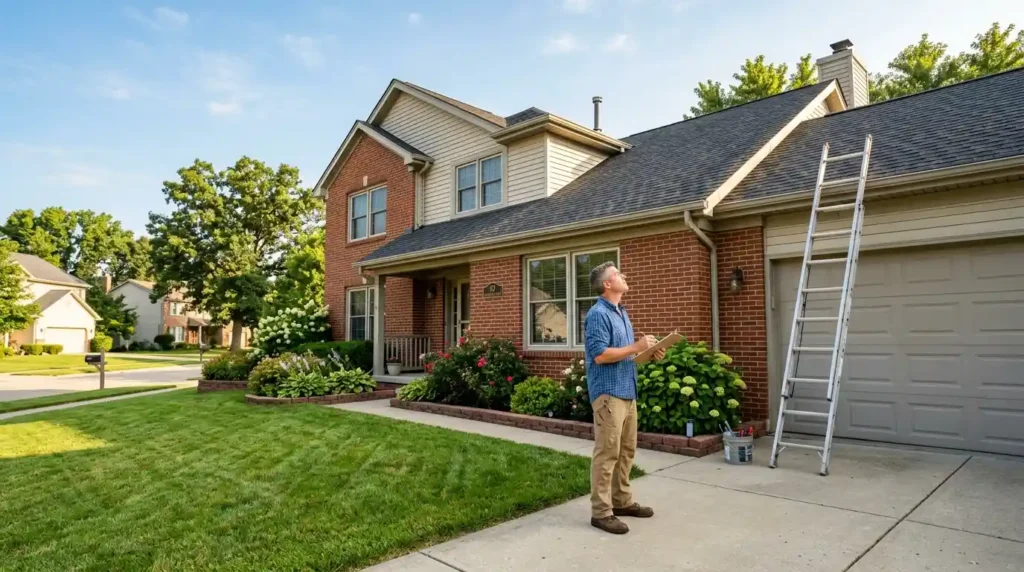
Before anything else gets scheduled or priced, walk the full perimeter of the property slowly not a glance from the back door, actually walking close to the walls, looking up at the roofline, crouching to check the foundation. This is the inspection step most homeowners skip because it doesn’t feel like doing anything. It catches more problems than almost any other task on the list.
Roof inspection is where the walk starts. Missing shingles, damaged shingles, granule loss in the gutters directly below a roof section, soft spots visible from ground level, sagging rooflines these are the things a ten-minute walk with a pair of binoculars reveals without anyone needing to climb onto the roof. Chimney flashing, roof vent flashing, and any flashing at joints or valleys needs specific attention because these are the points where water finds its way in first. If the roof is older than ten years, the inspection becomes more urgent, not less. A roof inspection costs $100 to $400 professionally, which is nothing against what an undetected leak costs once it reaches ceiling drywall.
Exterior walls come next. Peeling paint, cracked siding, gaps in caulking around windows and door frames each of these is a moisture entry point and an energy efficiency problem simultaneously. Weatherstripping inspection on every external door and window seal takes about fifteen minutes for a standard semi-detached or detached home and costs nothing unless the seals need replacing, which runs $20 to $80 for most doors. The energy saving from a properly sealed home in summer keeps cool air in and reduces how hard the AC works, which is a running saving rather than a one-off fix.
Foundation cracks deserve a proper look during the summer perimeter walk specifically because summer heat causes soil to contract and cracks that were hairline in spring can widen. Drainage around the foundation matters too the ground should slope away from the house, not toward it. Pooling water against a foundation during summer thunderstorms is a slow structural problem, and identifying it costs nothing to catch early and a great deal to fix once water damage is established.
Driveway and walkway inspection for trip hazards or frost-heaved cracks that widened over winter finishes the exterior walk. Tree trimming specifically removing overhanging branches that touch the roof, create pest bridges into the attic, or sit close enough to fall on the structure in a summer thunderstorm is the one exterior task that typically needs professional help. Average tree work costs around $1,138, but it’s significantly less than roof repair or structural damage from a fallen limb during a summer storm.
The HVAC and Roof Plumbing Tasks That Middle-Class Budgets Can’t Afford to Skip
The HVAC system is about to carry the full weight of summer heat, and summer is when HVAC breakdowns happen not in mild spring when the system is barely running, but in the middle of a heat wave when every technician in the area is already booked. A professional HVAC tune-up costs $70 to $200 and includes refrigerant level checks, condenser coil cleaning, electrical connection inspection, thermostat calibration, and an overall assessment of whether the system is running efficiently. Skipping it and hoping for the best is how a $200 tune-up becomes a $300 to $1,200 emergency repair when the system fails on the hottest day of July.
AC filter replacement sits alongside the professional tune-up as a task most homeowners know they should do and many delay. Dirty air filters reduce airflow efficiency, force the system to run longer and harder, raise energy bills, and reduce indoor air quality noticeably over time. Filters need replacing every one to three months depending on the filter type, household size, and whether there are pets or allergy sufferers in the home. Set a phone reminder it takes four minutes to swap a filter and it makes a measurable difference in cooling performance and system lifespan.
Kitchen hood vent cleaning and dryer vent cleaning belong on the summer list specifically because lint buildup is a genuine fire hazard and summer is when both appliances see increased use. A clogged dryer vent that goes uncleaned costs $100 to $170 to have professionally cleaned and represents a fire risk that homeowners regularly underestimate. If clothes are taking longer than usual to dry or the exterior of the dryer feels unusually hot during a cycle, the vent is restricted.
Gutter cleaning and downspout inspection in summer beyond the standard spring and fall cleans becomes necessary specifically for properties near mature trees, north-facing rooflines with heavy moss growth, or homes that had a wet spring that deposited debris mid-season. Clogged gutters during summer thunderstorms overflow directly against the siding and foundation, which is exactly the water management failure a functional gutter system exists to prevent. Gutter debris removal and a check that downspouts are directing water at least three to five feet away from the foundation takes under an hour on a single-storey property and should be done before the first heavy summer storm, not after.
Plumbing, Electrical, and Safety Tasks the Summer Checklist Can’t Skip
Water heater flush is the summer plumbing task that rarely makes it onto homeowner checklists and probably should. Sediment builds up in the tank over time faster in hard water areas and reduces heating efficiency while shortening the lifespan of the unit. A flush takes about thirty minutes and costs nothing if done DIY; it’s a legitimate reason to defer replacement of a marginal water heater for another season.
Pipe inspection for leaks or early corrosion, water pressure testing, and a check of outdoor faucets and hose bibs for proper sealing rounds out the summer plumbing checklist. Water stains appearing on ceilings or walls after summer rain are active leak signals not cosmetic problems to repaint over. Even small discolorations in wall plaster or ceiling drywall indicate that water is finding a route in somewhere, and summer humidity accelerates whatever damage that moisture is doing once it’s inside the structure.
Sump pump testing matters specifically in summer because sudden thunderstorms can dump significant rainfall in a short window, and a sump pump that hasn’t been checked since winter may not respond when it needs to. Test it by pouring water into the pit and watching the pump cycle on and clear it.
Smoke detector and carbon monoxide detector testing is the safety task that takes two minutes, costs nothing, and never gets done until someone smells smoke. Test every unit in the home. Replace batteries in anything that chirps. Check that units older than ten years are still within their rated operating lifespan most detectors have a replacement date printed on the back. Outdoor grill safety ten-foot clearance from the structure, same standard for a fire pit and fire escape plan review close the safety section of the checklist, particularly relevant in homes with children.
Attic inspection in summer catches what winter hides: pest infestation, bird nesting, damp spots that indicate roof leaks, and insulation damage from critters that moved in during the colder months. Summer heat drives increased rodent and insect activity, and the attic is the first place they look for shelter from it. A professional termite inspection costs $0 to $250 depending on the provider and the region, and is worth scheduling in summer specifically because termite activity peaks with the heat.
The Budget Framework That Makes Summer Maintenance Actually Manageable
The 1% rule is the starting framework: set aside one percent of the home’s purchase value annually for maintenance and repairs. On a $300,000 home, that’s $3,000 a year — or $250 a month. It’s not a number that fits every household budget comfortably, but the alternative to budgeting for maintenance is paying emergency repair rates for the same work later, which is consistently more expensive and consistently less convenient.
The practical application for middle-class homeowners who can’t fund everything simultaneously: prioritise by consequence. HVAC failure in a heat wave is both expensive and immediately uncomfortable. A roof leak that reaches ceiling drywall costs far more than early roof repair. Foundation water damage is the most expensive failure of all. These sit at the top of any summer maintenance budget allocation, ahead of cosmetic exterior painting or driveway resurfacing.
The DIY versus professional split saves meaningful money when applied correctly. AC filter replacement, ceiling fan maintenance including setting blades to spin counterclockwise for summer airflow efficiency gutter debris removal on accessible single-storey sections, smoke detector testing, sump pump testing, and the full perimeter inspection are all tasks most homeowners can handle confidently in a weekend. Roof access beyond what’s visible from ground level, anything involving live electrical, gas appliances, structural concerns, or height that feels genuinely unstable these belong to licensed contractors, regardless of what video guides suggest. The CDC reports over 500,000 emergency room visits annually from ladder falls, and home maintenance is a significant contributor to that number.
The pre-sale summer maintenance checklist adds one extra layer: grout cleaning and resealing in kitchens and bathrooms, interior door alignment checks, and ensuring all HVAC, plumbing, and electrical servicing is documented. A recently serviced HVAC system signals a well-maintained home to an inspector. Clean grout and properly sealed caulk prevent negotiation headaches at inspection. These aren’t luxury upgrades they’re the details that protect resale value without requiring significant spend, which is exactly what a sensible summer maintenance checklist summer middle class homes middleclasshomes framework delivers when it’s followed consistently rather than sporadically.
Conclusion
A maintenance checklist summer middle class homes middleclasshomes owners actually follow isn’t long or complicated it’s just consistent. The homes that avoid expensive emergency repairs aren’t the ones with the biggest budgets. They’re the ones where someone walked the perimeter in June, swapped the AC filter on schedule, cleared the gutters before the first summer storm, and caught the flashing gap before it became a ceiling stain. Thirty minutes of attention in the right places, repeated every season, does more for a home’s long-term condition and resale value than any single renovation project ever will.
Frequently Asked Questions (FAQ’s)
A practical summer home maintenance checklist should cover the roof, gutters, foundation, exterior walls, HVAC system, plumbing, safety devices, attic, and drainage. The goal is to catch small problems before heat, storms, or heavy system use turn them into expensive repairs.
Simple jobs such as changing AC filters, testing smoke detectors, checking the sump pump, and inspecting accessible gutters are usually suitable for homeowners. Roof access, structural concerns, live electrical work, gas appliances, and unsafe heights are better handled by qualified professionals.
Most AC filters should be replaced every one to three months, depending on the filter type, household size, pets, and allergy concerns. A clean filter supports airflow, cooling efficiency, indoor air quality, and the long-term health of the HVAC system.
Start with problems that can cause the greatest damage or disruption, such as roof leaks, HVAC issues, foundation drainage, and active plumbing leaks. Cosmetic jobs like repainting or driveway improvements can usually wait until essential systems and water-related risks are under control.
The article uses the 1% rule as a starting point, meaning roughly one percent of the home’s purchase value is set aside each year for repairs and maintenance. It is only a budgeting framework, so the actual amount should reflect the home’s age, condition, systems, and the household’s financial situation.
