

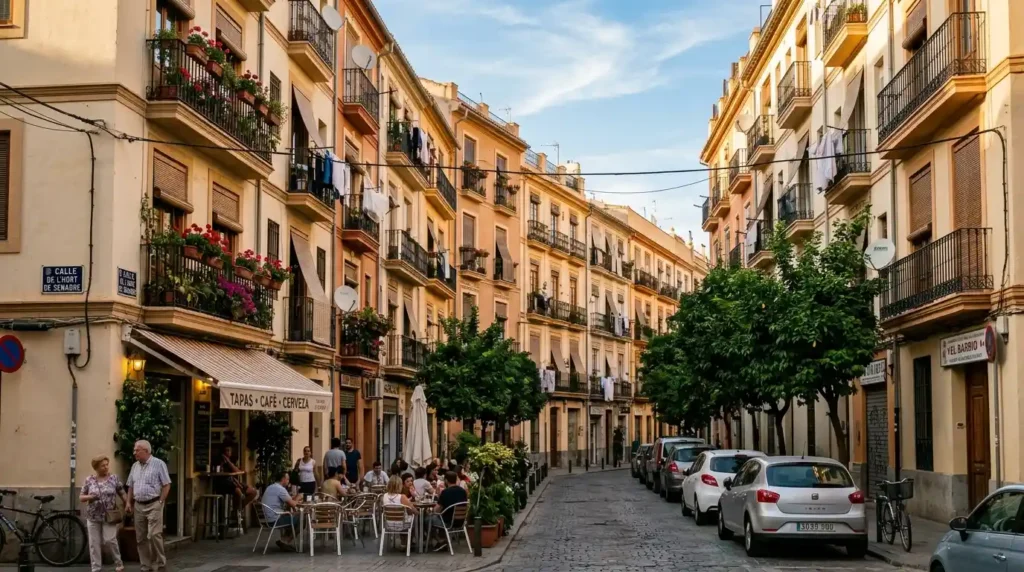
A colleague of mine spent three years saving for a flat in Valencia, watched the price climb the whole time she was saving, and ended up buying something smaller than she’d originally planned when she finally pulled the trigger last spring. That’s basically the story for a lot of middle class homes in Spain right now, prices pushed past the old 2007 bubble peak at some point in the last year or so, and wages just haven’t kept pace the same way, not even close in some cities. This piece breaks down what buying or renting actually looks like depending on where you land in Spain, based partly on market tracking and partly on what I’ve watched happen to people I actually know going through it.
What Counts as a Middle Class Home in Spain Right Now
Forget the old assumption that middle class meant a modest three-bedroom flat close to a city center, that math barely holds up anymore in Madrid or Barcelona specifically. Prices swing wildly depending on where you’re looking, which honestly is the whole point of this piece. My colleague’s Valencia experience sits somewhere in the middle of the national picture, not the cheapest city by a long shot, definitely not the worst either.
Madrid’s a different story entirely though, square meter prices there run well above what most of the country pays, closer to what you’d expect from a major European capital than a typical Spanish city. Somewhere like Jaén, meanwhile, a family earning a solid regional salary can still buy comfortably, that same salary barely covers a small flat outside Madrid’s center. I checked a few property tracking sites out of curiosity after my colleague’s purchase and the regional gap genuinely surprised me, it’s not a small difference, it’s closer to three or four times the price per square meter between the cheapest and priciest regions.
How Much Does a Middle Class Home Cost in Spain Today?
Depends entirely on the region honestly, that’s really the only honest short answer here. Nationally an average-sized home appreciated by tens of thousands of euros over the past year alone according to Idealista’s tracking, which is a genuinely startling jump if you’re trying to save toward a down payment the way my colleague was. Cheaper inland regions like Jaén or Cáceres still run at a fraction of what buyers face nationally, sometimes less than half, so the national average kind of obscures more than it reveals.
Where the Real Price Gaps Are
Regional variation isn’t a footnote here, it’s basically the whole story once you actually start comparing cities side by side. Prices climbed pretty much everywhere across Spain’s regions this past year according to recent tracking, though the pace and the starting point differ enormously depending on where you look. Coastal and island markets sit near the very top of that range, San Sebastián in particular has been running hotter than almost anywhere else in the country lately.
Barcelona and Madrid trail behind San Sebastián but still sit well above what most of the country pays, especially in central neighborhoods. Bilbao runs noticeably cheaper than either of those, and smaller inland cities drop further still. My colleague’s Valencia purchase landed her somewhere in the middle of all this, more affordable than Madrid for sure, but she told me the price still climbed fast enough during her search that she felt genuine pressure to just commit before it moved again.
Which Spanish Cities Are Still Affordable for Middle Class Buyers?
Jaén, Cáceres, and Ávila, if I had to name three off the top, remain some of the cheapest realistic options for anyone buying on an average income right now. A friend of a friend actually bought in Cáceres last year specifically because Madrid had priced her out entirely, and she said the difference in what her money bought was almost hard to believe at first. The obvious tradeoff is jobs though, fewer opportunities and a lot less international demand compared to the bigger coastal cities, which is exactly why prices stay lower there in the first place.
Mortgage Rates and What Buyers Are Actually Paying
Rates matter as much as the sale price for anyone financing a purchase, maybe more depending on how the numbers shake out. Spain’s official mortgage rate has been sitting a bit below the broader eurozone average through most of 2026, which is a modest but genuinely real advantage if you’re a resident buyer. Discounted fixed rates run lower still for people willing to bundle in extra products, insurance, direct deposit, that kind of thing, though the exact discount depends a lot on which bank you’re dealing with.
Non-residents face tighter terms across the board unfortunately. Loan-to-value caps drop noticeably for buyers from outside the EU compared to EU citizens, which forces a lot of foreign buyers to bring meaningfully more cash upfront than a Spanish resident would need for an identical property. I’ve heard this from a couple of British friends who bought here specifically, the LTV gap caught them off guard even after they’d done what they thought was thorough research beforehand.
Are Mortgage Rates in Spain Higher or Lower Than the Rest of Europe?
Spain’s been running slightly below the broader eurozone average for most of 2026, which is a small real advantage if you’re a resident. That said, non-residents don’t always feel the benefit the same way, since stricter loan-to-value limits and extra fees can quietly eat into whatever rate advantage exists on paper. My British friends mentioned above are a decent example, technically got a competitive rate, still ended up needing a much bigger deposit than they’d budgeted for.
Renting vs Buying for Middle Class Families
Renting isn’t necessarily the cheaper long-term option anymore, but it’s often the only realistic short-term one for a lot of people. A one-bedroom in central Madrid or Barcelona costs a genuinely significant chunk of a middle income salary, move slightly outside the center and it gets more manageable, though still not what most people would call cheap.
Smaller cities offer a lot more breathing room generally. My cousin rents in Nervión, a Sevilla neighborhood, and pays noticeably less for her two-bedroom than what she says a comparable Madrid studio would run her. Jaén rent sits even lower than that for a similarly sized place. It’s the same regional pattern as buying really, just shifted down a tier in absolute cost.
Is It Cheaper to Rent or Buy in Spain Right Now?
Buying builds equity long term, sure, but renting stays more accessible for anyone without a substantial deposit already saved, which is most people honestly. With mortgage rates sitting near 3% and prices climbing the way they have, monthly mortgage payments in the expensive cities often end up exceeding comparable rent, at least in those first few years of ownership before you’ve built real equity. The math tilts back toward buying mainly in the cheaper inland regions where prices simply haven’t climbed as sharply as everywhere else.
Affordable Housing Programs Worth Knowing About
Spain’s regional governments have been pushing affordable housing initiatives, though availability varies a lot depending on which autonomous community you’re actually in. Andalusia’s been fairly active here recently, allocating land across several provinces with real capacity behind it, Cádiz especially, alongside smaller allocations spread across Huelva, Granada, and Seville.
These programs usually get labeled VPO housing locally, and they come with income caps and resale restrictions, so they’re not accessible to just anyone who wants in. Still, for middle class families who actually qualify, they can mean paying meaningfully below market rate for a comparable property. Availability moves fast though from what I’ve read, and waiting lists in the popular regions can apparently stretch well beyond a year before anything opens up.
Conclusion
Middle class homes in Spain look completely different depending on which city you’re actually comparing, that’s really the core takeaway here. Madrid and the coastal hotspots have priced out a lot of average earners at this point, while inland regions like Jaén and Cáceres still offer something close to what affordable used to mean nationally not that long ago. Mortgage rates hovering near 3%, regional price gaps stretching far wider than most people expect, rents climbing steadily almost everywhere, it all points toward the same basic conclusion. Location matters more than almost anything else in this market right now, more than income, more than timing, more than most other single factor you could name.
Frequently Asked Questions
How much has the price of homes in Spain increased recently?
Nationally, prices rose noticeably year over year as of mid-2026, based on tracking through sources like Idealista. Some individual cities and regions saw sharper increases still, particularly along the coast and on the islands.
What is the average mortgage rate in Spain in 2026?
Spain’s official rate has been sitting a touch below the broader eurozone average through most of the year. Discounted fixed rates for residents can run meaningfully lower, depending heavily on the lender and how many extra products a buyer agrees to bundle in.
Which Spanish region is cheapest for middle class families to buy a home?
Jaén and Cáceres remain among the most affordable options right now, running at a fraction of what buyers face in Madrid or the coastal markets. Fewer job opportunities and much less international demand explain a good chunk of that price gap.
Is it better to rent or buy a home in Spain right now?
Buying builds equity over time but requires a bigger upfront commitment given where mortgage rates currently sit. Renting remains the more accessible option short-term, especially in the expensive cities where monthly mortgage costs can genuinely exceed comparable rent.
