

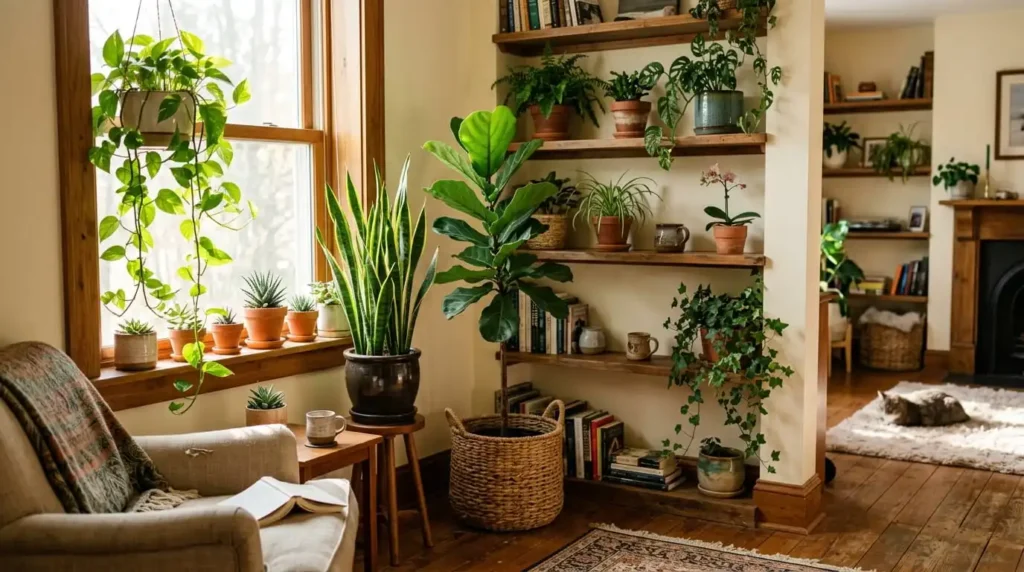
As a kid, I didn’t have a green thumb at all, and quite frankly, I wouldn’t even have one without the pandemic. The early plants I bought quickly began to wilt they would lose their leaves soon after arriving home from the store. Overwatering and a lack of research resulted in poor outcomes. However, finally, it was through getting to know the plants and providing them with what they require that I was successful. Currently, I have created a jungle of good energy, beautiful aesthetics, and pure air in my place .These plants do not only enhance the looks of my apartment but also bring life to the places where I keep them. As per certain studies, indoor plants serve both physical and psychological purposes for the people who own them. The humans have a need to relate to nature, and these plants enable them to do so.
They increase productivity, purify indoor air, and even provide assistance to horticultural therapists to cure people with mental disorders. NASA discovered through one study that the roots and soil can break down dangerous compounds such as formaldehyde, benzene, xylene, ammonia, and trichloroethylene, which are present in most houses. Hence, air-purifying plants become very useful rather than just being beautiful. A study published by the Journal of Physiological Anthropology found out that dealing with plants decreases heart rate and blood pressure.
The participants were relaxed, calmed, and even reduced their levels of physiological stress through contact with indoor potted plants. Employees working in workplaces where there were natural elements enjoyed greater job satisfaction, fewer sick days off from work, and greater productivity, according to research done on this topic. It was discovered that individuals were able to perform tasks much quicker (by 12 percent) where there were more greens and natural lighting. It is worth mentioning that hospital stays got shorter and patients used less pain medications where there were plants present.
Best Indoor Plants for Beginners
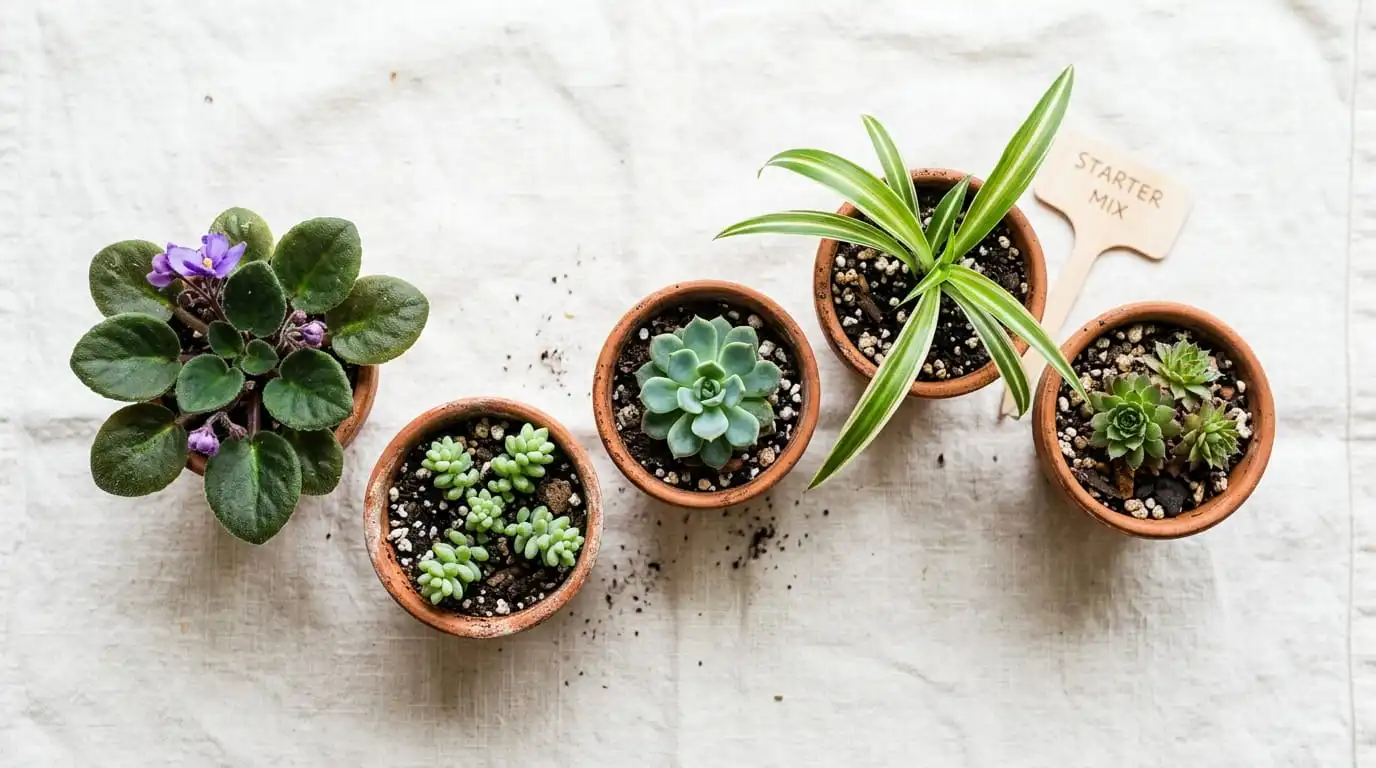
Starting out on your path to growing plants indoors is simple because you don’t need a pro to help you out; all it requires is choosing the perfect plant for your indoor gardening efforts. You will want to start with easy-to-care-for plants, those that require minimum care and are happy to live whether there is sunlight or not. Succulents such as echeveria and hens and chicks are perfect choices for the ever-migratory tenants.
Do not overwater your succulents as root rot will be more deadly to your plants than anything else you do to them. The spider plant or Chlorophytum comosum, as its scientific name is, is a plant that is super easy to grow when you live in an apartment. This spider-like plant does fantastically in indirect sunlight while making new spiders from its runners.
Also known as the African violet, Saintpaulia comes with a lovely color mix of pink and purple colors, flowering throughout the year. It should always be kept moist but not wet, with bright but indirect sunlight. Another easy-to-propagate plant is the friendship plant, otherwise known as Pilea involucrata. The plant requires a moderate amount of low sunlight, grows up to 12 inches tall, and grows well in moist soil.
With the inclusion of a humidifier, the velvet plant will grow in optimal humidity levels. The ZZ plant, whose scientific name is Zamioculcas zamiifolia, is difficult to kill because its semi-succulent stems are covered in wax, which retains water. It can thrive even under low lighting and adverse weather.
Best Indoor Plants for Low Light Apartments
Being in an apartment setting that lacks adequate window space does not make it impossible to grow gorgeous indoor plants. There are plenty of houseplants that actually do well in low light conditions and would therefore be perfect for growing in the city jungle of today’s world. Chinese evergreen, which is otherwise called Aglaonema, grows excellently in low light conditions and requires little attention. This plant requires fertilizer twice annually, watering whenever necessary, and placement on the table or planter.
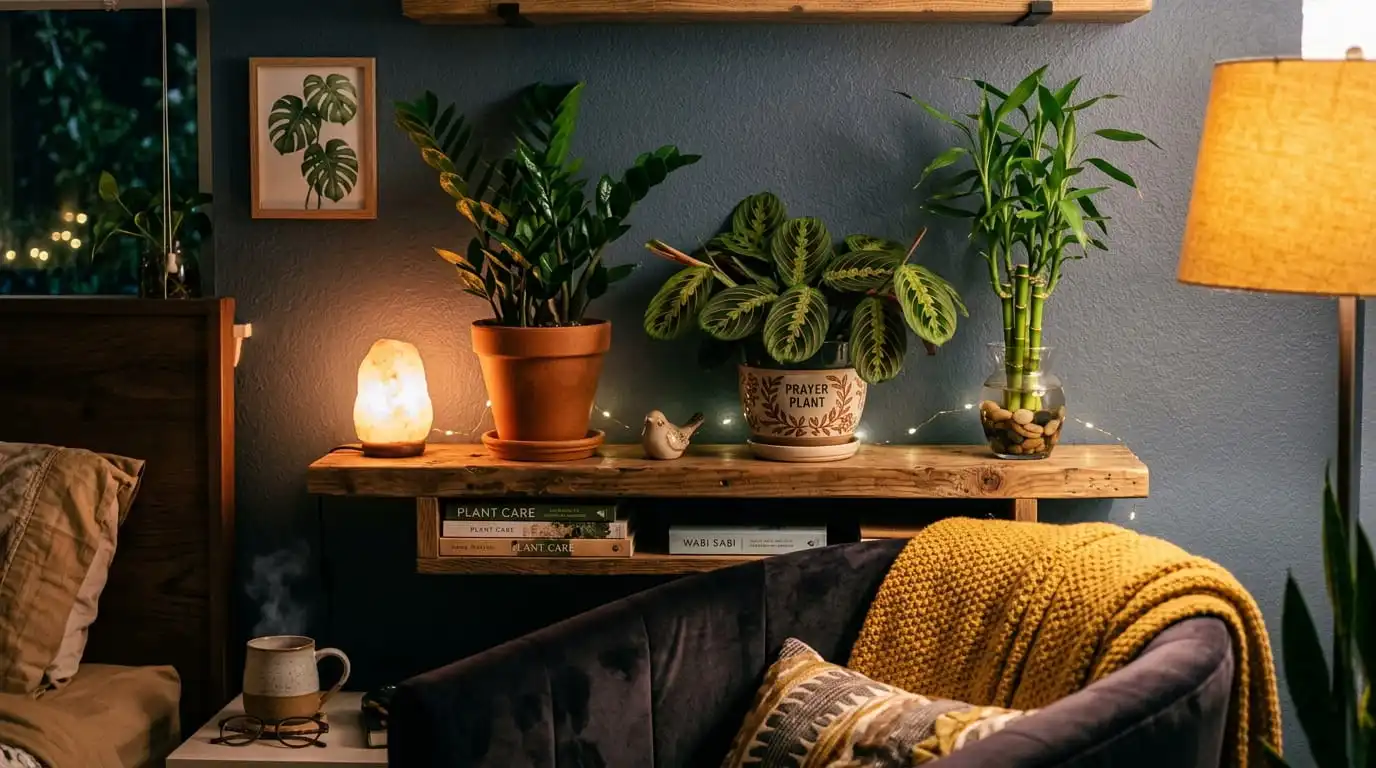
Lucky Bamboo is a type of plant that you can maintain either in water or in soil, depending on how your interior decoration style would allow. The praying plant whose scientific name is Maranta leuconeura grows up to a maximum height of 10-12 inches and prefers dim light condition. Praying plant folds the shiny dark green leaves of the plant into praying position every night, which is an interesting biological behavior.
The parlor palm or Chamaedorea elegans is a type of plant that can reach a height of about six feet. It has bamboo-like stems, which make it very attractive. Parlor palm thrives in dim light condition, and thus you will need to water the plant only once in a week or two. You should plant parlor palm in your living room because it is an outstanding plant to decorate your place of residence. Rabbit foot fern or Davallia griffithiana is among the most recent hanging plants.
Best Indoor Plants for Small Spaces
When talking about decorating an enclosed area, one should think of something that can provide a big statement without taking much space. One such type of plant is the zebra plant (Aphelandra squarrosa) with its striped appearance and dark green shiny foliage with hints of tropical nature. Zebra plants grow to a height of less than two feet in well-draining soil.
The plant needs adequate sunlight but should not be exposed to direct sun rays. It can be watered once the soil gets dry. The stem is long and can grow up to three feet in length, although the plant is easy to prune since it is a creeper. The polka dots give life to the house with its colorful appearance. This plant requires bright indirect lighting and moisture in the soil for it to display its best qualities.
Watermelon peperomia (Peperomia argyreia) is a neat plant choice for those who seek architectural plants instead of flowing ones.
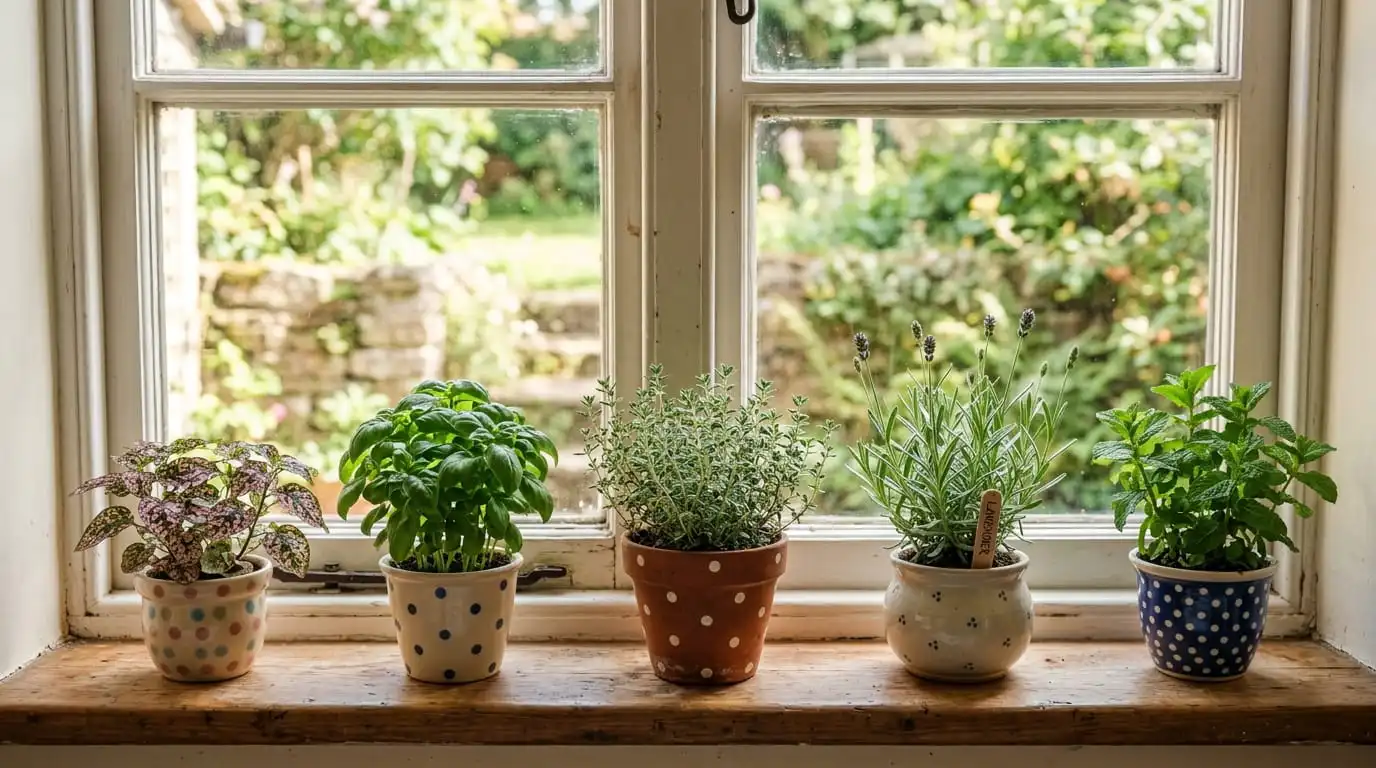
The pink polka dot plant (Hypoestes phyllostachya) remains short and does well in either a terrarium or greenhouse environment. Alocasia Tiny Dancer has long slender stalks which elegantly move around and reach a height of almost two feet in perfect circumstances. The geogenanthus or purple geo plant has very large glossy round leaves that have an amazing purple coloring.
Indoor Plants That Clean Your Air
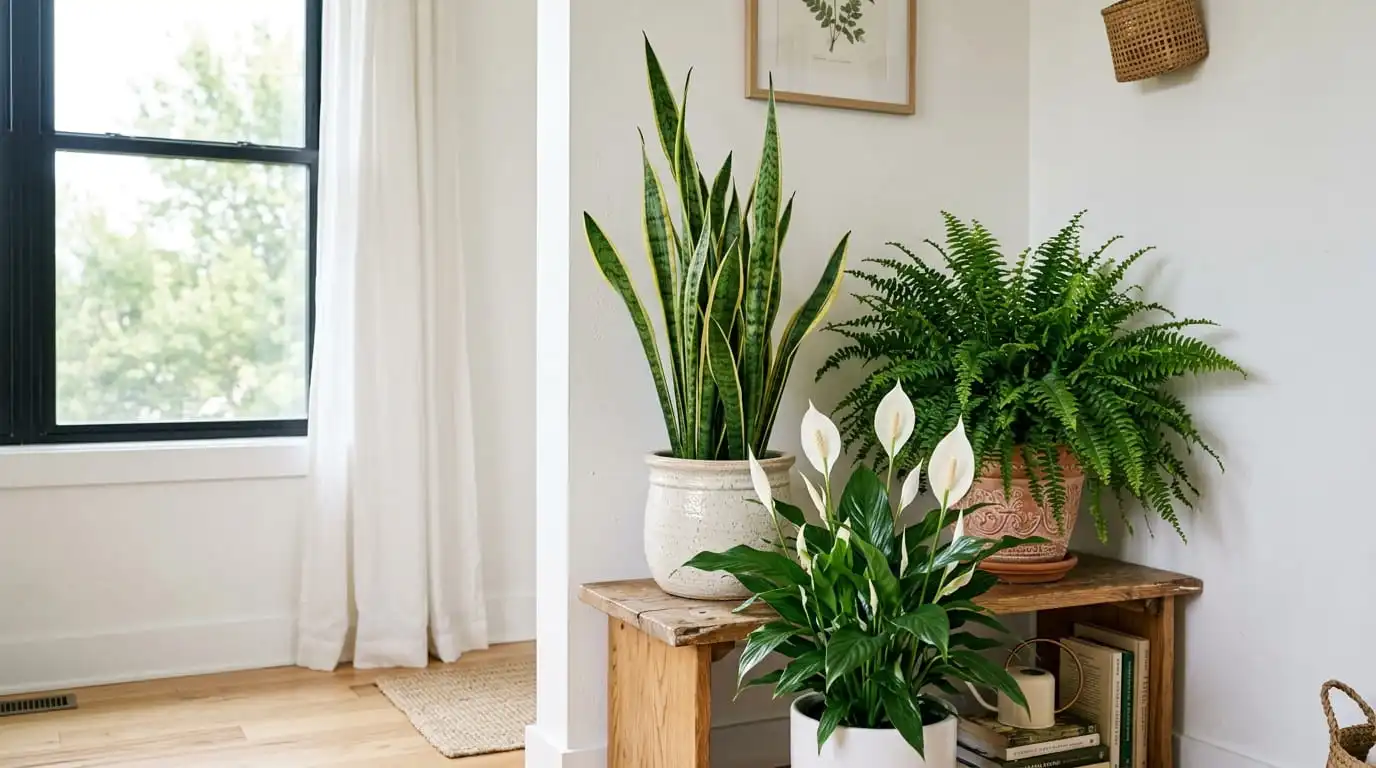
One of the best aspects of having indoor plants is that these plants have been scientifically proven to purify the air in a natural manner. By means of a process called phytoremediation, the roots and soil serve as biological filters and eliminate any airborne toxins present in your home. Snake plant, known by its scientific name Sansevieria, has the capability of filtering out formaldehyde, benzene, and xylene, and it does so under low-light conditions at night time. Mother-in-Law’s Tongue is yet another popular air-purifying plant known by its other name Sansevieria.
Areca palm, lady palm, dwarf date palm, and bamboo palm are all wonderful indoor air purifiers through nature. Rubber plant (Ficus elastica) has glossy green leaves that act as natural air cleaners by absorbing nutrients from indoor air. The English ivy (Hedera helix) is a climbing plant used as an effective natural cleaner of indoor air pollutants. Peace lily (Spathiphyllum) is a flowering plant with white spathes.
The Dieffenbachia is a great natural indoor air purifier and can add beauty to your kitchen and bathroom interiors in a beautiful way. Similarly, the Monstera Deliciosa that has holed leaves can greatly help improve indoor air quality too. Both the Ficus tree as well as Ficus lyrata make for great additions as well.
Health Benefits of Indoor Plants
Plants do far more than decorate science confirms they deliver measurable health benefits to people every day. Studies involving 440 employees and 23 participants across India, United States, Manchester, and England proved this conclusively. In actuality, real plants at workplaces have helped minimize work-related stress levels and increased creativity and concentration levels among the employees. The autonomic nervous system reacts positively to the presence of greenery, and studies reveal that people’s attention level goes up when they are in the proximity of plants.
Horticulture therapy has proven to be effective in treating many mental conditions and assisting patients in dealing with anxiety disorders, depression, and even dementia. In hospitals, patients undergoing surgery required fewer amounts of painkillers and recovered faster in the presence of plants. Gardening and replanting is considered a scientifically-proven form of therapy and has a calming effect on the mind irrespective of the age group of a person.
Allergens such as pollen and moisture from molds and fungi are a result of overwatering, meaning it is vital to have effective drainage. Pest infestation, fungus gnats, and mold formation through the use of insects can be easily managed as long as there is good control over soil moisture. Webbing on the leaves, holes, and eggs are indicative of the presence of pests which should be taken care of immediately because they will spread throughout the entire garden.
Growing Herbs and Edible Plants Indoors
If you have your own herbs at home through gardening, you won’t have to keep going back to the grocery store every time you want some fresh taste. Gardening is a big benefit for those who love cooking and having their own herbs inside their kitchen. There are some herbs that grow well in areas where there’s high heat, like basil, which needs full sunlight and water in its soil. Some herbs prefer being near windows facing south, like lavender, which also grows well under artificial lights.
Allow it to become slightly dry between each watering to enjoy the maximum aroma. Thyme is the easiest herb to grow in your garden because thyme thrives on sunlight, drainage soil, and fertilization twice a week. The herb Oregano is very much heat loving and needs six to eight hours of sunlight. It likes being a little dry in between waterings. Plant your oregano near the south window to ensure sufficient sunlight.
The herb cilantro needs four to five hours of sunlight, while catnip needs five hours of sunlight and proper moisture. All these herbs are absolutely necessary in adding life and utility to your place all through the growing season.
Plants to Avoid If You Have Pets
It does not mean that all lovely looking plants are harmless for inquisitive cats and dogs which would roam around your apartment all the time. There are quite a lot of very popular indoor plants which are highly poisonous to pets and thus need to be kept away from your house. For example, aloe Vera which is a medicinal herb due to its healing properties when it comes to burn and skin irritations. However, pothos or Devil’s Ivy, a wonderful trailing plant, can be harmful to cats and dogs.
The most important thing to keep away from is sago palm, poinsettia, mistletoe, jonquil, chrysanthemum, cyclamen, azalea, and amaryllis. Also, English ivy, philodendron, monstera deliciosa, and dieffenbachia are poisonous house plants to be kept away from if you have pets running in the house. It will be better for you to check the ASPCA list of poisonous plants before bringing any new plant into your indoor garden. Another few plants include Raven ZZ plant, asparagus fern, and string of hearts that one must check the toxicity level before bringing them into your garden.
If you have pets at home, like cats and dogs, then it is recommended that you grow safe plants like spider plants, African violets, and Boston ferns. Some other easy-to-grow plants for your pets are lucky bamboo, friendship plant, and parlor palm.
Conclusion
I never imagined that having plants indoors would transform the ambience of my house. There is something quite profound about opening your eyes each day and being surrounded by life and greenery. Indoor plants do much more than decorate a room. They purify your air, soothe your soul, and help nature come inside with you. It does not matter whether it is a succulent or a parlor palm; any plant adds value.. The journey with indoor plants is personal, imperfect, and honestly a lot of fun along the way.
Frequently Asked Questions (FAQ’s)
Spider plants, African violets, friendship plants, succulents, and ZZ plants are good beginner options because they can handle common indoor conditions with relatively simple care. Choosing a plant that matches your available light is usually more important than choosing one based on appearance alone.
Neither is automatically better; the right choice depends on the natural light in your home. Chinese evergreen, prayer plant, and parlor palm suit dimmer rooms, while many herbs and other indoor plants perform better with stronger light.
Check the soil before watering and make sure excess moisture can drain away instead of collecting around the roots. Good moisture control also helps reduce root problems, mold, fungus gnats, and other issues linked with overly wet soil.
Compact plants such as zebra plants, watermelon peperomia, pink polka dot plants, and Alocasia Tiny Dancer can add greenery without taking over a small room. Their manageable size makes them practical for shelves, tables, terrariums, and other limited spaces.
Spider plants, African violets, Boston ferns, friendship plants, and parlor palms are presented in the article as safer choices for homes with cats or dogs. Plants such as pothos, sago palm, philodendron, monstera, and dieffenbachia should be checked carefully for toxicity before bringing them into a pet-friendly home.

12 thoughts on “Indoor Plants: The Complete Guide to Growing Green at Home”