

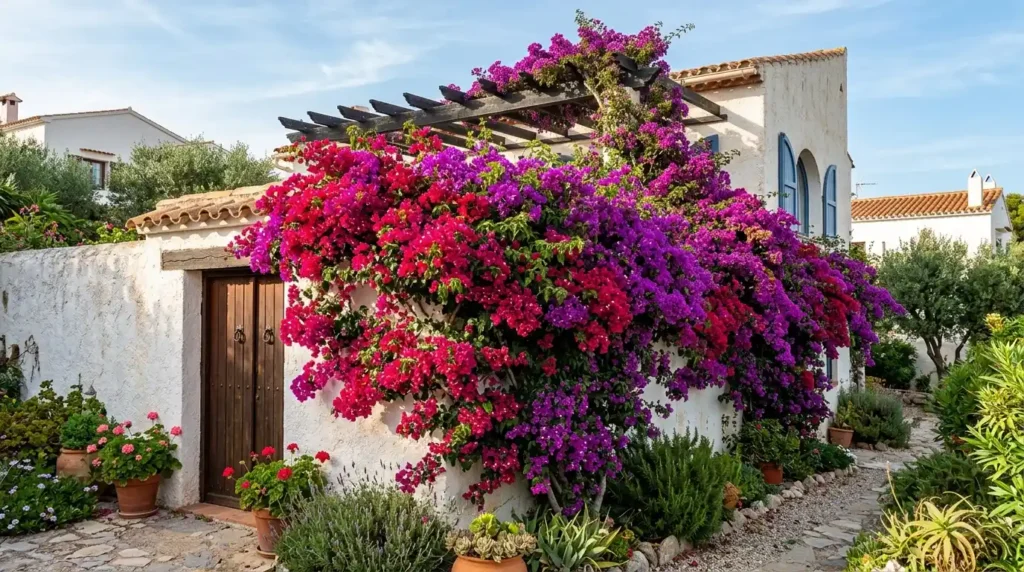
Have you ever driven along the coast of California, explored the landscape of the Mediterranean region, or visited a tropical greenhouse in the middle of the English winter? If so, then there is a good chance that the stunning bougainvillea plant caught your eye. This is because of its incredible vibrancy.
Walls of magenta flowers, vines of deep purple, or cascades of scarlet red falling over a wall or archway. All of this is achieved without the need for coaxing. It simply demands attention. And despite its spectacular appearance, it requires very little effort on the part of the gardener once established.
What Is a Bougainvillea Plant
Bougainvillea comprises a genus of spiny flowering plants that include vines, shrubs, and trees of the family Nyctaginaceae. They are indigenous to South America. Where they are found in Mexico, Brazil, Bolivia, Paraguay, Peru, and Argentina. And they belong to the order Caryophyllales. The plants are grouped under the categories Tracheophytes, Angiosperms, and Eudicots.
The genus was named after French Navy admiral and explorer Louis Antoine de Bougainville. Who was born in 1729 and died in 1811. The first record of the plant appeared through Philibert Commerçon, a botanist, on Bougainville’s circumnavigation journey. Which was published in 1789 by Antoine Laurent de Jussieu. The name of the genus Bougainvillea was established in the Index Kewensis in the 1930s.
What Most People Think They Look Like
The actual flowers of this plant are rather inconspicuous compared to what most people think they look like. They are usually very small, normally white, and are relatively unnoticeable. However, surrounding them are brightly colored sepals-like bracts arranged in clusters of three or six depending on the species. Their colors range from shades of pink, magenta, purple, red, orange, white, yellow, to burgundy.
The brightly colored sepals-like bracts are what make bougainvillea one of the most recognizable ornamental plants. Bougainvillea glabra is often referred to as paper flower since its bracts are exceptionally paper-like.
Plants Range In Size
The plants range in size from 1 to 12 metres high or 3 to 39 feet scrambling on other objects by way of sharp thorns. The foliage is alternately arranged. Simple leaves of ovate-acuminate shape that are 4 to 13 cm long and 2 to 6 cm wide. The fruits are elongated, five-lobed achene. If growing in places where there is continuous rainfall, then the species remain green or perennial.
However, if they grow in environments with a dry period, then the plant becomes deciduous or loses its leaves in the dry season. Presently, more than 300 varieties are found that include double flowers or variegated types as a result of centuries of cross-breeding of South American plants.
Quick Facts
Bougainvillea is an evergreen climbing plant that flowers between summer and autumn in most temperate areas and throughout the year in tropical zones. Spring is the best period for planting. Established plants grow to heights of 4 to 8 metres or 13 to 26 feet with a spread of 1 to 1.5 metres. It needs a sunny position with some shading during the middle of summer when kept under glass.
This plant is half hardy, requiring a warm glasshouse or frost-free condition in winter in the UK; however, it can be cultivated outdoors during the summer season. The night temperature in a frost-free condition must not fall below 4°C or 39°F.
Bougainvillea Plant Varieties and Colors
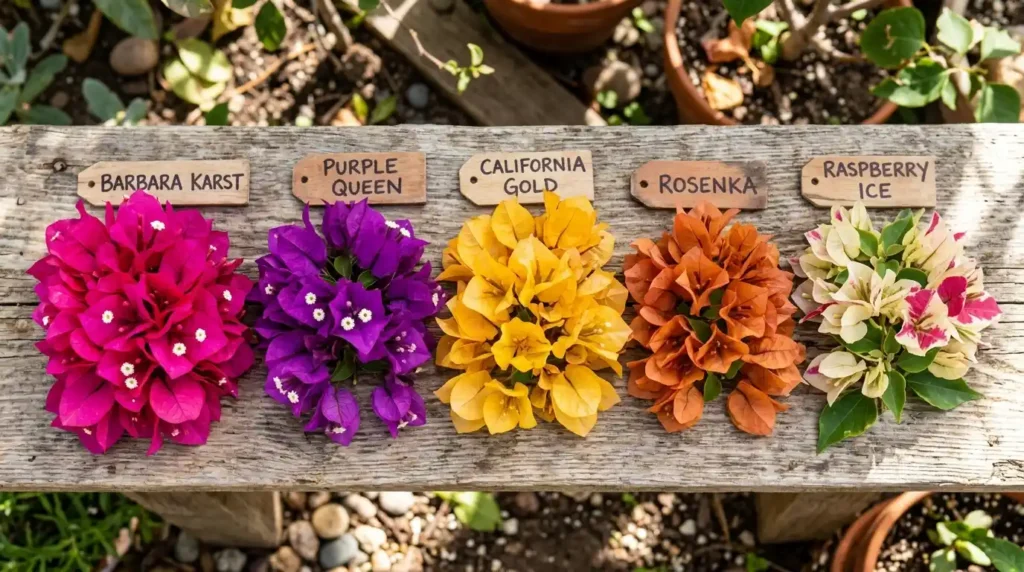
There is truly an overwhelming selection available. Some of the favorites include Barbara Karst for their bright red or crimson hues. Another popular option includes the Purple Queen which offers deep imperial purple bracts. The James Walker has a striking reddish purple and fuchsia hue. Both California Gold and Gold Rush have offered golden yellow bracts.
Rosenka comes in a rich copper orange and peach color. The Double Pink is just as the name suggests with double-flowers and layers of bracts. Raspberry Ice features variegated leaves with cream colored edges and vibrant cerise bracts. The Torch Glow has an upright column shape that would be perfect for tight areas. The San Diego Red offers scarlet red bracts and was awarded the Royal Horticultural Society’s Award of Garden Merit.
One of the most popular hybrids developed from this genus is Bougainvillea × buttiana, created by crossing B. glabra and B. peruviana. Some of these include Poulton’s Special with its magenta-rose bracts and African Sunset with its large bright orange bracts.
Bougainvillea Plant Care and Growing Conditions
The secret of growing a bougainvillea successfully lies in providing plants with their basic requirements, rather than your guesses on the needs of a tropical plant. The bottom line is that this is a full-sun, low-water, high-temperature plant that flowers better under slight stress than pampering.
Sunlight is a must for this species, which requires a minimum of 6 hours per day and grows best in USDA Hardiness Zones 9-11. For UK climate, it requires a sunny site and winter protection from frost. This species thrives in the warm, subtropical, and Mediterranean climates.
For healthy development, soil must be well-drained and slightly acidic, with a preferred pH of 5.5 to 6.0. It can adapt to loam and sand soils, but not to clay or waterlogged sites. Good drainage is essential for healthy plant growth. Root rot due to excessive watering or bad drainage is one of the leading causes of death of bougainvillea.
How to Plant Bougainvillea
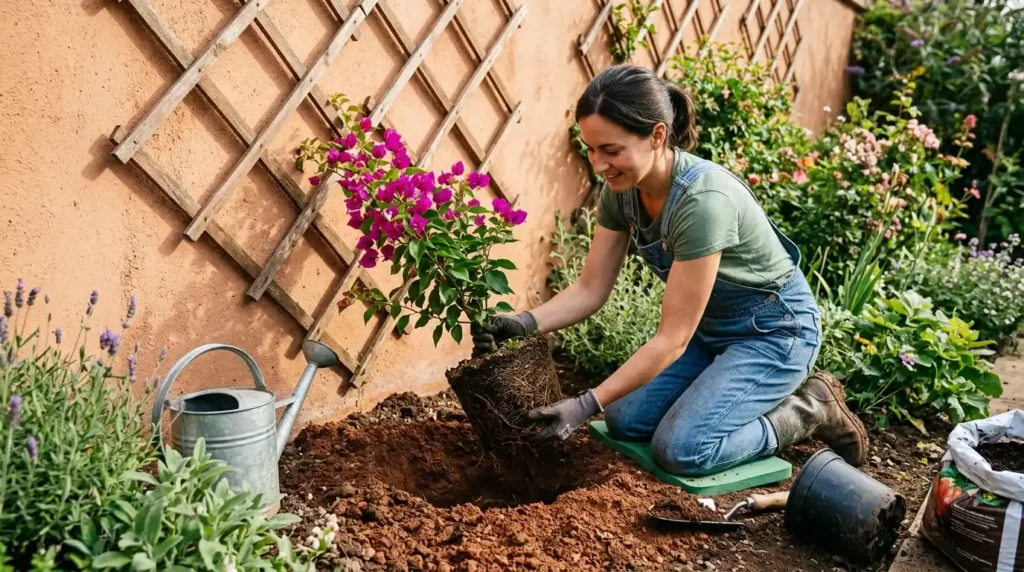
However, location choice becomes much more important for bougainvillea compared to most other plants. Choose a site near the south or western wall which will provide the plant maximum access to sunlight. Dig a planting hole twice as wide as the root ball but equally deep. Add soil and compost mix to the planting hole, press firmly on top of it, then water it abundantly immediately after planting.
Due to its dislike of root disturbance, bougainvillea needs an undisturbed root ball while transplanting. Minimum handling of the root ball when planting the shrub will yield positive results regarding its fast adaptation and growth. As far as container planting is concerned, choose a terracotta pot with good drainage holes and use peat-free loam compost such as John Innes 3 enriched with a slow-release fertilizer at the bottom.
The plant requires spacing between one and two meters in case you are planting several specimens as hedges or walls. Spring is the right season to plant bougainvillea after the last frosts when soil becomes warm enough.
Watering Bougainvillea
One of the vital aspects in caring for bougainvillea that gardeners must know is that dryness stress stimulates flowering. It is not a species that thrives with constant moisture. Deep and infrequent watering should be used from spring to summer, where once weekly irrigation is ideal in mild climate, while twice weekly watering works well for periods of heat.
The best way to determine whether to water the plants is by checking moisture in the top 2 inches of soil using the finger test. Only if dry should watering be applied. If the soil is moist, then it is better to hold off on watering. Plants grown in containers dry out fast and need more frequent care. Ensure excess water from saucers is drained away to avoid wet feet. During fall, less frequent irrigation should be carried out. Watering will occur less often but more deeply in winter.
Avoid spraying leaves directly to avoid fungal diseases. In the conservatory, enough humidity should be maintained for indoor species via a pebble tray or humidity tray.
Fertilizing Bougainvillea
The bougainvillea’s nutrition requirement varies according to its stage during different seasons. As soon as early spring starts, and the plant is just beginning its vegetative growth, it needs a weekly supply of a high-nitrogen liquid fertilizer. The plant then develops its shoots and leaves, which is its vegetative leafy growth stage.
As the bracts turn into their colorful form, it will require a high potash fertilizer and high phosphorous, a bloom boosting nutrient. This nutrient should contain the NPK composition of 6-8-10. The balanced plant food, which contains the 10-10-10 NPK, works well in feeding border plants throughout their growing season.
It should be fed monthly, although overfeeding of nutrients such as excess nitrogen will result in vegetative growth, which is not ideal as it hinders flower formation. Lack of certain micronutrients such as iron and magnesium causes chlorosis, which presents itself by yellowing leaves. These should be sprayed on to prevent them from spreading. Controlled-release fertilizers, such as Osmocote, can be used to fertilize container-grown bougainvilleas. Stop supplying nutrients altogether from the fall until winter ends to begin again in February or March.
Pruning Bougainvillea
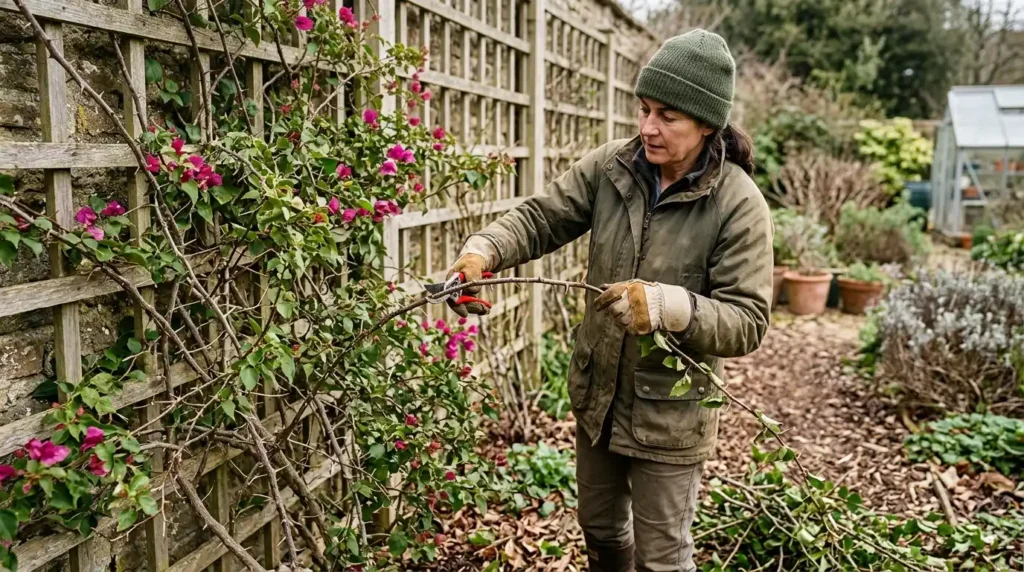
Pruning should be done at the end of winter or beginning of spring prior to the new growth coming out. Prune using sharp secateurs making sure to make clean cuts so that the risk of diseases being introduced via the wounds is minimized. Deadwood, crossing branches, and weak growth should be removed to allow better access within the plant and improved air flow.
At the beginning of the growing season, vigorous side shoots should be bent downward and secured rather than being pruned away. The restriction of growth is the key to encouraging bract production. This is perhaps one of the most unconventional yet most reliable ways to get more flowers. When the bracts have all dropped, cut back the long shoots by about half to promote a second wave of bracts towards the end of the summer.
Bougainvilleas are suitable for use in walls, fans, espaliers, standards, and scrambling on pillars and trellises. For limiting the growth of the plant, spur pruning works efficiently, especially for pot-bound plants. Wearing gloves while handling the plants is highly recommended due to the presence of thorns and the sap that causes skin irritation like that of toxicodendrons.
The plant can be rejuvenated by hard pruning, although very old plants should be removed completely.
Propagation
Propagation through semi-ripe cuttings with a heel in summer is one of the easiest ways for the homeowner gardener. The process takes between four to six weeks in usual circumstances, but when you provide bottom heat around 15°C or 50°F, rooting will occur much quicker. The hardwood cutting propagated in deep pots in winter requires bottom heat of 3 to 6°C above the air temperature and can take up to three months to root. Propagation using tip cuttings is also a viable option for many cultivars.
Layering at the end of winter or beginning of spring is, in my opinion, the most efficient way of propagating hydrangeas. Plants grown through layering typically start flowering within two to three years. All forms of propagation should be accompanied by a warm and humid environment while rooting.
Overwintering Bougainvillea
Bougainvilleas are intolerant to frosts. While it can survive outside in zones 9b to 10 all year long, in colder areas it needs to be moved inside prior to the first frost. A cool glasshouse, conservatory, or any frost-free area with temperatures above 10°C (50°F) is ideal, although the plant can handle temperatures as low as 4°C (39°F) if the compost remains relatively dry.
Watering should be reduced after planting. Loss of leaves during the dormant period of winter is perfectly natural and there’s nothing to worry about. The plant should be kept in well-lighted areas but far from heating outlets which would provide overly dry atmosphere. From October until Christmas, the plant will require infrequent watering but thorough watering should be carried out when required.
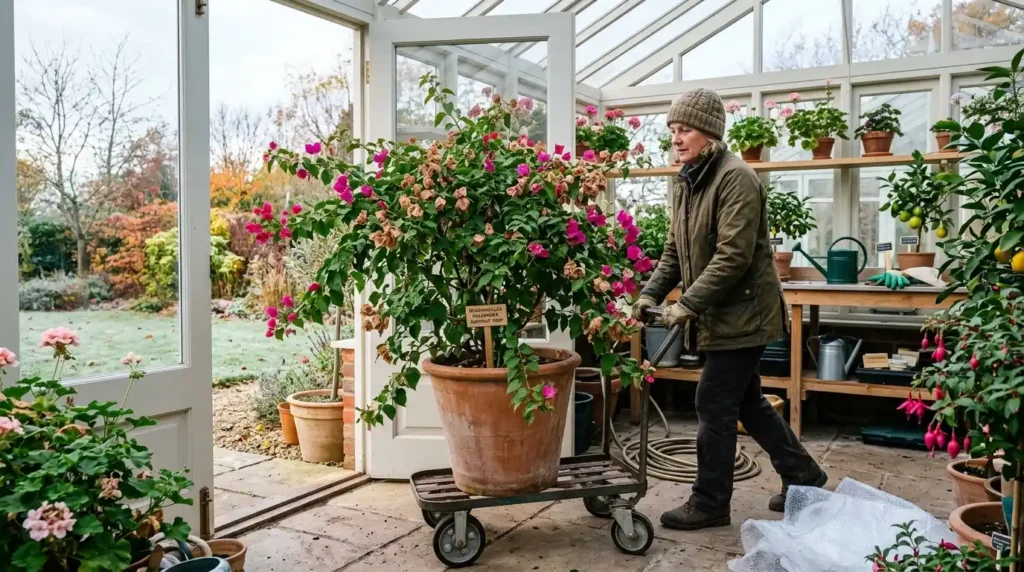
From February onwards and with an increased availability of light and higher temperatures, the growing process will begin again. This means gradual increase in watering, possibly replacing the plant into a new compost, and feeding the plant. Plants which can be brought outside following the last frost should be acclimatized for at least a week before placing them directly under the sun.
The protective measures include the use of horticultural fleece, wrapping in bubble wrap, cold frames and warm greenhouses.
Pests and Diseases
The bougainvillea is generally resistant to pests when cultivated healthily, although it may attract whitefly, mealybugs, aphids, and red spider mite, which are common pests in greenhouses. The snail and worm might also damage the plant at soil level. Some species of the Lepidoptera group use the bougainvillea as their food source. Scale insects, thrips, and caterpillars are rarer pests.
Management may be done through insecticidal soap, neem oil, systemic insecticides, or biological control methods involving the use of beneficial insects such as ladybugs and lacewings. The preventive measures are always better than the curative measures since the former involves adequate ventilation and air circulation and not watering the leaves directly.
The most prevalent diseases include root rot due to excessive watering as well as fungal infections such as grey mold, botrytis, powdery mildew, and leaf spot. New plants should be quarantined before introducing them to the already existing collection and inspect them regularly for prompt action.
As for the non-flowering plants, pruning the mature plants in May and exposing them to low temperatures may encourage flowering.
Bougainvillea as a Houseplant and in Landscape Design
However, when cultivated indoors, this plant may prove difficult but is certainly possible due to the fact that light becomes the most important requirement. Growing a bougainvillea plant in the window sill which faces the south side with minimum six hours of sunlight exposure, maintaining temperatures between 18 to 24°C and providing a dormant stage during winter with less irrigation and fertilization ensures success. Dwarf bougainvillea and Torch Glow can be easily grown indoors and are suitable for bonsai.
In the garden setting, the bougainvillea adorns walls, pergolas, archways, and fences with vibrant colors. The bougainvillea can be grown in any garden type, be it tropical garden, Mediterranean garden, or coastal garden. This plant is suitable for drought landscaping, privacy screening, soil stabilization in sloped areas, and for its aesthetic value.
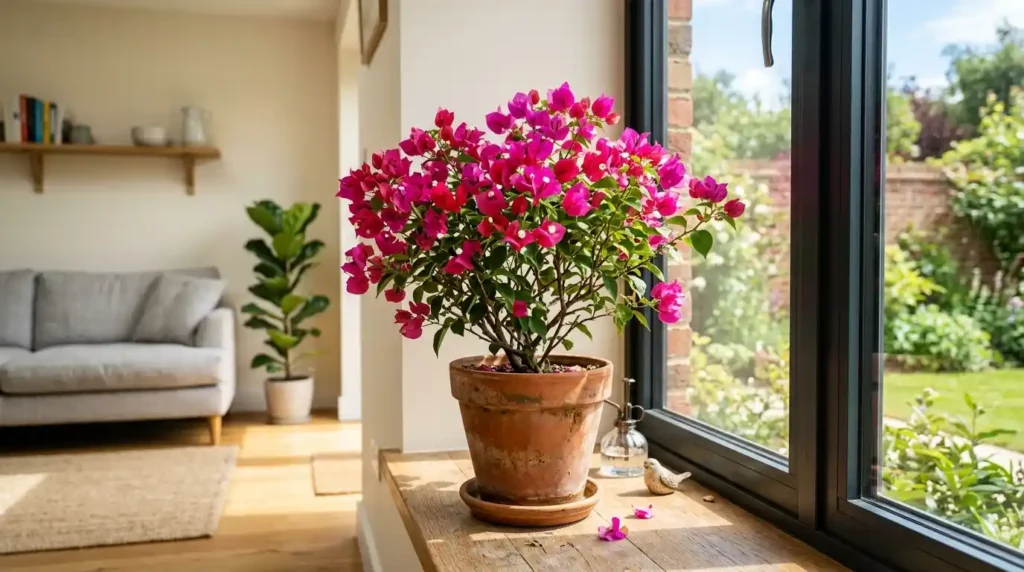
The blooming period can be from four to six weeks depending on the number of flowering periods within a planting season. In some cases, the flowers continue throughout the year in equatorial environments. The bougainvillea works well with lavender, salvia, agapanthus, and ornamental grasses when used in mixed plantings.
Apart from being beautiful, the bougainvillea is the national flower of Grenada and the city flower of Shenzhen, Ipoh in Malaysia, and cities in Taiwan. Bougainvillea has been found to have anti-inflammatory properties, antidiabetic properties, antifever properties, and respiratory effects due to the presence of antioxidant polyphenolic compounds and flavonoids, according to scientific research conducted in Brazil, Mexico, and South America. In terms of its tough and vibrant nature, it is surprising how low its demands from growers are.
Conclusion
This is a plant that will pay off once you know how it works. This particular plant does not need frequent watering nor wet ground. It needs lots of sun, good drainage, occasional yet thorough watering and fertilizing. This plant produces one of the most spectacular colored flowers that can be seen in gardens or conservatories.
Yet, what makes the bougainvillea stand out from the rest of the climbers is not its looks alone. What this particular flower can withstand is dry weather and soil saturated with salt – anything less hardy would not be able to live under such conditions. Moreover, this plant is one of the fastest-growing ones on the planet and in a matter of days it will cover your bare wall. With 300 different varieties of this amazing plant including such varieties like blazing red San Diego Red, glowing yellow California Gold, and unusual cream-cerise Raspberry Ice, everyone can find their favorite!
Irrespective of whether you are cultivating it to climb vigorously on a wall within your tropical garden, training it into a standard plant in your flower bed within the conservatory, growing it only in a small pot made of terracotta under your deck that gets plenty of sunlight, or simply nurturing it via the art of bonsai cultivation inside your home, everything remains more or less the same. Provide it with adequate sunlight, understand its tolerance for water, prune it well to develop its paper-like bracts, and prevent it from freezing, and bougainvillea will shower its beautiful flowers on you for many years to come.
Frequently Asked Questions (FAQ’s)
Bougainvillea is a thorny flowering plant native to South America that can grow as a vine, shrub, or small tree. The bright pink, purple, red, orange, or white parts are bracts surrounding the plant’s much smaller, usually white flowers.
Growing bougainvillea in the ground works well in warm, frost-free climates, while containers are more practical in colder areas because the plant can be moved indoors for winter. Pots should have excellent drainage because bougainvillea does not tolerate waterlogged soil.
Water bougainvillea deeply but allow the upper soil to dry before watering again. Established plants generally prefer slightly dry conditions, while container-grown plants may need more frequent watering because pots lose moisture faster.
The main pruning is best done in late winter or early spring before new growth begins. After the first display of bracts fades, cutting long shoots back can also encourage another flowering period later in the season.
Yes, but it needs plenty of direct sunlight and protection from frost. In colder climates, growing it in a container makes overwintering easier, while indoor plants perform best near a bright south-facing window with reduced watering during winter.

1 thought on “Bougainvillea Plant by Middle Class Homes: The Complete Guide to Growing, Caring and Enjoying”