

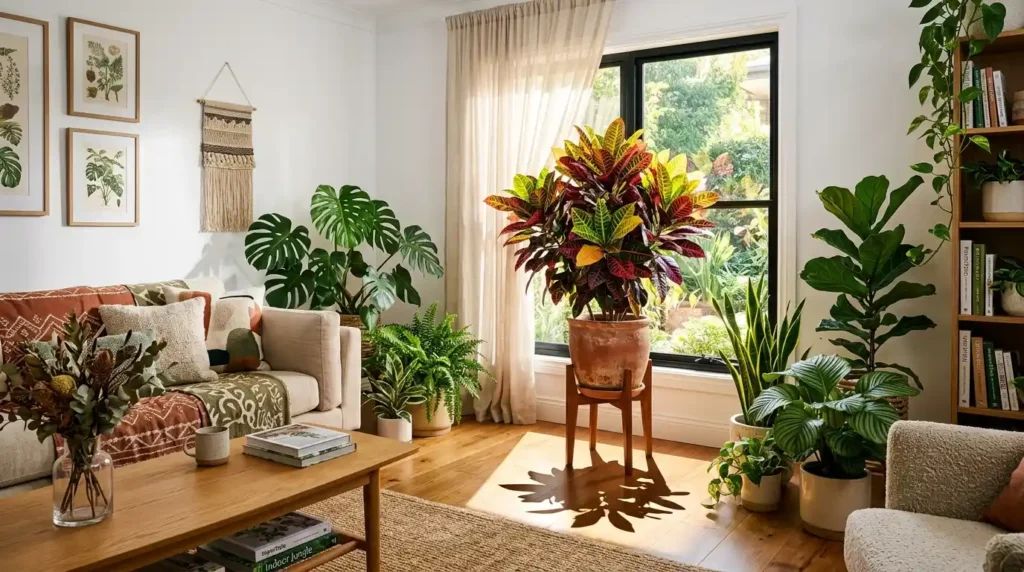
Some plants become windowsill favorites thanks to their low-maintenance nature and calm demeanor. Croton plants do not respond that way. They enter a space and announce themselves with colorful, striped foliage, which can be red, orange, yellow, green, and even black, often within the same leaves. Croton plants are considered among the most visually appealing houseplants. Once you know what they need to thrive, they will not cause you as much trouble as their reputation.
I have had Petra Croton sitting on my desk for three years now. It lost some leaves twice, but only because I decided to move it without first considering that option. Everything else was pretty simple.
What Is the Croton Plant
The Botanical name Croton Codiaeum variegatum belongs to the Euphorbiaceae family. The plant comes from the tropical zones of Southeast Asia and the Pacific Islands. These regions provide a clue as to the nature of the requirements that croton requires once transplanted inside the home.
As stated earlier, the botanical name of Codiaeum spp represents a genus of plants, however, in most cases, those sold as household plants belong to Codiaeum variegatum species. However, the universal name used for all varieties is croton. It refers to plants cultivated in large volumes by major producers like Costa Farms, Lively Root, and Jackson and Perkins.
It should be pointed out straight away; the croton plant is poisonous to children and pets. The milky fluid coming out of the stems or cut leaves is not only irritating to the skin but can cause health problems if ingested. Therefore, one must always keep croton out of reach in homes where pets or children live.
Why Croton Plants Are Worth Growing
Crotons have a unique cultural significance that should be considered. They symbolize happiness and positivity because of their vibrant colors. The leaves of these plants make dining rooms and living spaces positively energetic, something which only a few indoor plants can do. This is precisely why Costa Farms refers to crotons as some of the boldest houseplants you can purchase.
Indeed, crotons are fascinating plants because of their foliage. Leaves could be long and slender, shield-like, lobed, lanceolate or twisted and curled. The colors of these plants include cream white, banana yellow, deep purple, vivid gold, and rich red. Every plant will appear different in appearance. Even within the same variety, all leaves would differ in coloration. The Magnificent Croton aptly named by Costa Farms has colorful leaves where none are alike.
When grown in a brightly colored container that complements the leaves, crotons become even more beautiful. The effect of placing Bush on Fire Croton with its leaves splashed with red, orange, gold, and purple colors adjacent to a deep terracotta pot cannot be understated.
Croton Light Requirements The Most Important Factor
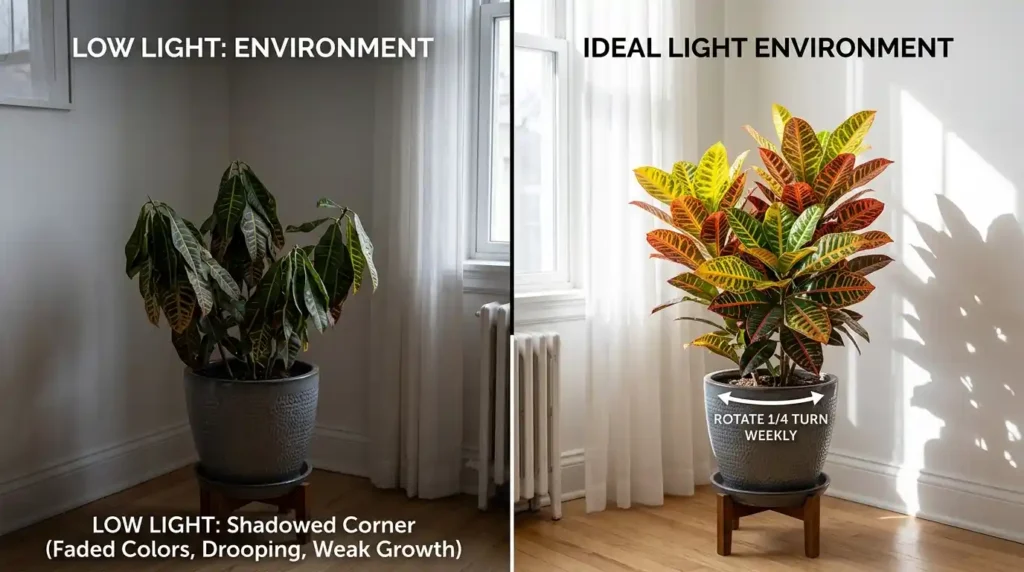
Light has more impact on a croton’s well-being compared to any other care factor. If you get the light factor right, then almost all else becomes relatively easy. Otherwise, the plant will indicate its displeasure by droopy leaves, loss of color, and gradual leggy growth.
The minimum requirement of light for the croton is about six to eight hours of intense but indirect light. It should be placed close to an East-facing or a West-facing window inside your house. The croton should be able to cast a long shadow most of the day, which will be proof enough of proper lighting.
The issue of direct light is again a tricky one because certain outdoor types such as Petra Croton and Magnificent Croton thrive in full light. However, when placed indoors, the direct light from outside causes sunburns, scorch marks, curling, brown patches, and black spots. A sheer curtain is the best solution to the problem.
Poor Lighting Poses
Poor lighting poses equal dangers, but the effects happen much slower. When a croton is placed in an area with poor lighting or even total darkness, the plant gradually loses its value. Leaves turn dark green, lose pigmentation, lose their markings, and grow very slowly. The plant is alive, just unhealthy. Once moved into better light, the leaves will regain their pigmentation; it just takes time.
There is not much use in relying on artificial lighting as a way to supplement sunlight to the croton. While some plants can thrive using artificial lights, most of them like to be exposed to natural light. During the winter months, you can place a small grow light near the plant to help out, but it should not be a permanent solution.
One simple thing you could try to improve your croton’s appearance is rotating the pot occasionally. By doing this, you make sure that the plant receives proper lighting on all sides.
Watering Your Croton The Balance That Matters
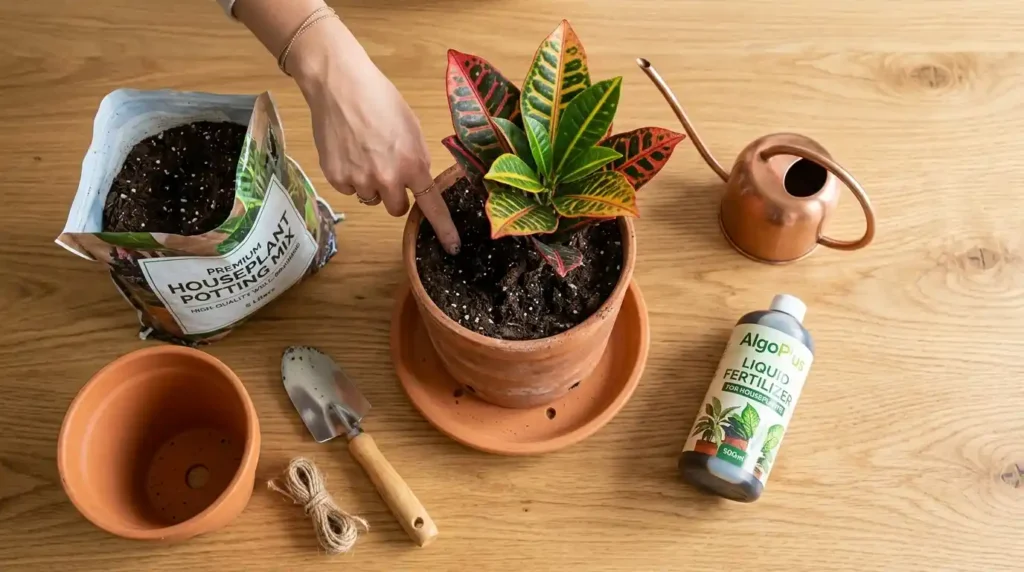
Watering of crotons is not a complex process, but regularity should be observed. The principle behind watering this plant is that it should be watered if the top layer of soil feels dry, which means it will have to be done weekly or biweekly, taking into account the time of the year and the temperature. During summer, the plant will probably require more watering, while in winter, due to slowed growth, it will require considerably less.
What crotons do not stand are periods of staying too moist and too dry, which will result in leaf loss. Typically, it will be the oldest and lowermost leaves that start dropping first. Should you lose some leaves and be unable to understand what causes this, irregularities in watering schedule should be considered.
The croton must never be left in standing water, since root rots and sogginess can lead to serious problems. Ensure excess moisture flows freely through the drainage holes of the pot, and always remove any water from the saucer after watering the plant. In case of doubt if your croton requires any watering at all, it is better to delay the procedure.
Humidity and Temperature Keeping Conditions Tropical
Crotons hail from the tropics and they know that. Crotons need 40 to 80 percent humidity and temperatures between 70 and 75 degrees F. Once winter sets in and temperatures fall below 15 degrees C, the croton starts feeling the pinch. Cold drafts, air vents, and open doors are no bluff – don’t place the plant anywhere close to such locations.
Come summer and you can take it out to a shaded porch or balcony area. Move it gradually; start with a shady location first so that it gets accustomed, then slowly move it to sunnier spots. Remember to bring it indoors again by the time temperatures begin to fall with the onset of winter.
Increasing humidity levels indoors is fairly easy. Keep the plant in a well-lit kitchen or bathroom, use a nearby humidifier, or place it with other house plants, as the moisture released from multiple plants can significantly raise humidity levels. During winter months, when indoor heating systems dry up the environment considerably, you can always mist the plant’s foliage.
Soil, Fertilizing, and Repotting
Drainage of the soil is very important. It is vital to have quality soil that retains moisture but does not get soggy. One of the few things that can cause a healthy croton to die is root rot caused by poor soil drainage.
Feeding your plant during the spring and summer seasons will ensure that your plant remains healthy and continues to grow. According to Costa Farms, feeding your plant once or twice during the growing period will suffice. If you want faster results, then you might consider feeding your plant more often. Jackson & Perkins advise using a complete liquid fertilizer once every two months from March to September and recommend the use of AlgoPlus fertilizer. Always follow instructions to avoid over-fertilization.
Repotting is necessary every two to three years or if roots start emerging from the bottom of the pot. During repotting, ensure you increase the size of the pot by one to two inches. Also, always use high-quality potting soil. The best time for repotting is early spring just before the growing season starts. Ensure the new pot has enough drainage holes.
Pruning and Propagation
Crotons need minimal pruning, although light pruning can help maintain an attractive appearance of the plant and stimulate the growth of new shoots. When trimming the plant, you should use a pair of clean and sharp scissors to prune the excess stems and get rid of any damaged leaves. Crotons should not be pruned too extensively since this type of plant stores its energy in leaves.
Propagation is conducted using cuttings planted either in the water or soil. Take one cutting from the plant with at least three leaves on it, wait for the cut part to dry, and then put it either into the water or soil, keeping it in humid and warm conditions. Roots will appear rather quickly.
Pests and Problems to Watch For
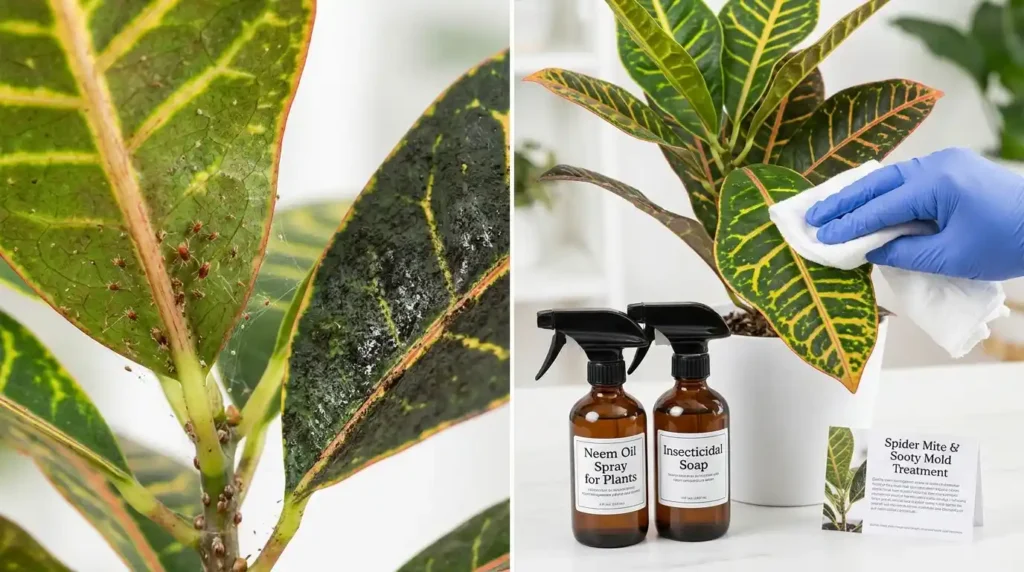
Crotons have high tolerance to pests under good growth conditions. Some pests that affect croton plants include aphids, spider mites, mealybugs, and scales. These pests tend to attack crotons more frequently in artificial environments, particularly during winter.
Inspect the underside of the leaves whenever you care for the plant. Infestations should be treated at the earliest opportunity using insecticidal soap or neem oil, following directions on the product label. Several treatments may be required to eliminate the problem.
Sooty mold, which looks like a black dust-like substance found on croton leaves, is only an indirect indicator of a pest infection. This is because the sooty mold is triggered by the honeydew left by the insects. However, sooty mold is not harmful to the plants and can easily be washed off using room temperature water and a soft piece of cloth.
The most common issue associated with crotons is leaf drop. This happens due to transplanting shock, temperature changes, improper watering techniques, and lack of light. Luckily, crotons are resilient and will bounce back to health under better conditions and proper care.
The Best Croton Varieties to Grow
There is actually a wide variety of crotons. Costa Farms describes some of the most trusted and interesting crotons.
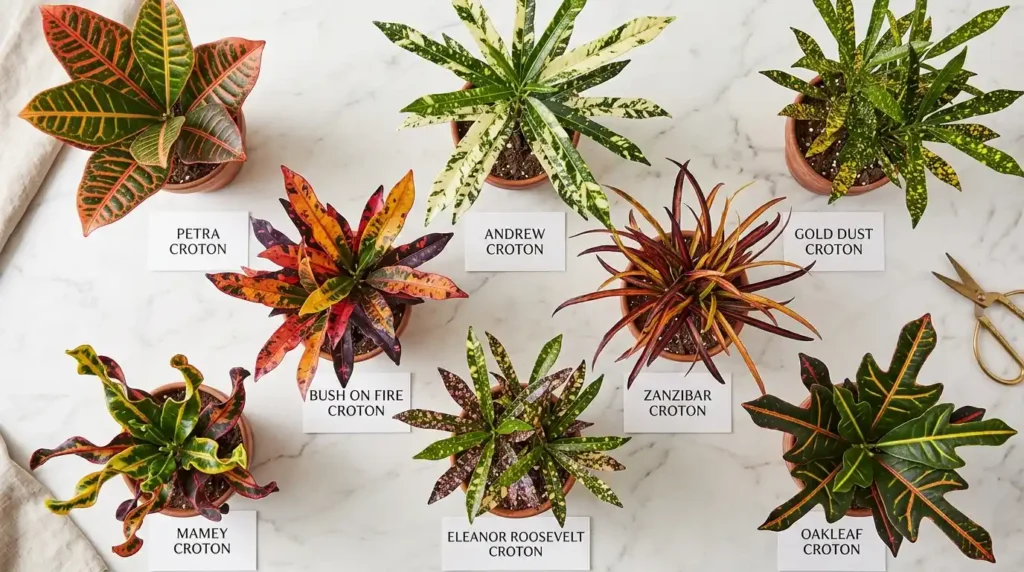
Petra Croton – Codiaeum Petra is the most common variety with shield-shaped leaves that feature red, orange, and yellow veins. This plant is usually the first choice for beginners in crotons and one of the most attractive crotons for indoor use.
Gold Dust Croton – Codiaeum Gold Dust comes with thin green leaves that are covered with yellow gold spots. It is normally used as an ornamental shrub in frost-free regions but does very well when grown inside in places with abundant light. Lively Root suggests that it is one of the most beautiful varieties for your indoor jungle.
Zanzibar Croton – Codiaeum Zanzibar
The Zanzibar Croton is distinctive even among other crotons, featuring narrow, arching leaves adorned in red, gold, orange, and purple colors that are quite unusual for this group of plants whose broad, variegated leaves can be compared to those of ornamental grasses.
Mamey Croton – Codiaeum Mammy
The Mamey Croton has leaves that develop in a twisted fashion, which makes them colorful and unique in their form. This croton variety gets its name from the color of tropical mamey fruits.
Eleanor Roosevelt Croton – Codiaeum Eleanor Roosevelt
The narrow green leaves with a purple flush and golden yellow spots make the Eleanor Roosevelt Croton quite distinctive from other varieties.
Bush on Fire Croton – Codiaeum ‘Bush on Fire’
Croton is one of the most accurate names among all plants mentioned here. The leaves covered with spots and streaks of red, orange, yellow, and purple color really give the impression of burning. In a brightly decorated dining room or living room, this beauty will stop everyone who steps inside.
Oakleaf Croton – Codiaeum Oakleaf.
A plant with lobed leaves resembling an old-fashioned oak. The color of leaves can be described as deep green with strokes of orange, yellow, and red colors less vivid than Bush on Fire Croton but no less beautiful.
Andrew Croton – Codiaeum Andrew.
A variety that attracts attention due to long, narrow leaves of light creamy color. This kind of croton is considered the most elegant plant on the list.
The USDA hardiness zones 11-12 mark the boundary for outdoor growing of most croton varieties. Within those zones, plants like Gold Dust Croton can be used as landscaping shrubs with little additional care. Outside those zones, crotons are container plants that come indoors at season’s end typically when nighttime temperatures begin dropping toward 15 degrees C.
The lifespan of a well-cared-for croton indoors is 5 to 8 years, though with excellent conditions they can last considerably longer. That is a meaningful return on a plant that costs relatively little and delivers extraordinary visual impact every single day it is in the room.
Conclusion
The croton plant is undoubtedly an honest plant species. The moment you are doing everything right with the croton plant, it lets you know through vibrant colors, strong growth, and satisfaction with a leaf that looks like the plant has taken inspiration from a painter who cannot make up his/her mind about the colors. On the other hand, you will know if it is unhappy through wilting leaves, lack of vibrancy, and some leaves falling off to the ground.
Provide this beautiful plant with at least 6 to 8 hours of bright indirect sunlight, good draining soil, regular watering whenever the top inch of soil dries, temperatures between 70 and 75 degrees F, and sufficient moisture levels. Fertilize during spring and summer. Repot the plant after every 2 to 3 years. Keep the plant away from any draft or air vents. Monitor the plant for possible pests.
It does not matter if you opt for the Petra Croton with its shield-like veins, Gold Dust Croton with its golden spots, Bush on Fire Croton with its flamboyance, or the Eleanor Roosevelt Croton with its subtle beauty; your dedication will always be the same. That is, bright sunlight and regular care.
Frequently Asked Questions (FAQ’s)
A croton plant, commonly grown from the Codiaeum variegatum species, is a tropical houseplant known for its bold, multicolored foliage. It comes from Southeast Asia and the Pacific Islands and prefers warm, humid indoor conditions.
Give your croton 6–8 hours of bright, indirect light and water when the top layer of soil feels dry. Use well-draining soil, maintain warm temperatures, and avoid cold drafts or letting the roots sit in water.
Leaf drop commonly happens after sudden changes in location, temperature, watering, or light. Once stable growing conditions are restored, a healthy croton can usually recover and produce new growth.
Petra Croton has broad leaves with striking red, orange, and yellow veins, while Gold Dust Croton has slimmer green leaves covered with yellow-gold spots. Petra is especially suitable for beginners, while Gold Dust is a strong choice for bright indoor spaces.
Petra Croton is one of the easiest starting choices because it is widely grown indoors and is described as a popular option for beginners. Regardless of variety, consistent bright light and regular care are the main factors behind healthy growth and strong leaf color.

3 thoughts on “Croton Plant by Middle Class Homes The Complete Guide to Growing, Caring For, and Choosing the Right Variety for Every Home”