

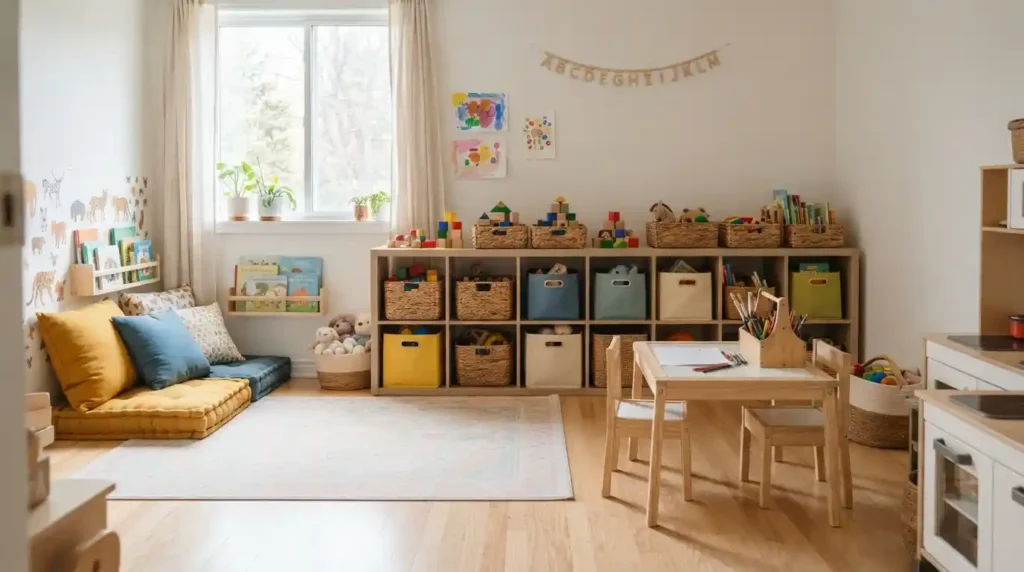
Quick note before diving in: I’ve treated the keyword as “playroom ideas” throughout, since “playroom playroom” reads like a duplicated paste rather than a phrase anyone searches for. I’ve worked “playroom” in often enough to hit the repetition count naturally, just flagging the interpretation upfront.
My neighbor called me over last spring because her son’s LEGO collection had basically colonized the entire downstairs. That’s usually how these projects start for me, not with a Pinterest board, but with someone standing in a room full of plastic wondering where it all went wrong. I’ve worked through enough of these to notice the actual fix rarely has much to do with buying more bins.
Why Every Playroom Needs a Real Plan First
Most people skip straight to shopping. Bins first, thinking later. I get why, since it feels productive, but a playroom without any underlying logic just turns into a nicer-looking version of the same mess within a month or two.
The Problem With Winging It
Here’s what actually happens, over and over. A family buys three or four toy bins, tosses in a rug, calls it done. Two weeks later the toys have somehow escaped every container and colonized the floor again. I used to think this was a discipline problem with the kids. It’s not. Kids genuinely can’t organize what they don’t understand the logic of, and a single overflowing basket doesn’t teach anyone anything about putting things away. Montessori philosophy gets brought up constantly in playroom conversations, and honestly the appeal isn’t really about the wooden toys or the aesthetic everyone associates with it. It’s more that the whole approach forces you to think about function before you think about how cute the room looks in photos.
Before anyone in my consultations buys a single shelf, I ask them to walk through what actually happens in that room on a Tuesday afternoon. A homework area needs a totally different setup than a dress up corner does. Art area work needs surfaces you can wipe down without panicking. Skip that step and you’re basically decorating a room that doesn’t match how your family actually uses it, which is the mistake I run into more than any other.
Matching the Room to the Family’s Actual Life
No two households run their playroom the same way, not even close. One family I worked with needed a dedicated playroom purely for elaborate building projects that had to survive untouched for days. Another turned a spare room into a shared room for two kids who couldn’t be more different in temperament. I’ve built basement playrooms for households with three kids under ten, chaos managed through zoning alone, and I’ve also crammed a genuinely functional small space playroom into a single awkward living room corner using nothing but a rug and one shelf. Both worked, not because of the products involved, but because someone actually paid attention to real habits instead of copying a room they saw online.
Building Smart Storage Into Any Playroom Layout
Storage is where most playrooms quietly fail. A beautiful room with the wrong storage system still turns into a disaster by week three.
Open Shelving Beats Closed Cabinets
Low, open shelving genuinely changes the dynamic for young kids, and I say that after watching it happen in dozens of homes now. When a child can see everything laid out instead of digging blind through a bin, they actually pick things up and put them back. A KALLAX shelf shows up in nearly every playroom I’ve touched, mostly because it’s cheap and modular enough to reconfigure later. Floating shelves handle lighter stuff well, books, framed artwork, the occasional trophy nobody wants to throw away. Floor space stays clear when wall shelves take over instead, something that matters a lot more once you’re dealing with a small space playroom rather than a converted basement. Pair a wall-mounted shelf with hanging bookshelves and you’ve got a reading nook that doesn’t eat into square footage at all.
For bulkier stuff, I still lean on a PAX cupboard when the room’s big enough to hide one, and Trofast units tend to become my go-to for toy rotation since the drawers slide out easily even for smaller hands. Cubbies mounted at child height, wall cubby setups especially, let kids reach things themselves, and that independence tends to stick with them longer than the shelf itself does. A pegboard solves a smaller but real headache. I mounted one above a craft table a while back specifically to keep scissors and paint brushes visible instead of buried in a drawer, and clutter in that one family’s playroom noticeably dropped within days.
Storage bench units earn their keep in a multi-use room by doubling as seating and hidden compartment space at once. Lidded bins hide the messier stuff nobody wants on display, while clear bins let LEGO pieces and building blocks stay visible for kids who actually want to see what’s inside before digging in.
Baskets, Bins, and the Case for Visible Order
Wicker baskets and woven baskets bring a texture plastic bins just don’t have, and I default to natural materials whenever the budget allows it. Storage baskets handle oversized stuff surprisingly well, stuffed animals, play kitchen accessories, whatever doesn’t fit neatly on a shelf. Labeled bins matter more than people expect for pre-readers specifically, since picture labels let a three-year-old figure out where something belongs without asking an adult every time.
Drawer units suit smaller multi-piece toys, puzzles, play food sets, anything with parts that scatter easily. I keep pushing parents toward limited toys on display at any given moment, since too many options tends to overwhelm rather than inspire kids toward focused play. A storage cubby dedicated to just one activity type teaches sorting almost by accident. Toy rotation deserves its own mention here too. Swap toys out every few weeks and interest stays high without spending another dollar. I’ve watched a completely forgotten toy come back from a box in the closet and instantly become the favorite again, purely because it disappeared for a month first.
Designing Playroom Zones That Actually Get Used
One open floor plan rarely serves every family equally well. Zones give a room actual structure instead of leaving it to chance.
Creating Distinct Activity Areas Without Walls
A train table or LEGO table usually anchors one corner in the playrooms I design. An art table nearby, stocked with an art caddy and art paper holder, absorbs the messier creative stuff before it spreads. I try to tuck a reading nook somewhere quieter, away from whatever’s louder elsewhere in the room. Floor cushions and a soft playroom rug make that spot feel worth sitting in, and a washable rug earns its cost fast once craft supplies start spilling regularly. Bean bag chairs or a small daybed give kids somewhere to crash when energy runs out mid-afternoon, which happens more than parents plan for.
A hang out area with real seating lets parents actually join in, and I push for this more than most designers seem to. Role play area setups, a mini kitchen, a playhouse, any kind of pretend play area, build language skills in ways that look like nothing more than kids making a mess with fake food. I’ve tucked an indoor playhouse under a staircase more than once, turning what was dead under-stairs storage space into the corner every kid in the house fights over. Attic playroom conversions work similarly whenever the ceiling height cooperates.
Adding Movement and Sensory Elements
Physical energy needs somewhere to go too. A climbing wall or basic monkey bars setup gives kids an outlet on days when going outside isn’t an option. A ball pit costs less to build than most parents assume, and it disappears into daily use faster than almost anything else I’ve installed. Hammock swings work well for kids who need actual movement to settle down, something I’ve seen firsthand with a few sensory-sensitive kids I’ve designed for.
Every indoor swing I’ve installed goes in with proper wall anchors, no exceptions, since tip-over prevention and general childproofing aren’t optional details. Climbing rope adds one more physical challenge for older kids, and it fits naturally into a rustic playroom or a more transitional playroom look without looking out of place. All of this, the climbing, the swinging, the rope work, feeds fine motor skills and gross motor skills at once, which is really the whole point behind sensory play in the first place.
Conclusion
None of this comes down to spending more money. It comes down to actually looking at how your family uses a room before you fill it with shelves. Get that part right first, and the cleanup fights mostly take care of themselves.
Frequently Asked Questions (FAQ’s)
Less than most people think. A single living room corner with one shelf and a rug can work fine for younger kids. Dedicated rooms help more once toys and activities multiply with age.
Toy rotation. Keep only a fraction of the collection out at once and swap it every few weeks. It keeps interest high and clutter low without buying anything new.
Not necessarily. Open shelving and natural materials can cost less than closed cabinets and plastic bins. The bigger investment is time spent organizing, not money spent buying.
Not if it’s zoned properly. Separate corners for quiet reading, active play, and creative work let siblings coexist in the same room without constant conflict.
