

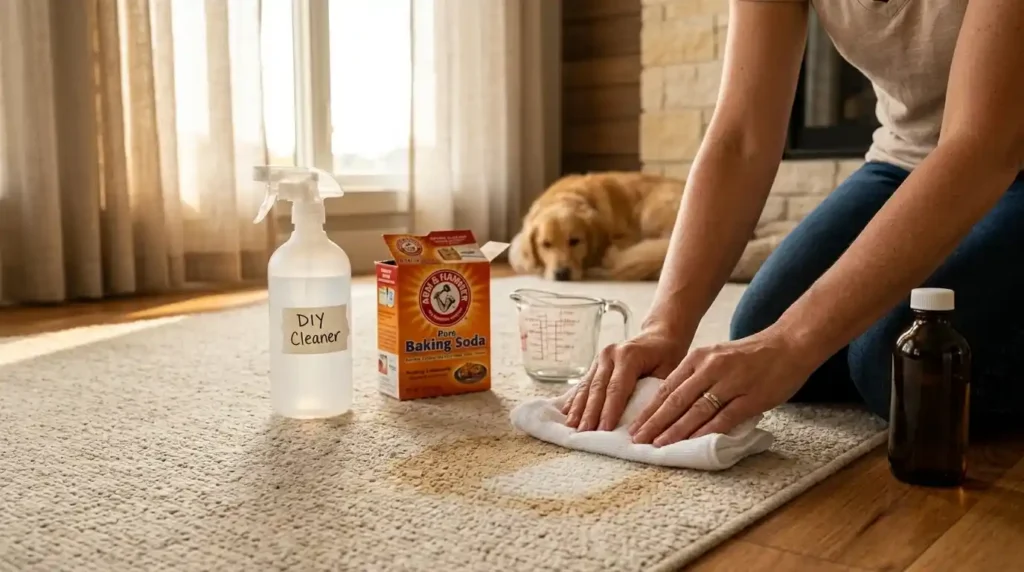
Alright, let me get honest with you. It wasn’t like I figured out how to clean carpets using a home-made solution since I knew everything about cleaning. No, I figured that one out because I was broke, my dog had dirtied my whole living room floor, and there was nothing left in the cupboard but vinegar.
That was three years ago. Now I won’t go back to store-bought even when I could easily afford it. Not because I’m frugal about everything, but because what I make at home genuinely works better on most stains. I’ve tested enough variations at this point that I feel pretty confident sharing what actually holds up and what’s just a nice idea on paper.
Let me walk you through it properly.
What Goes Into a DIY Carpet Cleaning Solution Worth Making:
There’s a lot of noise online about which ingredients are best. Some of it’s good advice. Some of it is just people repeating whatever they read somewhere else. Here’s what I’ve actually found works, after a lot of trial, error, and a few near-disasters on a cream-colored rug I still feel guilty about.
White Vinegar and Warm Water: The One You’ll Reach for Most
In case you were wondering which DIY carpet cleaner recipe I would recommend above all others, it’s this one. One part distilled white vinegar and two parts warm water, shaken together in a spray bottle. That’s it. It handles pet stains, food stains, dirt stains, and a solid portion of whatever mystery stain appeared without explanation.
It is not rocket science either. The acidic properties of vinegar ensure that it works very well in cleaning off the alkaline waste. It gets rid of the bacteria responsible for the bad smell, making it better than any deodorant available on the market. The warm water acts as the loosening agent without being dangerous like the hot water.
Hot water is worth mentioning specifically because a lot of people get this wrong. Hot water can permanently set protein-based stains like blood stains and vomit stains into carpet fibers. Once that happens, even professional cleaning struggles to pull them out. Use warm, not hot. Always.
If you’re dealing with wool carpet cleaning, dilute the mixture even further. Half vinegar, half water is safer on natural fibers. And before you use anything new on any carpet, take thirty seconds to do a patch test carpet check on a hidden corner. The colorfastness test sounds like extra work but it’s saved me from making a much bigger problem more than once.
Baking Soda: Genuinely Underrated for Odors
The importance of baking soda in this discussion on homemade carpet cleaners is often overlooked. Baking soda is an alkaline compound which can neutralize the odor of the acid in your carpet rather than merely covering up the smell. However there is an absolute difference between a carpet that smells clean and a carpet that smells like a cleaner
To eliminate any smell from pets, you will need to apply lots of baking soda to the entire affected area. Do not skimp on the baking soda. Allow it to settle there for fifteen minutes and then vacuum it away. This is your basic home remedy for carpet deodorizing.
For grease stains and oil stains, the baking soda pre-treatment approach is different. Mix one tablespoon of baking soda with one tablespoon of mild dish soap until it forms a paste. Apply that paste directly to the stain, let it sit for five to ten minutes, then blot with a clean cloth. The baking soda draws the grease up while the soap breaks it down. It’s a combination that works on food stains from oily snacks particularly well.
Are you looking for a recipe to make your own carpet deodorizer easily which you could use on your carpet once a week without putting in much effort? Just add one quarter of a cup of baking soda with ten drops of lavender or lemon essential oil.Sprinkle it on your carpet. Wait for fifteen minutes and then vacuum. Your whole room will smell better!
Hydrogen Peroxide and OxiClean for the Stubborn Stuff:
Some stains just need more help. Red wine stains, coffee stains, and old stains that have been sitting for a while don’t always respond to vinegar alone. That’s when you bring in hydrogen peroxide or OxiClean.
OxiClean dissolved in warm water uses oxygen-based cleaning action that lifts pigment stains without bleach. It’s genuinely effective on set in stains that other DIY carpet cleaning solution recipes can’t touch. Follow the package guidance on ratio, apply to the stain, let it dwell for the full five to ten minutes, then blot.
Hydrogen peroxide works well on blood stains and juice stains specifically. But hydrogen peroxide can lighten the color of the carpet, so doing a test is not an option here. Take one tablespoon of hydrogen peroxide and add to it one tablespoon of liquid dish soap. Apply the mixture and allow it five to ten minutes to work. Then use a blotting method and do not rub because rubbing only aggravates the problem by embedding the stain deeper into the carpet fibers. I know it from my experience with a light carpet in the bedroom.
How You Apply Your DIY Carpet Cleaning Solution Matters as Much as What’s in It:
I’ve given people good homemade carpet cleaning solution recipes and watched them get mediocre results because the technique was off. The recipe is half the battle. Here’s the other half.
Vacuum First, No Exceptions:
The vacuuming prior to the actual cleaning is not only an excellent suggestion but the one that actually ensures the effectiveness of your homemade carpet cleaning mixture. The dry particles of dirt and hair lying on top will immediately absorb the sprayed water, resulting in the formation of a muddy spot.
After vacuuming, apply your homemade carpet cleaner using what I call the mist not soak technique. This is probably the single most important thing I’ll tell you.After vacuuming, apply your homemade carpet cleaner using what I call the mist not soak technique. This is probably the single most important thing I’ll tell you. Over saturation of carpeting is quite prevalent and the repercussions can be truly frustrating. Excess moisture travels into the carpet backing and underlayment providing the ideal conditions for mold to form. A little bit of moisture delivered evenly through your mister sprayer will give the cleaners enough contact time to do their job without soaking the entire area. With large areas such as high traffic stains treat smaller sections at a time.
Let It Sit, Then Rinse:
Apply your DIY carpet cleaning solution and leave it alone for five to ten minutes. Most people spray and immediately start blotting. That’s too soon. The dwell time is when the actual cleaning is happening at the fiber level. Give it the time it needs.
After blotting, rinse with clean water. A lot of people skip this step and it’s why their carpets seem to get dirty again faster than before. Soap and solution residue left in the carpet fibers attracts new dirt. This is called carpet re-soiling and it’s the reason a freshly cleaned carpet can look grubby again within a week. Rinse it out. Then press dry towels or paper towels into the area to absorb as much remaining moisture as you can.
Let the carpet air dry fully before walking on it heavily again. Carpet drying with a fan or use of a dehumidifier will greatly shorten the time that your carpet will take to dry. The drying process normally takes 24 to 48 hours. Hasty drying will cause the same problem that you are trying to avoid – mildew.
Your DIY Carpet Cleaning Solution Guide by Stain Type:
Not all stains respond to the same recipe. Matching your solution to the stain type makes a noticeable difference.
Pet Stains: The Hardest Ones to Fully Fix
A dog urine carpet problem and cat urine carpet problem are difficult since you are faced with both a stain and an odorous chemical. Animals have the ability to detect the scent of their own urine even after it appears to have been cleaned, thus prompting them to go back to that particular place.
If the stain has been caused by the recent urine of a pet, absorb all the moisture possible from the stain with paper towels by pressing it hard, and spray the affected area with a mixture of distilled white vinegar and hot water in the ratio of 1:1 for about ten minutes. The smell-holding crystals of uric acid will be dissolved through the vinegar. Then, let the area dry and sprinkle it with baking soda. If some tea tree oil is added to the vinegar solution, a natural carpet cleaning remedy against the smell of bacteria present in the urine is created.
Food, Drinks, and the Panic Stains:
Red wine stains are the ones that make people freeze. First rule: move fast. The more time passes, the greater the bonding of the stain to the carpet fibers becomes. Clean up the spill with the help of the cloth and then pour the club soda on the stain. The bubbles will assist in lifting off the stain from the carpet. Finally, use the usual cleaning solution that you made with vinegar and hot water.
Coffee stains respond well to one tablespoon of liquid laundry detergent or liquid dish soap mixed with two cups of warm water. Mud stains are the exception to the act-fast rule. Let the mud dry completely first. Trying to clean wet mud just spreads it further across the carpet. Once dry, vacuum the solid material away, then treat the remaining mark with your basic homemade carpet cleaner. For juice stains and other pigment-heavy fresh stains, adding OxiClean to your solution gives you extra lifting power.
Running Your DIY Carpet Cleaning Solution Through a Machine:
A lot of people ask whether homemade carpet cleaner is safe for a Bissell carpet cleaner or a Rug Doctor rental. Yes, it is. But the recipe needs to be adapted.
The Machine-Safe Version:
The main requirement for a carpet cleaning solution for machines is low foam. The amount of foam created by excess detergent can not be washed away and will affect the machine’s inner workings. It will also result in the creation of an adhesive layer on the carpet.
Here’s what to use: one gallon of hot water, a quarter cup of distilled white vinegar, and one tablespoon of liquid laundry detergent. That’s your concentrated carpet cleaning solution for machine use. This DIY approach costs about one dollar per gallon to make compared to nineteen dollars and fifty-nine cents for half a gallon of Rug Doctor branded solution. For a whole-house clean where you need several gallons, that difference is significant.
Prior to using carpet shampoo made at home in any carpet cleaner machine, refer to its warranty terms. Certain brands of carpet cleaners may insist that you use their specific carpet cleaning products to retain warranty protection. For such machines under warranty, continue using the recommended carpet cleaning agent until the warranty expires. Thereafter, your homemade carpet cleaner will work as effectively.
Conclusion:
There is no need for any unusual ingredient in the best homemade carpet cleaner solution. Just white vinegar, baking soda, dish soap, and warm water take care of almost all stains and odors in the typical household. And equally important are the steps followed along with the mixture of ingredients, including misting rather than soaking and the rinsing process which avoids re-soiling of carpet. Get these steps right, be patient while waiting for the dwell time to be completed, and give enough time for the carpet to dry properly. You will end up having your carpets clean without spending $20-$30 per week on purchased concentrate solution.
Frequently Asked Questions (FAQ’s)
A simple mixture of one part distilled white vinegar and two parts warm water works well for many common stains, including food, dirt, and some pet messes. Always test the solution on a hidden section of carpet first to check for color changes.
Vinegar is more useful for treating many stains, while baking soda is particularly helpful for absorbing and neutralizing unpleasant odors. For pet smells, the article recommends treating the stain first and using baking soda after the area has dried.
Vacuum first, then lightly mist the cleaning solution instead of soaking the carpet. Let it work for about five to ten minutes, blot the area, rinse away residue with clean water, and allow the carpet to dry fully.
Yes, but the article recommends using a low-foam mixture because too much detergent can leave residue and affect the machine. Check the manufacturer’s warranty requirements before using a homemade solution in a Bissell, Rug Doctor, or similar carpet cleaner.
The best option depends on the stain: hydrogen peroxide may help with blood or juice, while an oxygen-based cleaner such as OxiClean can be useful for older, coffee, or red-wine stains. Because stronger cleaners may affect carpet color, test them on a concealed area before treating the visible stain.
