

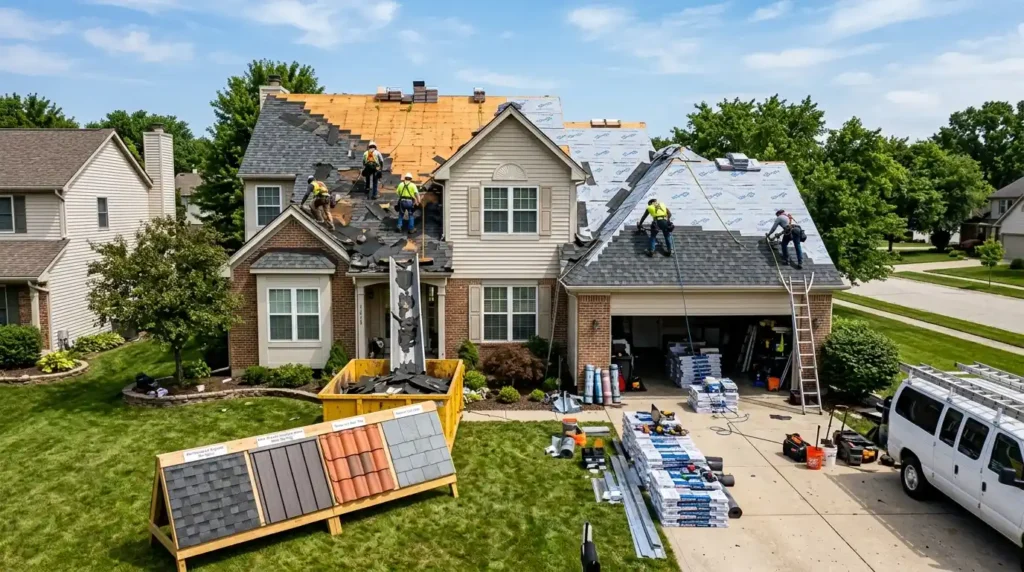
If you ask five contractors how much a new roof would cost you. You will receive five very distinct answers that are just as definite, but do not overlap at all. This is not because they are estimating based on an assumption. But rather “roof cost” is the kind of query that includes too many hidden variables to have one answer. Most people find this out after receiving three very distinct quotes on $9,500 to $28,000 for the same job. That was supposed to be done.
I went through this myself and found that the difference between the two estimates is not necessarily deception. One contractor accounted for full tear-off and installation of synthetic underlayment and flashing. While another one estimated the cost of a lay over install. That did not include the additional support I actually needed. The estimate on paper meant different things and the key to protecting your budget was knowing the difference. Rather than having one roof cost formula in mind.
Why the National Averages Vary So Widely Across Sources
Find any five cost estimates for roofing in 2026 and you will see a real variety. This Old House gives average roof cost for a 1,500-square foot house at about $9,313. Asphalt shingle roof system for a 1,500 square foot house would be priced at roughly $7,158. NerdWallet’s number is about $9,500; $5,800 to over $47,000 based on type of roof and difficulty of installation. FoxHaven Roofing says in 2026 prices range from $9,800 to $41,800 for standard 2,000-square foot house roof. FoxHaven Roofing provides another range of $9,500-$28,000. With average price about $25,840 for the same size house – two estimates of one company. That have thousands dollar difference based on methodology. According to Orca Roofing price range would be about $12,000 to $30,000 with average cost about $18,000. Fixr’s average cost is about $10,000; most roof replacement projects will be within $7,5
None of them is incorrect, however. Each is assessing different things, namely different sized roofs. Different labor costs from different regional samples, different materials mixes. And different ideas of whether the roof replacement cost includes or does not include the actual materials and labor cost. The best thing to do is to figure out the cost per square foot, depending on material. And apply that to the square footage of your particular roof.
Cost Per Square Foot: The Number That Actually Translates to Your Roof
Cost Per Square Foot
In calculating the cost of material and labor for roofing. The measurement used is “square,” meaning one square equals 100 square feet. For a 1,200 square foot roof, 12 squares of material will be needed. For a 1,800 square foot roof, 18 squares; and for a 2,400 square foot roof, 24 squares will be required. Since the greater the size of the roof, the more material, labor and disposals required. Due to the pitch of the roof, the overhang, and other roof components. You have a roof surface area that is 20% to 30% bigger than the footprint of your house.
Asphalt Shingles
For asphalt shingles. Which are one of the most popular forms of roof materials among about 47 percent of surveyed homeowners. Standard three-tab shingles cost between $4.50 and $7.50 per square foot. While architectural shingles cost between $6.00 and $9.00 per square foot. High-end asphalt that resembles wood and slate can cost up to $16.00 per square foot. However, some sources cite lower figures regarding asphalt shingles. Suggesting that material alone may be only $1 to $1.20 per square foot. And installation costing $400 to $900 per square foot, or $4 to $9 per square foot.
Metal Roofs Cost
Metal roofs cost anywhere between $6 to $16 per square foot based on the type. Where standing seam metal roofing is the higher cost option and corrugated panels come in as the more affordable one. Traditional prices for standing seam metal installation have been within the $10 to $12 per square foot range. But tariffs on steel and aluminum under Section 232. Which were at 50 percent levels during mid-2025 and continue until March 2026. Have driven prices up to $12 to $15 per square foot.
Year-on-year price increases from the Producer Price Index for aluminum mill shapes went up by 33 percent in January 2026. While steel mill products registered a 20.7 percent increase. As per the Associated General Contractors of America data of the largest rise in producer prices. Since the pandemic-related disruptions to the supply chain. Over 400 types of derivative products have been added under Section 232. Including metal flashing, drip edge, and prefabricated roof panels.
Cost Of Installing Clay Tile Roofs
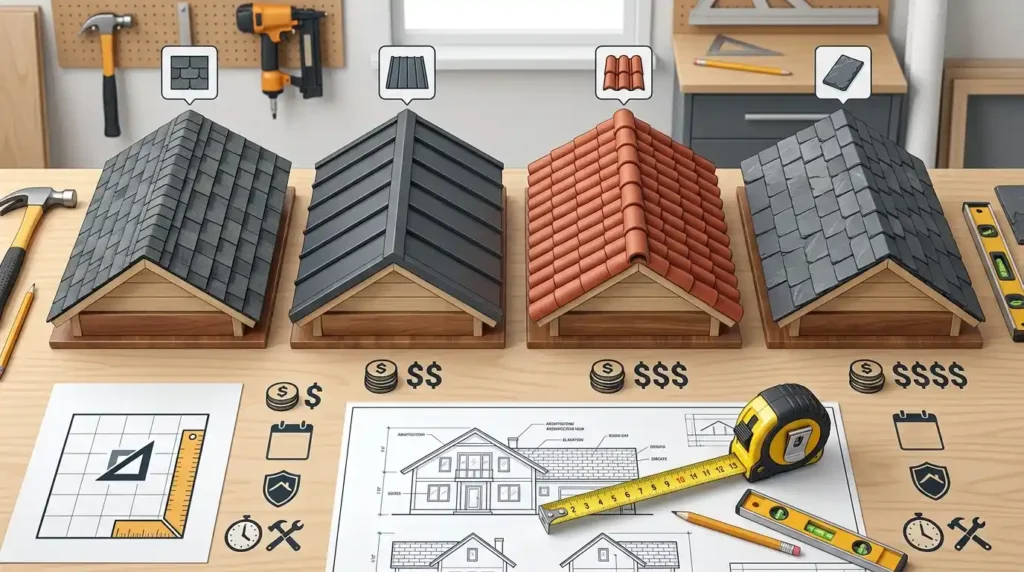
The cost of installing clay tile roofs is between $9.09 and $12.29 per square foot, while some sources mention a higher range of $10-$20 per square foot for ceramic or clay tile roofs. The price of natural slate is between $15.00 and $30.00 per square foot, while synthetic slate provides a similar appearance for $9.00-$15.00 per square foot. Copper roofs are priced between $30 and $50 per square foot. Wood shingles and wood shakes cost between $6 and $15 per square foot. Synthetic shingles, which are less expensive than other types but offer the same appearance as premium roofing materials, are priced between $15 and $20 per square foot.
Labor: The Cost Driver Most Homeowners Underestimate
Across nearly every source surveyed, labor consistently accounts for 50 to 65 percent of total roof replacement cost making it, by a meaningful margin, the largest single cost factor in any roofing project, ahead of materials. The Roofers Guild places general roofing labor around $75 per hour. Other sources place the range between $40 and $90 per hour per worker depending on complexity, location, and the reputation of the roofing contractor or roofing company hired. In California specifically, labor costs run notably higher, averaging $60 or more per hour, reflecting both cost of living and the skill premium required for steep roof pitch work and compliance with local building codes.
Roof complexity is where labor costs escalate fastest. A simple gable roof installs faster and cheaper per square foot than a roof with multiple dormers, valleys, or steep pitches requiring specialized safety equipment and installation technique. According to a report from Angi, complex roof designs can increase labor costs by 20 percent or more compared to simple designs. Steep or complex roofs with multiple dormers and valleys can add $1,000 to $3,000 directly to labor costs due to increased safety requirements and installation time. Skylights, chimneys, and vent pipes each require custom flashing to prevent leaks every one of these architectural features adds labor hours that a simple “up and over” gable roof never accumulates.
Additional Expenses
Additional expenses for tear off and removal of old roof amount to $1 to $5 per square foot according to various sources with Home Guide citing $1 to $5 per square foot while other sources cite $2 to $5 per square foot as an average price range. The cost of tear-off increases when there are two layers of shingles in place on a particular property because of the additional weight and the extra labor that is required. There are even cases where building codes prevent the addition of a third layer of shingles which makes tear-off the only option available. Tear-off and haul-away increase the overall expense by $1,000 to $3,000. The cost of permits varies between a couple hundred dollars and up to $1,000 with Home Guide citing a permit fee range of $100 to $500.
Material Lifespan: Why the Cheapest Roof Isn’t Always the Best Value
Considering only the price of various materials per square foot is an incomplete analysis because one does not take into account the factor that plays a major role – how long the roof will last before having to replace it. On average, asphalt shingles last for 20 to 30 years (some sources mention the period between 20 to 25 years while others talk about 30 to 35 years for architectural shingles). Metal roofs (standing seam, corrugated panels, stone-coated steel) usually last 40 to 70 years with the standing seam systems being known to have a lifespan of 50 to 70 years provided that they require minimum maintenance.
Tile clay roofs have one of the longest lifespans compared to other residential roofing materials since they last 100 years. The leader in terms of durability is slate which lasts from 75 to 150 years (however, slate is extremely expensive and heavy, so it needs to be approved by a structural engineer).
This is the reasoning behind the rising economic feasibility of metal roofs even though they come at an initial expense twice or thrice as much as asphalt roofs. If one owns a home with an asphalt roof and changes it once in 20 to 25 years, the money spent on two to three roof replacement would be equal to the amount spent on installing one metal roof. Metal roofing is more efficient in terms of energy conservation too, which means cool-color reflective metal roofing could cut utility expenses by up to 40% in warm climates.
What Drives the Final Number on Your Specific Quote
Aside from materials and labor costs, there are other factors that affect what is included in your final roofing quote. Location is very important, as people who live in coastal or urban areas always have to shell out more money than those who live in rural settings for roofs that have the exact same materials, while even inside the same state, prices depend on city due to various factors including demand, permit fees, and general cost of living in the area. Mid-job budget surprises occur most often due to structural issues such as rotten wood or poor ventilation detected when tearing off the existing roof.
Warranties should be looked into as much as the price, since there can be very big differences in material and workmanship warranties among contractors and manufacturers. An installation that is cheap but comes with an inferior workmanship warranty will cost you more money over 10 years than a more expensive installation that provides real warranty protection. Proper installation always beats quality materials when it comes to roofs, even though asphalt may not cost nearly as much as metal.
For homeowners evaluating several bids, the principle to follow is clear: any bid that varies by more than 25 percent from your calculated cost-per-square-foot range is one that should receive some discussion before the contract is signed. It either includes something that you did not take into consideration, or it excludes something and the only way to know which is by examining the line items instead of relying on the total. The lowest bid in every comparison of roofers is going to be the one with the most limited scope, be it the omission of tear-off, poor quality underlayment, or a labor cost that does not take the slope of the roof into consideration.
Conclusion
And what does one say when asked about the cost of a new roof in 2026? It all depends on the size, type of material, pitch, the prevailing labor prices in the region, and the amount of structural work revealed after starting the tearing-off process and that’s why reliable sources quote anything between $9,500 and $28,000 for the same type of work. The only way to transform a broad national price range into an estimate that really works for you is to measure the square footage of your roof in roofing squares and multiply it by the relevant cost per square foot for your preferred material.
Frequently Asked Questions (FAQ’s)
A new roof can vary widely in price because roof size, material, pitch, labor rates, tear-off requirements, and structural repairs all affect the final quote. For a useful estimate, calculate your roof area and compare the installed cost per square foot for the material you plan to use.
Asphalt shingles usually cost less upfront, while metal roofing can last considerably longer and may require fewer replacements over the life of the home. The better value depends on your budget, how long you expect to own the property, and whether long-term durability matters more than initial cost.
Start by estimating the actual roof surface area rather than using only your home’s floor area, since pitch and overhangs increase the amount of roofing required. Then multiply that area by the installed per-square-foot rate for your chosen roofing material.
Quotes may cover different scopes of work, such as full tear-off, underlayment, flashing, disposal, structural repairs, or a simpler overlay installation. Compare the individual line items instead of judging bids only by their total price.
Not automatically. A lower bid may exclude tear-off, quality underlayment, adequate labor, or stronger warranty coverage, so the scope and workmanship protection should be reviewed alongside the price.
