

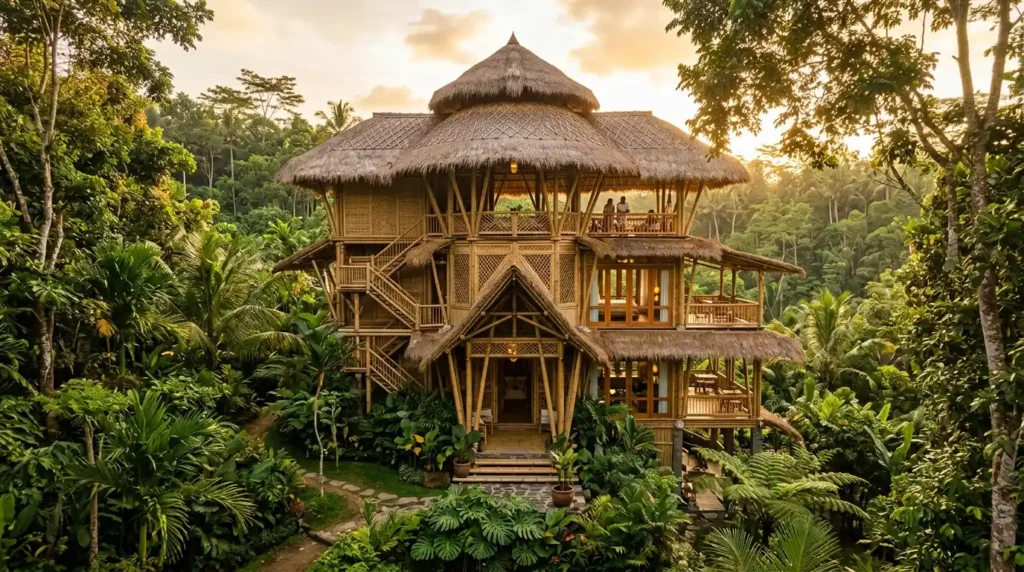
I first came across bamboo construction watching a documentary on Simón Vélez, a Colombian architect whose bamboo pavilions had won international prizes. My initial reaction was honest skepticism. It looked beautiful, but would it actually hold up? Years later, after researching bamboo construction across Latin America, Indonesia, and Hawaii, my opinion has changed completely.
Origins of a Building Material That Predates Modern Engineering
Bamboo has been used as building material since the ancient times for many civilizations. Over billions of people in earthquake zones such as Colombia and Costa Rica rely on bamboo for their houses. It is known for its numerous species as over 1,200 to 2,000 types are available. There are species of bamboo that grow up a yard in a day.
It is the physics that makes bamboo superior to wood, steel, and concrete. Bamboo has a tensile strength of 52,000 pounds per square inch. That puts it in conversation with grades of steel on a weight-to-strength ratio comparable to graphite. A single acre of bamboo can replace an entire hardwood forest needed to build one American home. It regenerates from a quarter acre per year, harvested without killing the root system at all.
Why Bamboo Handles Earthquakes and Hurricanes So Well
Structures located in seismically active zones will experience shear forces that cannot be absorbed by rigid structures. The bamboo is flexible, sturdy, and resilient compared to concrete columns. In a 7.5 magnitude test project conducted in Colombia, bamboo structures came through with no damage, which vindicated what local builders had argued for generations.
Engineers now understand that a flexible Guadua frame Guadua being the neotropical genus indigenous to Central and South America, particularly ideal for cultivation in Colombia and Ecuador performs better in seismic zones than most modern materials that have produced disastrous results in similar conditions. The same properties that resist earthquakes also handle hurricane winds. Bamboo Living Homes in Hawaii, founded by Jeffree Trudeau and David Sands, has built prefab structures tested against 200 mph hurricane winds and 6.9 magnitude earthquakes, making them the first code-certified bamboo structures legally permitted worldwide.
Bamboo Versus the Building Codes Problem
Here is a real hurdle that slows bamboo adoption in the United States. The International Congress Building Codes, known as ICBO, did not historically include engineering criteria for multi-story bamboo construction. That left architects and contractors in a frustrating position a material with proven performance sitting outside the regulatory framework they needed.
California has moved further along than most states. Progressive green architects there pushed for preliminary testing and code amendment. Hawaii, because of its tropical habitats and climate, developed its own pathway for approval. Bamboo Living Homes became a practical example of how to navigate permitted regulations within the existing system.
These challenges may be true, but they are not insurmountable. INBAR, a multilateral development agency that promotes the use of bamboo in safe construction projects since 1997, has been working on improving standards and creating global awareness of the same. They have members in 45 countries. Through their Task Force, they coordinate organizations and companies in the field of research and business to ensure that quality bamboo is used in construction processes. The Sustainable Development Goals that involve everything from eliminating poverty to ensuring reliable energy services have provided INBAR with goals to strive for.
The Architecture That Changed My Mind
Simón Vélez designs bamboo structures that do not look like compromises. His work covers pavilions, hotels, restaurants, and temples, primarily across Latin America. His books, including Filosofía Renovable and Arquitectura Mixta, treat bamboo with the same seriousness an engineer would give steel. Reading those changed how I thought about what a grass could actually do.
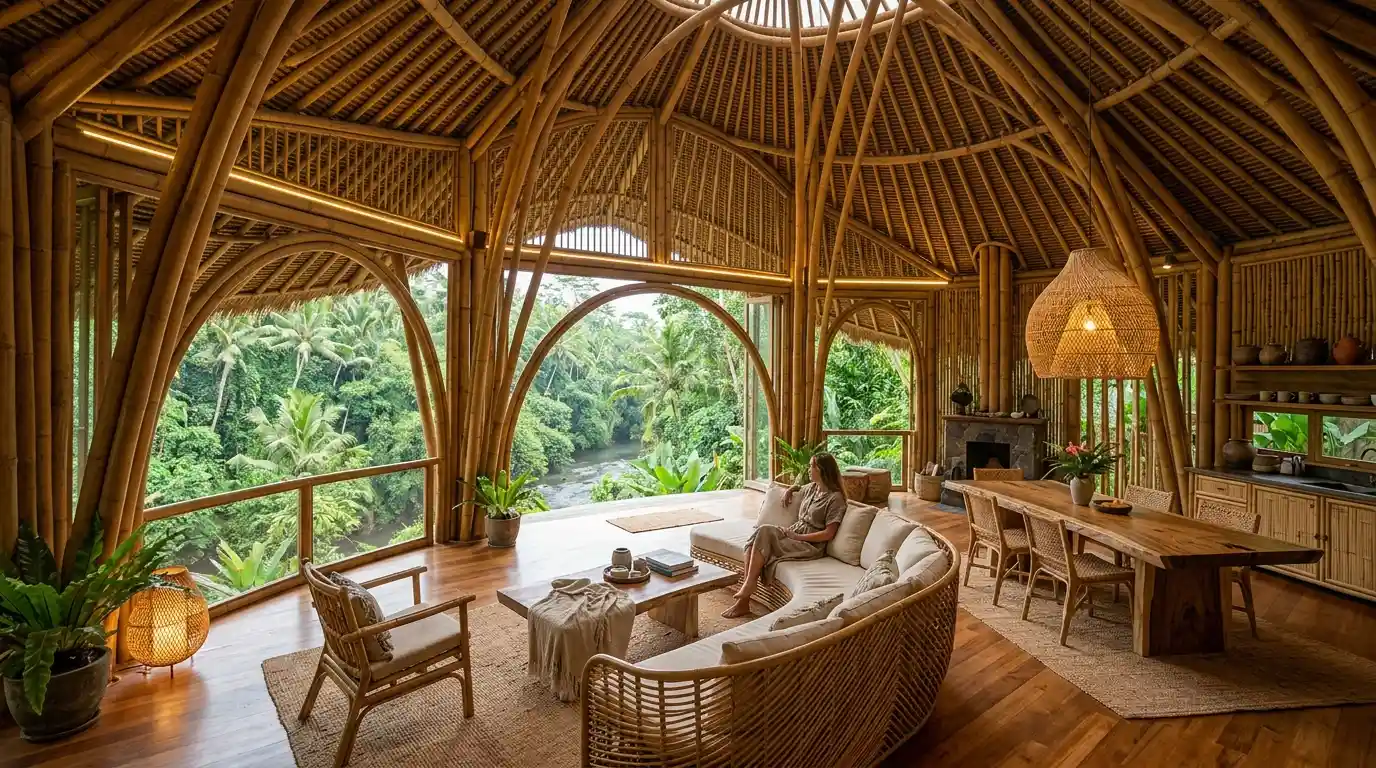
On the Indonesian island of Bali, the tropical paradise setting has made bamboo architecture something close to extraordinary. John, Cynthia, and Elora Hardy founded IBUKU, a design firm that has built spectacular private homes and an all-bamboo campus for the Green School, which provides K-12 instruction entirely within bamboo buildings. They have the Sharma Springs building which is six stories high and provides views of the jungle from an architecture design that resembles that of a lotus flower. Indeed, this is arguably one of the most impressive structures that I have ever seen in my life.
In Mexico, we see the Izakaya Restaurant, where bamboo proves itself able to compete in commercial buildings by providing passive heating and cooling. In Miami, Florida, the architectural firm known as KZ Architecture has designed award-winning affordable housing in flood-prone areas, as well as in hurricane-prone areas in the Caribbean by utilizing bamboo frames, zinc roofs, barrels for storing rainwater, solar energy to provide electricity and hot water, as well as piers to protect against floods. The cost of a house of 600 to 800 square feet is less than $10,000, with tanks, batteries, and pumps costing about $8,107.
Affordable Housing, Developing World Solutions, and Earl Forlales
The affordable housing conversation around bamboo gets interesting with Earl Forlales, a Filipino engineer whose Cubo system is modular, manufactured within a week, and assembled in hours at roughly $10 per square foot. It won first prize at the Cities for the Future competition run by the Royal Institute of Chartered Surveyors. His target was the housing shortage in Manila. Full-scale production was the goal from the start. He wanted to actually build homes, not prototype them.
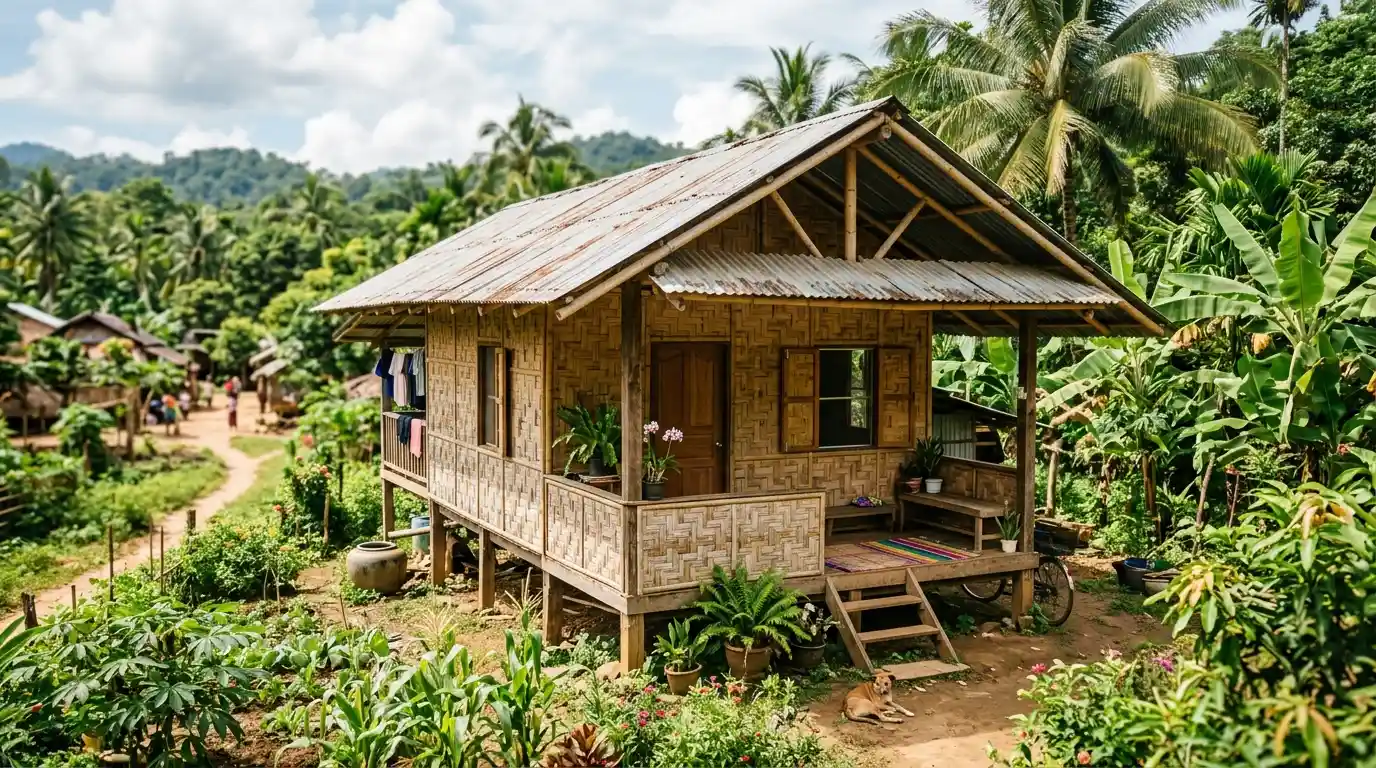
In Nepal, Habitat for Humanity has joined hands with local builders who use local bamboo, which is then stripped and woven into walls by volunteers. The plaster used for coating is made up of mud, straw, water, and dung. Corrugated metal sheets form the roof. The results are inviting homes that came together in about two weeks, for families who needed durable and affordable shelter rather than aspirational architecture.
This kind of construction represents something important that high-end bamboo architecture can sometimes obscure: bamboo as a material for the developing world is not about aesthetics. It is all about making sure that there is access to housing that is not only safe but which can be built by the community using locally available renewable materials. This improves the local economy and decreases dependency on foreign imports.
Prefab, DIY, and the American Market
Bamboo Living Homes has moved bamboo into territory that American buyers can actually access. Their product range includes a 100-square-foot tea room or meditation space starting at $8,300 and three to four-bedroom models reaching 2,700 square feet with a 1,100-square-foot porch. Their buildings come in single-wall and double-wall configurations to handle both tropical habitats and hot-cold zones. Building kits ship in a container straight to the foundation, where experienced certified assemblers put them together in a few days under a 10-year structural warranty.
What makes their model work is the combination of permit-ready prefabricated buildings and an international team of architects and designers who handle the permitting approvals. They offer 3D tours so buyers can explore the space before committing. Furniture, cabinetry, doors, towels, bedding even piña coladas on arrival, apparently come as options for full furnishing in an eco-friendly setup.
For the genuinely adventurous, there is Bamboo U, which runs intensive 11-day courses in Indonesia for aspiring builders who want decades of experience compressed into a hands-on program. Oliver Goshey from Abundant Edge has answered similar questions in a classroom at Green School Bali, laying out pros, cons, and tips for new builders in plain terms. Estaban Morales, a civil engineer who works with earth and wood as well as bamboo, offers courses on hotels, restaurants, and temples across Latin America.
The Joinery Problem Nobody Talks About Enough
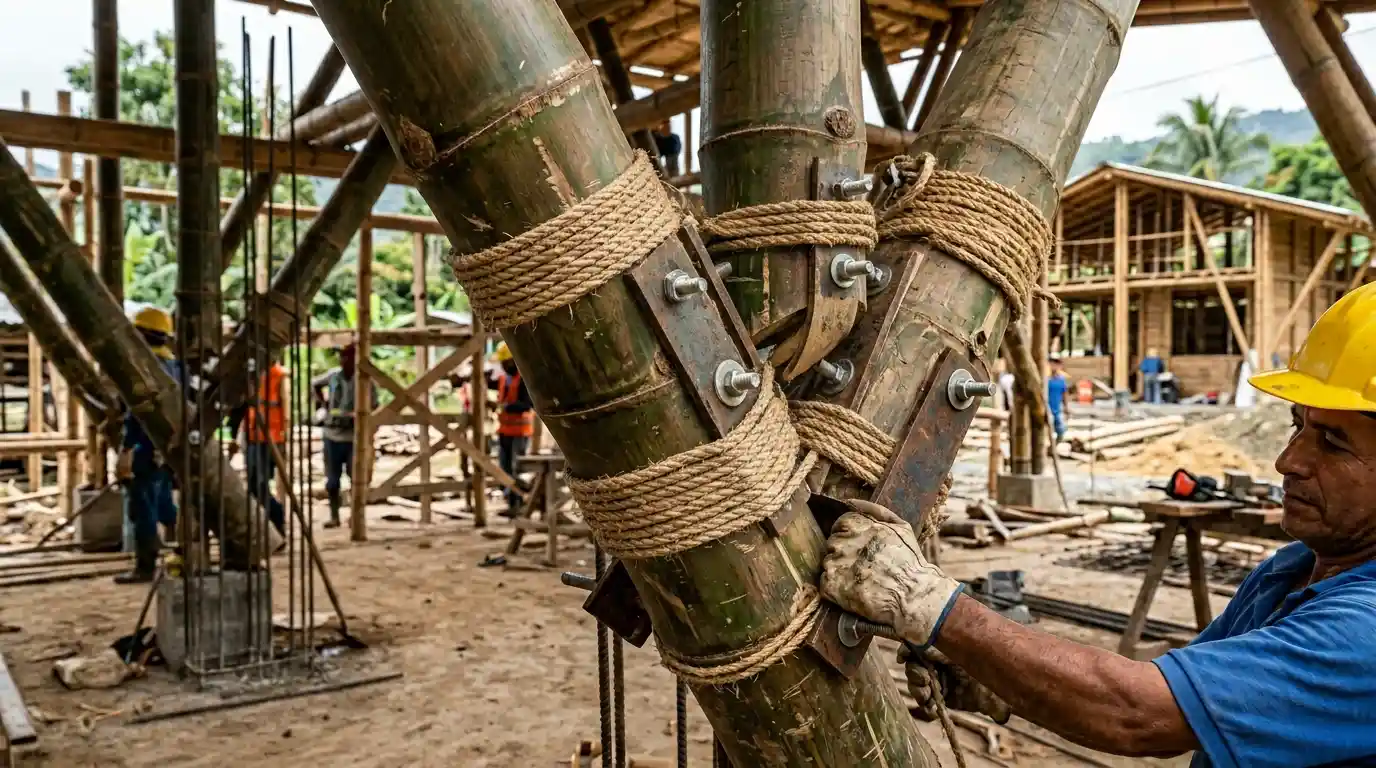
I want to be straight about something most bamboo promotion glosses over. Joinery is genuinely tricky. Round culms require fish-mouth joints cut at the ends and large hole borers for connections. Connecting bamboo pieces takes practice and patience it is not like screwing standardized 2x4s together. There is room for improvement in connection techniques, and anyone working in a region where bambuseros with real skill have built a local knowledge base should find those people and learn from them.
Bamboo also needs treatment. The culms contain full carbs and sugars that insects and fungi target aggressively. Bamboo that has not been treated decomposes easily. Boracic acid is one of the treatments used, though its effects wear off with time, requiring further chemical treatment to prevent premature decomposition. This varies widely depending on climate, exposure, and the specific species used.
For attaching rafters to structural supports, perforated threaded steel rods bent at the top work well brought up through the bottom under washers with nuts screwed tight. Traditional lashing with natural fiber rope, often coconut fiber in Asia or maguey cactus fiber in Central America, remains an option, though the general wisdom among experienced builders is that a saved connection is always the stronger one.
Selecting Varieties and Looking Forward
Selecting the right variety matters more than most guides admit. Out of the 1,200 to 2,000 varieties available, only a fraction are useful for construction-grade work. Some are perfectly suited to a Japanese zen garden. Others will take over a backyard if left unchecked. The Guadua genus remains the leading choice for serious structural work in the New World.
There is growing momentum on the part of contractors and consumers who seek cost-effective and sustainable building materials. The use of bamboo creates less waste, saves energy because of passive cooling and natural ventilation, consumes fewer nonrenewable resources, and has a smaller carbon footprint compared to wood, steel, and concrete. It is not a grass-thatched hut made of haphazard bunches of bamboo and palm sticks. It is a serious construction material resilient, attractive, and increasingly practical in regions where green architects are pushing the codes forward. The potential is, by any reasonable measure, limitless.
Conclusion
Bamboo houses are not a trend waiting to be validated hey already are validated. The engineering data, the permitted prefab systems in Hawaii, the award-winning designs in Bali and Latin America, and the disaster-tested frames in Colombia all point to the same thing. This material has earned its place in serious construction.
What still needs work is the regulatory momentum in countries like the United States, where building codes lag behind what the material can actually do. That gap is closing. And when it does, bamboo houses will stop being the interesting alternative and start being the obvious choice for builders who care about cost, resilience, and the land they build on.I have spent enough time in this subject to say this plainly: the limiting factor was never the bamboo.
Frequently Asked Questions (FAQ’s)
Bamboo houses use construction-grade bamboo as a structural building material rather than only as decoration. Properly selected bamboo offers flexibility, strength, renewable growth, and lower environmental impact, making it suitable for both traditional and modern buildings.
Bamboo can offer an excellent strength-to-weight ratio while remaining more flexible than rigid materials such as concrete. This flexibility is especially valuable in earthquake-prone areas, although bamboo still requires correct engineering, treatment, and skilled construction.
Well-designed bamboo structures can absorb movement instead of resisting it rigidly, which helps reduce damage during earthquakes. Some modern bamboo systems have also been engineered and tested for strong hurricane winds, showing that bamboo can work well in disaster-prone regions.
Builders should choose a construction-suitable species, treat the bamboo against insects and fungi, and use reliable joining methods. Guadua is highlighted as a strong structural option, while untreated bamboo can deteriorate much faster in unsuitable conditions.
They can be, particularly when modular systems, local materials, or prefabricated building methods are used. The article describes low-cost housing projects as well as prefab bamboo homes at different price levels, so the final cost depends heavily on size, location, design, permitting, and construction method.

1 thought on “Bamboo Houses Are Stronger Than You Think Here’s the Proof”