

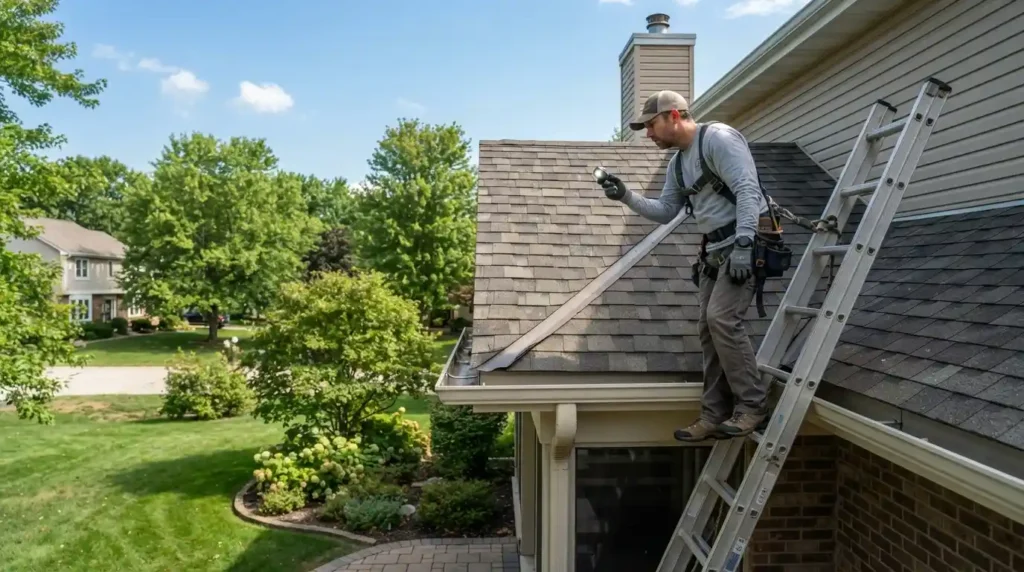
Summer heat finds every weak spot a roof has. It also stresses plumbing you forgot existed. Then a pipe bursts in July and you remember fast. I’ve climbed into enough attics with a moisture meter to know the pattern by now. Small problems sit quiet all spring. Storm season shows up and turns them into five-figure repairs almost overnight. This middle class homes summer roof plumbing checklist exists to stop that jump before it happens. You’ll get seven concrete checks. You’ll get real cost ranges for what you find. And you’ll get a clear line between what you can handle yourself and what needs a licensed roof plumber. None of this requires a luxury budget. It just requires doing the walkthrough before the first heat wave, not after the ceiling stain shows up.
Why Summer Is the Right Time for a Roof and Plumbing Checklist
Heat expansion does real damage. Shingles curl, flashing separates, and sealant that looked fine in April starts cracking by June. Add a summer storm on top of that, and a roof already weakened by UV exposure gives out fast. The National Roofing Contractors Association recommends inspecting roofs at least twice a year, and pre-summer is one of the two windows that actually matters, since it catches winter damage before storm season tests it.
Plumbing follows a similar seasonal logic. Higher water use from irrigation, guests, and pool refills pushes older pipes harder than they see the rest of the year. A slow leak that’s invisible in February becomes a wet drywall patch by August. Checking both systems in one pass just makes sense. Here’s why. A roof problem often shows up as a plumbing symptom. A clogged gutter backs water into a wall cavity. Suddenly you’re chasing a “plumbing leak” that isn’t plumbing at all. It’s a roof issue wearing a different disguise, and I’ve seen homeowners call a plumber three times before anyone checked the gutter above the stain.
How often should I inspect my roof and plumbing in summer?
Once at the start of summer, and again after any major storm. Most home inspectors and roofing associations recommend that baseline. It holds true whether you’re in a modest ranch home or a lakefront estate with three roof lines. Skip that second check after a wind event and you’re taking a real risk. One missed shingle can turn into a full leak in a matter of weeks.
The 7-Step Summer Roof Plumbing Checklist
This is the core of it. I’d rather give you seven specific things to physically check than a vague list of “inspect your roof” advice that tells you nothing. Grab a ladder, a flashlight, and give yourself 45 to 90 minutes — that’s roughly what a thorough DIY pass takes on an average single-family home.
1. Clear gutters and check for ponding
Standing water on a flat or low-slope section means drainage isn’t working. Leaf build-up in gutters can hold 38,000 litres of water annually on a typical roof system before it overflows — that number comes from EPA WaterSense estimates on residential runoff, and it’s a useful reminder of just how much volume a clogged gutter is actually managing.
2. Check flashing around roof penetrations
Look at every place metal meets the roof deck — chimneys, skylights, vent stacks, valley gutters. Cracked or lifted flashing is the single most common source of hidden roof leaks, according to most roof inspection reports I’ve reviewed, more common than missing shingles by a wide margin.
3. Inspect for missing, curling, or lifted shingles
Granule loss and curling edges mean UV damage has already started breaking down the shingle. One or two isolated shingles is a $200–$400 season fix. A widespread pattern across the roof usually means you’re a year or two from needing partial re-roofing instead.
4. Test outdoor faucets and hose bibs
Turn each one on fully and check for weak pressure or drips at the base. A dripping hose bib wastes water all year. It usually points to a worn washer. That’s a cheap fix now. Ignore it and the fitting corrodes, and then you’re looking at a burst pipe instead.
5. Locate and test your main water shutoff valve
Every homeowner should know exactly where this is before an emergency, not during one. Test that it turns all the way. A stuck or corroded shutoff valve won’t help you when you need it most. You’ll be searching for the right wrench while a fixable leak floods the mechanical room.
6. Check the water heater’s age and TPR valve
Water heaters typically last 8 to 12 years. The temperature and pressure relief valve is the safety mechanism that keeps the tank from failing outright. If yours is pushing 10+ years old, budget for replacement instead of another repair. Most plumbers will tell you straight: a unit that age is a when-not-if situation, not a maybe.
7. Walk the attic with a flashlight for water stains
Dark stains, sagging insulation, or a musty smell mean one thing. A slow leak has been running longer than you’d guess. This is the check most homeowners skip entirely. It’s also where the real damage tends to hide, because nobody looks up there until something else forces them to.
DIY Inspection vs Professional Roof Plumbing Inspection
A DIY visual walkthrough catches the obvious stuff. Missing shingles, clogged gutters, dripping faucets, all visible if you know where to look. What it won’t catch is hidden moisture behind a wall or a slow leak inside a vent stack. That’s where infrared scans and moisture meters earn their cost. A professional inspection generally runs $150 to $400 depending on home size and region. The report stays valid for 6 to 12 months, which matters if you’re planning a sale or refinance during that window.
I tell people to think of it as tiered. Do the DIY version every summer without exception. Bring in a licensed roof plumber every two to three years, or sooner if the DIY pass turns up anything beyond a single obvious fix. Skip the professional layer entirely and you’re rolling the dice, and the National Association of Realtors’ Remodeling Impact Report data backs that up. Roof-related issues show up disproportionately often in pre-sale inspection findings, because slow damage stays invisible until someone’s actually looking for it.
Is a professional inspection worth it for a middle class home?
Yes, especially before a sale or after a major storm. The $150–$400 cost is small next to what a missed roof issue costs in a buyer’s inspection contingency. Repair credits and price reductions during negotiation often run several times the inspection fee itself.
What to Do With What You Find
Not every finding needs the same urgency. Rank what you find into three buckets: safety-first repairs, medium-term plumbing fixes, and long-term roof optimization. A TPR valve that’s not functioning is a today problem. Curling shingles on a 15-year-old roof are a this-year problem. A gutter guard upgrade is a whenever-it’s-convenient problem.
Budget realistically too. Minor seasonal repairs stay cheap. A flashing reseal, a hose bib washer, a gutter clean, these usually add up to $200 to $400 total. Bigger fixes cost more. A water heater replacement or a partial re-roof section lands in the $500 to $1,000+ range and climbs from there, depending heavily on local labor rates and material choice.
Conclusion
A summer roof and plumbing checklist isn’t complicated. It just needs to happen every year, not just the year something breaks. Seven checks, done before the heat peaks, catch most of what turns into expensive damage later. Keep records of what you find and fix. That history pays off at resale and helps any inspector who comes after you. Skip the checklist and you’re betting this summer’s storm won’t find the one weak spot you never checked. Most years, that bet doesn’t pay off.
FAQs
What’s the best month to do a summer roof inspection?
Late spring to early summer, generally May or June in most US climates, works best. That timing catches winter and spring damage before summer storms and heat stress make it worse.
How much does a summer roof and plumbing checkup typically cost?
A DIY pass costs nothing but your time. A professional inspection runs $150 to $400, and any repairs found typically range from $200 for small fixes up to $1,000 or more for bigger jobs like partial re-roofing.
Can I do this checklist myself, or do I need a professional?
You can handle the visual walkthrough yourself in under 90 minutes: gutters, flashing, faucets, shutoff valve. Bring in a licensed roof plumber for anything involving hidden moisture, structural concerns, or water heater replacement.
Does fixing small roof and plumbing issues actually save money long-term?
Yes, catching problems early typically costs a fraction of waiting for major damage. Industry estimates suggest homeowners recoup 60 to 70 percent of proactive maintenance costs through avoided emergency repairs and better resale outcomes, based on data cited in NAR’s Remodeling Impact Report.
