

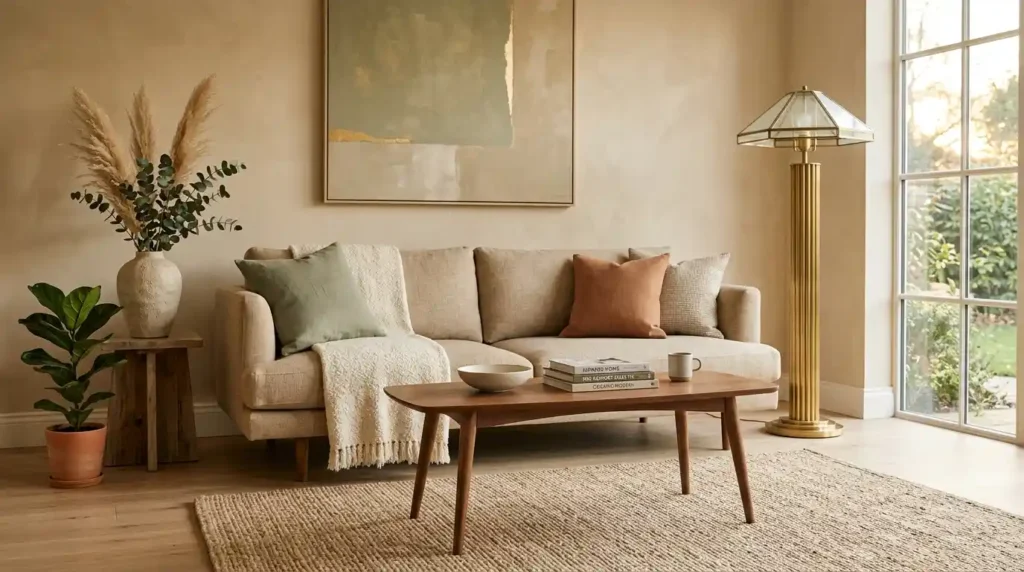
Most people don’t choose a design style so much as stumble into one. They spot a room in a photo, buy the sofa, paint the walls then stand in the finished space wondering why it still doesn’t look like the picture. The missing element is almost never the sofa. It’s usually the underlying logic of the style what it values, what it rejects, and how every decision within it connects to a consistent set of principles rather than a collection of individually pleasing objects.
I’ve worked with enough rooms and enough people who live in them to know that the question “what’s your design style” is really asking something more specific: how do you actually use your home, what does it need to do for you emotionally and functionally, and which visual language reflects that honestly rather than aspirationally. The person who says they want a minimalist interior and also owns a thousand books is not going to be happy in a minimalist interior. The person who says they want farmhouse style but lives in a Georgian flat in Edinburgh is going to have to make adjustments. Style is a starting point and a framework not a prescription applied regardless of context.
This guide works through the most significant interior design styles operating in 2026, what distinguishes each one at the level of form and function, and how to identify which one or which combination actually suits the home and life you have.
The Foundational Styles That Everything Else References
People mix up modern and contemporary constantly, and it’s worth untangling. Modern is a specific historical movement, running roughly from 1920 to 1950: clean lines, honest materials, function before decoration, a clean break from Victorian ornament. Contemporary isn’t a period at all it just means whatever’s current, so in 2026 it pulls from wherever the cultural wind happens to be blowing. A contemporary room in 2026 can have warm wood tones, sculptural furniture, layered textures, and curved organic shapes none of which would have appeared in a strictly modernist interior. Both terms get used interchangeably in property listings and retail catalogues, which is why the confusion persists.
Minimalist interior design inherited modernism’s obsession with clean lines, but it pushes the idea further: negative space isn’t just the absence of clutter, it’s doing actual work in the room. By 2026 the style has softened into what people are calling warm minimalism more tactile texture, more walnut and light wood, more of the understated-luxury look that’s been riding the quiet luxury trend. The real difference from 1990s minimalism is that it doesn’t feel cold anymore. Boucle, linen, textured ceramics, soft lighting that’s where the warmth comes from.
Scandinavian interior design has stayed near the top of every style search list for years, and it’s not hard to see why the principles just hold up. Pearl grey, sandy beige, sage green: a soft neutral palette that bounces light around and makes a room feel bigger than it is. Light wood dominates the floors and furniture, kept to clean lines and natural finishes that play up texture. The goal is a calm, ordered space where every object earns its place a habit Scandinavian design picked up from surviving long, dark winters, but one that works just as well anywhere natural light matters.
Japandi is probably the biggest hybrid style to emerge in the last five years, and it’s still gaining ground in 2026. Mix Japanese and Scandinavian design principles and you get something neither tradition produced alone: soft, earthy colours greige, sand, anthracite low furniture that keeps everything grounded, and a wabi-sabi attitude that treats imperfection as the point rather than a flaw to fix. Raw wood, linen, rice paper, textured ceramics these are the materials that show up again and again. Spaces are never overcrowded emptiness is treated as an active component of the composition rather than dead space awaiting furniture. Lighting is diffuse and soft. The style has particular appeal for homeowners in urban settings who find the western minimalist interior visually sterile but find Japandi’s earthier, more philosophical approach to sparse spaces genuinely calming.
The Warm and Personality-Led Styles That Have Dominated 2025 Into 2026
Mid-century modern just won’t go away, and the reason is simple: it manages to look retro and current at the same time. Organic furniture shapes, walnut, rosewood, teak, big picture windows and sliding doors pulling in natural light, and the odd hit of mustard yellow or avocado green against a neutral backdrop. It also plays well with other styles industrial, bohemian, contemporary which is half the reason it survives: it gives a room a warm, coherent base that can absorb mismatched objects and different eras without falling apart. Bohemian interior design, on the other hand, almost refuses to be pinned down which makes sense, since the whole point of the style is that it doesn’t follow rules.
Free-spirited and nomadic in its origins, it draws from global design traditions woven wall art, travel souvenirs, layered textiles, plants, mixed patterns and eras and resists the impulse to match or coordinate rigorously. The 2026 version has absorbed the maximalist comfort direction that designer Anne Marie Ostmeyer described as clients “moving away from minimalism and embracing maximalist comfort: rooms with multiple seating areas, layered rugs, and throws in varying textures.” Bohemian is the style framework that accommodates this instinct most naturally.
Organic modern is the style response to a decade of Scandinavian minimalism and the collective desire for something warmer and more textural without abandoning the restraint that makes minimalism appealing in the first place. Think biomorphic shapes, warm wood, natural stone, earthy neutrals the taupes and terracottas everyone’s forecasting for 2026 in rooms that feel put-together but not stiff. Living walls, houseplants, natural fibres, handwoven textiles with visible maker’s marks instead of machine-perfect uniformity. It’s basically biophilic design taken seriously, applied to a whole room instead of stuffed onto one shelf of plants.
Farmhouse interior design covers more ground than its name implies. The American version shiplap, exposed beams, neutral palette, galvanised metal, apron sinks only really works in a property that has some genuine architectural connection to that vocabulary already. The European or cottagecore take comes from a different place entirely: stone walls, linen, mismatched antique furniture, flagstone floors, charm that’s accumulated rather than designed in. What both versions share is natural materials, handmade details, and an allergy to anything that looks too polished or corporate.
The Bold End: Maximalism, Art Deco and Styles That Demand Commitment
Maximalism spent a decade as the style minimalism pushed out, and now it’s having its moment back plenty of homeowners who’ve lived in neutral rooms for ten years just want something else. The look mixes bold colour, pattern, and texture freely, built around whatever the homeowner actually likes rather than one coordinated palette: statement furniture, busy walls, bold hues, no apology. Jewel tones, metallic finishes, ornate mirrors, colourful wallpaper, plush fabrics, vintage pieces sitting next to modern furniture all of it fair game. The line between maximalism done well and a room that’s just full of stuff comes down to one thing: intention. Curated maximalism produces rooms with visual density that rewards examination. Unintentional accumulation produces rooms that exhaust the eye. MILGARD
Art Deco interior design requires perhaps the strongest architectural commitment of any style on this list to work correctly. Bold geometric patterns, metallic accents brass, chrome, gold rich jewel tone upholstery, antique bar carts, leather banquettes, and the kind of glamorous detail that references 1920s and 30s Parisian and American design. The style has seen a genuine 2026 revival, partly through the chunky 90s-inspired furniture trend that shares some of its formal drama and partly through the curated nostalgia moment that has brought heirloom objects and vintage ceramics back alongside modern décor.
Industrial interior design takes the look of a working building warehouse, factory, converted loft and moves it into a house. Exposed brick, concrete, steel beams, pipe shelving, Edison bulbs hanging bare. The whole point is materials that look like what they are, surfaces that haven’t bothered hiding their history. It’s changed since its mid-2000s peak, though the current version pairs all that rawness with warm wood, woven textiles, and enough plants that the room doesn’t feel like an actual warehouse.
How to Navigate the 2026 Shift From Single Style to Hybrid Aesthetic
The era of a single dominant style is over. The future is defined by diversity, personalisation, and smart functionality. While foundational styles like Modern, Contemporary, and Luxury continue to form a dominant core of 65.42% of the market, there is a powerful surge in niche and hybrid aesthetics. The driving philosophy has shifted from “what style is my home” to “how does my home reflect my lifestyle and values” a framing that makes the style question more honest and the answer more personal. Smart Exteriors
The practical implication of this shift is that most rooms in 2026 are built from a primary style framework with deliberate influences from one or two others. A Japandi primary framework with bohemian textile influences. A contemporary base with mid-century modern furniture and industrial lighting. A farmhouse structure with Art Deco accent pieces and Scandinavian restraint in the colour palette. The mixing works when the styles share at least one philosophical commitment natural materials, restraint, warmth, honesty of form and when the combination is deliberate rather than the result of purchasing decisions made at different times without a coherent plan.
The transitional interior design style is the category that accommodates this mixing most gracefully it doesn’t commit to any single historical period or philosophical position, instead blending traditional and contemporary elements in rooms that feel timeless rather than dated. It’s the most forgiving framework for a homeowner who genuinely loves multiple styles and resists choosing between them, and it’s the style that ages best in property terms precisely because it doesn’t make a strong enough aesthetic statement to feel irrelevant as trends shift.
Identifying which interior design styles actually suit a specific home requires a sequence of honest questions before a single purchase gets made. What does the architecture of the property already suggest Victorian or Georgian detailing, new build neutrality, converted industrial space? What do the people living there actually need from the space calm, stimulation, flexibility, display space for collections? And how much visual complexity actually energises you, versus wears you out? Answer those honestly and the style list narrows itself faster than any online quiz and what’s left is a framework the finished room has to answer to, not a mood board it slowly drifts away from.
Conclusion
Knowing the full range of interior design styles is really just step one. The real work is matching what you’ve read here to the architecture you actually live in and the way you actually use a room not the version of your life that would look good in a photo. Pick a primary framework, borrow from one or two others if it suits you, and let the room earn its place instead of just performing for a mood board.
Frequently Asked Questions (FAQ’s)
Popular interior design styles in 2026 range from minimalist, Scandinavian, and Japandi to Mid-Century Modern, Organic Modern, Bohemian, Maximalist, Art Deco, and Industrial. Rather than following one style rigidly, many homes now use a primary aesthetic with carefully chosen influences from one or two others.
Modern design refers to a defined historical movement known for clean lines, functional forms, and limited ornament. Contemporary design reflects what feels current now, so it can include warmer woods, curved furniture, layered textures, and other elements that traditional modernism would not typically use.
Start with your home’s architecture, how you actually use each room, and the amount of colour, texture, and visual detail you enjoy living with. A good style should support your lifestyle rather than force the space to imitate a photograph or trend.
Yes, especially when the styles share common ideas such as natural materials, warmth, simplicity, or honest forms. The combination works best when one style remains the main framework and the others appear as deliberate influences rather than unrelated additions.
Scandinavian design suits people who prefer light woods, soft neutrals, and an airy sense of order, while Japandi adds earthier colours, lower furniture, natural imperfections, and stronger Japanese influence. Choose Japandi if you want a warmer, more grounded version of restrained design; choose Scandinavian if brightness and simplicity matter most.
