

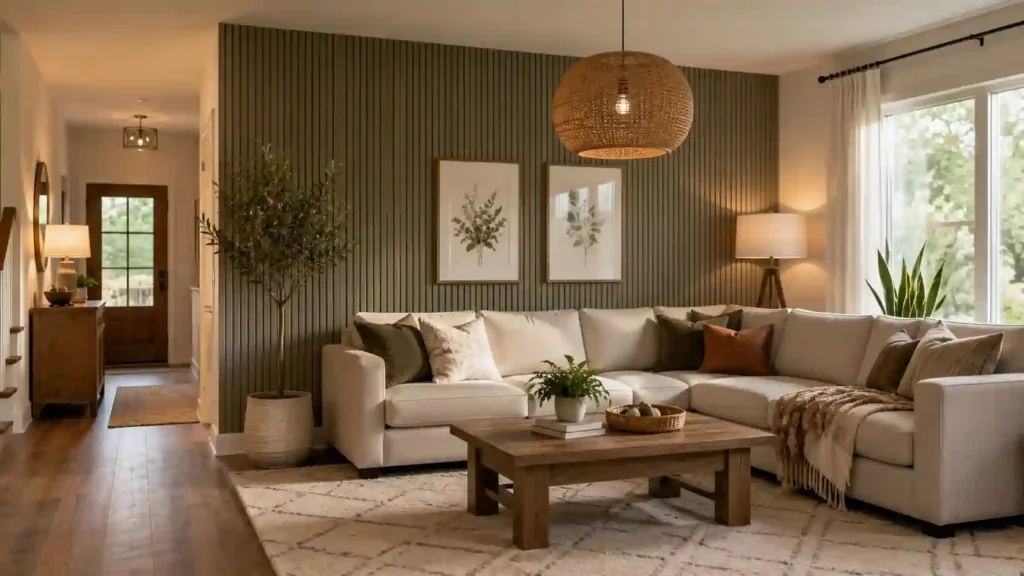
My grandmother always called it the living hall, never the living room. I didn’t get the distinction as a kid. Now, after helping decorate three different homes for family members, I do. A living hall is the first impression, the gathering point, the space that has to work for guests on Sunday and a kid doing homework on Tuesday. Most decoration advice ignores that double duty completely.
I’m going to walk through this the way I’d actually talk someone through their own living hall in person starting with the big, expensive decisions and circling back to the small, cheap fixes that often matter more than people expect.
Furniture First, Because Everything Else Gets Built Around It
A sectional sofa works beautifully in an open concept living room, but it swallows a smaller living hall whole. I learned this the hard way. An L-shaped sofa tucked into a corner frees up more usable floor space than a straight sofa pushed against a wall I made that exact swap last year and gained almost three feet of walking path I didn’t know I was missing.
Once the main seating’s decided, everything downstream gets easier. A loveseat paired with a single armchair gives you more seats than a main sofa alone without eating the room alive. Nested stools tucked under a center table are a trick I picked up from a friend’s apartment pull them out and four more guests suddenly have somewhere to sit. An ottoman pulls double duty too, footrest most evenings, spare seat the one night it’s actually crowded.
Tables matter more than people give them credit for. A coffee table anchors most living room interior design layouts; a center table works just as well if the space leans formal. Side table and end table placement near every seating cluster means drinks and books always land somewhere instead of balancing on an armrest. A console table floating behind a sofa adds storage without blocking sightlines.
Storage is where a lot of living halls quietly fall apart. A storage bench by the entry absorbs shoes and bags before they pile up. Modular furniture lets you reshuffle the whole layout the moment guests arrive, no shopping required. And refurbished furniture an old credenza, a recliner found secondhand somehow has more character than anything bought new and matching, while costing less.
One more thing on the furniture side: the TV unit or TV stand needs its own plan, not an afterthought bolted on at the end. A media console with floating shelves above it hides cables and shows off decor in the same glance. Bookshelf placement nearby turns the whole wall into something lived-in rather than just a screen mount with a couch facing it.
Color Comes Next — It’s Cheaper to Get Wrong Than Furniture, So Take More Risks Here
White walls white furniture creates an expansive, bright feel that genuinely suits smaller living halls. Cream walls and beige tones land close to that, just warmer than stark white. Going darker takes more nerve dark plum purple on a single wall reads confident, not heavy, as long as everything else stays lighter. Pastel shades like powdery pink soften a room getting hit with harsh daylight through south-facing windows.
Nature gives you color confidence you don’t have to invent. Sage green and pista green both echo outdoor landscapes once they’re inside. Emerald green pushes that further and looks rich against gold or brass accents. Teal, mustard, and terracotta bring warmth that neutral colors alone can’t deliver.
There’s a real choice buried here between bold contrast and quiet cohesion. A bold color palette with several saturated hues suits eclectic style rooms already comfortable with visual noise. Monochromatic colors create something calmer, closer to a minimal glam style feel, where texture does the talking instead of color. Accent colors layered over a neutral base split the difference.
Now Walls — Because Color and Wall Treatment Decisions Actually Depend on Each Other
One accent wall does more than four competing ones ever will. A feature wall behind the sofa or TV becomes an instant focal wall without tipping the room into chaos. Wall panelling batten and board panelling specifically adds texture without a single coat of paint. An MDF back panel cut into a honeycomb pattern hides TV wires while looking deliberate instead of makeshift.
Texture from unconventional materials changes a room faster than paint does, and this is worth considering before committing to your color story above. Stone cladding on a single wall section reads raw against softer furniture. Brick wall accent treatments do something similar, both pairing especially well with industrial design style spaces.
Wallpaper gives you personality without permanent commitment. A 3D wall effect panel adds depth to a flat space. Textured wall panels in folk art wallpaper patterns bring in cultural character fast. Stencil painting is the budget version far cheaper, just as capable of transforming a forgettable wall.
Wall art works as a genuine conversation starter, but only if you commit to scale. Hang one large piece in a smaller living hall rather than scattering several small ones. A gallery wall earns its place in bigger, formal living rooms it needs negative space around it to breathe.
Mirrors solve two problems at once, light and style. A mirror wall opposite a window bounces natural light deep into a room that might otherwise feel dim. A statement mirror especially a jharokha-style mirror with ornate framing works as wall art and light enhancer simultaneously. Framed family photos arranged near that mirror add warmth no generic print quite manages.
Lighting Ties the Walls and Color Together, So Don’t Treat It Last
Living room lighting works in layers, not one overhead fixture doing everything. Ceiling lights handle general illumination. Table lamps add warmth at eye level. Floor lamps catch the dark corners overhead light always seems to miss.
Spot lighting aimed at wall art or that feature wall you just picked turns decor into a genuine focal point once the sun goes down. Accent lighting tucked behind shelving adds depth without flooding the room a trick I wish more people used, because it’s cheap and the effect is dramatic. Pendant lights hung low over a center table fill the role a chandelier usually plays, at a fraction of the cost. Ornate pendant lights with brass or carved detailing suit a traditional Indian style room especially well.
A reading nook by a window seat needs its own dedicated lamp base instead of borrowing whatever ambient light the room happens to have. Coloured lights, used sparingly, can shift a room’s entire mood for one evening without changing anything permanent useful for a festival or a one-off gathering rather than everyday use.
Textiles, Which Quietly Do More Work Than People Expect
Curtains should get chosen on light first, color second. Sheer curtains let natural lighting flood in while still offering privacy. Blackout curtains matter more in a room doubling as a media space, where glare on a screen actually ruins movie night. Curtain rods mounted on a ceiling rail handle floor-to-ceiling windows better than standard hardware, which looks visually heavy at that height. Drapery hardware in matte black or brass ties curtains to whatever metal accents already exist elsewhere.
Rugs layer the way outfits do, and most people under-use this. An area rug anchors a seating arrangement and can visually separate a living hall from an adjoining dining space in an open floor plan, no construction required. A shag rug adds texture underfoot a flat weave never will. Natural fiber rug options bring a relaxed appeal that pairs naturally with rustic modern style decor.
Cultural textile character deserves a deliberate place too. Ethnic rugs and dhurries genuinely belong in a traditional Indian style living hall. Ikat textiles on cushion covers or throws bring in pattern without overwhelming a neutral base. Handloom fabric upholstery on even one accent chair elevates that single piece into something close to a statement.
And then there’s the fastest fix in this entire guide: cushions. Throw pillows and decorative pillows refresh a tired sofa for less money than almost anything else here. Velvet upholstery on one chair alone adds tactile richness fabric on its own rarely achieves. A patterned curtain set that echoes your rug’s color creates cohesion without forcing everything else to match exactly.
Decor Accessories — Small, but This Is Where the Room Stops Looking Like a Showroom
Indoor plants and houseplants bring genuine, visible life into a room furniture and fabric alone can’t deliver. One large floor plant near a window does more visual work than five small pots scattered across shelves.
Display objects with some intention. A flower vase or small vase grouping on a console table becomes a changeable focal point you can refresh by season. Showpieces on floating shelves stay visible without claiming any floor space.
Metallic warmth fixes a room that’s gone too cool or too matte. Brass decor and copper decor an Urli bowl filled with water and flowers, candles in brass holders bring warmth flat, cool-toned decor sometimes lacks. Metallic accents and a gold framed mirror catch light matte surfaces never will.
This is also where cultural and personal layers separate a room that feels like a catalog from one that feels like home. Cultural artifacts, handicrafts, and idols, displayed with some thought, reflect the people actually living there. Antique vases and sculptures collected over years tell a more interesting story than anything bought as a matched set in one trip.
And storage can disguise itself as decor, almost as an afterthought worth remembering. Decorative trays corral remote controls and coasters into something intentional-looking. Baskets tucked under a console table hide clutter while adding texture. Ottomans for storage solve the same problem with a seat built on top.
Pick a Style Before You Buy Anything Else — This Is the Mistake I See Most Often
Pick one lane instead of mixing everything at once. This is the single biggest mistake I notice in living halls that feel busy without feeling intentional. Modern farmhouse style leans into warm wood and simple lines. Rustic modern style does something similar with a slightly more polished finish. Scandinavian design style strips everything back to natural materials and quiet color almost the opposite instinct from farmhouse warmth.
If neutral feels boring, push further. Industrial design style brings in raw brick and exposed metal. Bohemian style and boho style layer pattern, texture, and color without much restraint. Eclectic style mixes eras and origins on purpose, which is different from mixing them by accident through years of unplanned purchases.
Traditional styles reward genuine commitment more than any direction here. Traditional Indian style, regal style, and ornate style all draw from carved wood, rich textiles, and intricate detail layered generously. North Indian living room style pulls specifically from Mughal art influence carved furniture, Persian rugs, bold chandeliers working in concert rather than competing.
And cultural and spiritual considerations still guide plenty of real households worth respecting, not treating as decoration trivia. Vastu properties and Vastu beliefs shape furniture placement and mandir placement in many Indian homes specifically. Jaali work, jhoola swing seating, and the Oonjal wooden swing carry decorative and cultural weight at once. Warli art on an accent wall, paired with folk art wallpaper, brings regional Indian craft traditions into a contemporary living hall without feeling like a costume.
Last, the Money Talk — Because Everything Above Means Nothing Without a Real Budget
Start with furniture you already own. Rearranging what’s already in the room solves more problems than most people expect, and it costs nothing. Multifunctional furniture small spaces solutions a storage ottoman, a console table that unfolds into a desk matter far more in compact living space than in a larger formal living room.
Respect the room’s actual proportions instead of fighting them. Space-saving furniture sized correctly for an apartment living room avoids the cramped feeling that comes from forcing pieces meant for a bigger house into a smaller footprint. A clutter-free living room reads larger than its actual square footage, every time.
Here’s where the real numbers matter, and most blogs skip this part entirely. Soft furnishing refresh cost typically runs ₹1,500 to ₹4,000 for cushions, throws, and small textile swaps. Floating shelves cost ₹3,000 to ₹8,000 installed. A plywood table cost lands at ₹4,000 to ₹12,000 depending on finish. Rug zoning cost for splitting an open floor plan runs ₹1,500 to ₹7,000. Décor cost overall art, cushions, curtains combined typically falls between ₹5,000 and ₹20,000, with lighting adding another ₹3,000 to ₹10,000 on top. A full interior consultation cost, bringing in a professional rather than going it alone, runs ₹5,000 to ₹25,000. Total estimated cost for a complete budget-conscious refresh lands somewhere between ₹28,000 and ₹1,05,000 depending on how far you take it.
Layout problems need solving before decorating problems even enter the picture. Furniture layout and seating arrangement should account for walking paths and traffic flow before a single cushion gets chosen get this wrong and no amount of decor fixes it afterward. Room zoning using a rug or a low bookshelf as a soft divider works well in studio apartment decor and rented apartment decor, where actual walls can’t move. Static elements plug sockets, TV port placement, phone socket placement should drive furniture layout decisions, not get fought against after the furniture’s already arranged.
Furniture symmetry creates a sense of calm that suits a formal living room. A deliberately asymmetrical layout suits a more casual living space, or a multifunctional living room that needs to flex between different activities across a single day. That’s really the whole game, whatever budget you’re working with.
Conclusion
A living hall, drawing room, lounge, or family room whatever your household calls it works best when furniture, color, lighting, and texture all get chosen with real daily use in mind, not just how one photo would look. Decide on seating and tables sized to your actual square footage first. Commit to one confident wall treatment instead of four competing ones. Layer lighting in at least three types. Let textiles and decor accessories carry the personality the bigger furniture pieces can’t. Budget using the real numbers above, and commit to a specific style traditional Indian, Scandinavian, industrial, or otherwise instead of blending everything into something forgettable. The best living hall decoration ideas aren’t the expensive ones. They’re the ones that survive contact with the people who actually live there.
Frequently Asked Questions (FAQ’s)
Start with the main seating because the sofa size and placement determine walking space, tables, lighting, and TV positioning. Once the furniture layout works for everyday use and guests, the smaller decorating decisions become much easier.
An L-shaped sofa is usually easier to fit into a compact living hall because it can use a corner without blocking major walking paths. A large sectional works better in an open or spacious living room where it will not overwhelm the available floor area.
Use correctly sized furniture, light wall colors, mirrors near natural light, and a clutter-free layout with clear traffic paths. Multifunctional pieces such as storage ottomans, nested stools, and slim console tables can also add function without filling the room.
Based on the upgrades covered in this guide, a complete budget-conscious refresh can range from about ₹28,000 to ₹1,05,000, depending on furniture, textiles, lighting, wall treatments, and professional help. Smaller changes such as cushions, rugs, shelves, or new lighting can be completed for far less.
Choose the style that fits your home’s architecture, existing furniture, and the way your family actually uses the space. Modern styles such as Scandinavian or industrial design favor simpler forms, while traditional Indian, regal, and North Indian styles rely more on carved furniture, rich textiles, cultural details, and decorative finishes.

6 thoughts on “Living Hall Decoration Ideas That Actually Work Once Real Life Moves In”