

I ruined a wool rug once. Cream colored, fairly expensive, belonged to my mother-in-law. I grabbed white vinegar the go-to for every homemade carpet cleaner recipe on the internet and went at a red wine stain like I knew what I was doing. The stain faded. The fibers didn’t. That rug still has a rough patch where the acetic acid broke the keratin structure down. Wool and vinegar don’t mix, and nobody in any of those recipe posts mentioned it.
That one mistake taught me more about DIY carpet cleaning than a hundred successful spot treatments. The ingredient isn’t the problem. Using the wrong ingredient on the wrong fiber that’s where things go sideways. So before any recipe, any ratio, any spray bottle gets involved, there’s one thing to sort out first.
Know Your Fiber Before You Touch a Single Ingredient
Pull a carpet fiber from somewhere nobody looks the far corner under a sofa, inside a closet doorway. Hold it with tweezers over a lighter flame. Watch what it does.
Synthetic fiber carpet curls away from the heat. Nylon carpet, polyester carpet, olefin carpet, acrylic carpet all four behave this way. Natural fiber chars without pulling back. Wool carpet does this. Cotton carpet too. Sisal rug and jute rug go the same way, and they’re even more sensitive to moisture than wool is.
Why does this matter so much? Because nylon carpet and polyester carpet handle white vinegar, baking soda, Dawn dish soap, and hydrogen peroxide without a problem. Olefin is hydrophobic water rolls right off it, but oil-based stains sink in deep and need a different approach. Acrylic carpet gets marketed as synthetic wool sometimes. It’s soft underfoot, resists mold and mildew, and tolerates most homemade carpet shampoo recipes without issue.
Wool carpet is a protein fiber. Keratin is the structural material same thing human hair is built from. Acidic solutions like distilled white vinegar attack it. So does oxygen bleach and anything with high alkaline content. The pH safe range for wool runs between 5.5 to 8.5. Step outside that and you get color bleed, fiber breakdown, or both. A wool-specific detergent diluted in lukewarm water is the safe path. WoolSafe approved products exist specifically for this situation. Wool blend carpet has slightly more tolerance, but not by much still treat it carefully.
Sisal rug and jute rug are the most water-sensitive of all. Over-wetting destroys the backing permanently. Use powder formula and dry methods only on these two.
Check the carpet care label or manufacturer tag first. Fiber content is printed there. If the tag’s long gone, the fiber burn test takes thirty seconds. Thirty seconds is less time than it takes to order a replacement rug.
What Each Ingredient Actually Does to a Stain
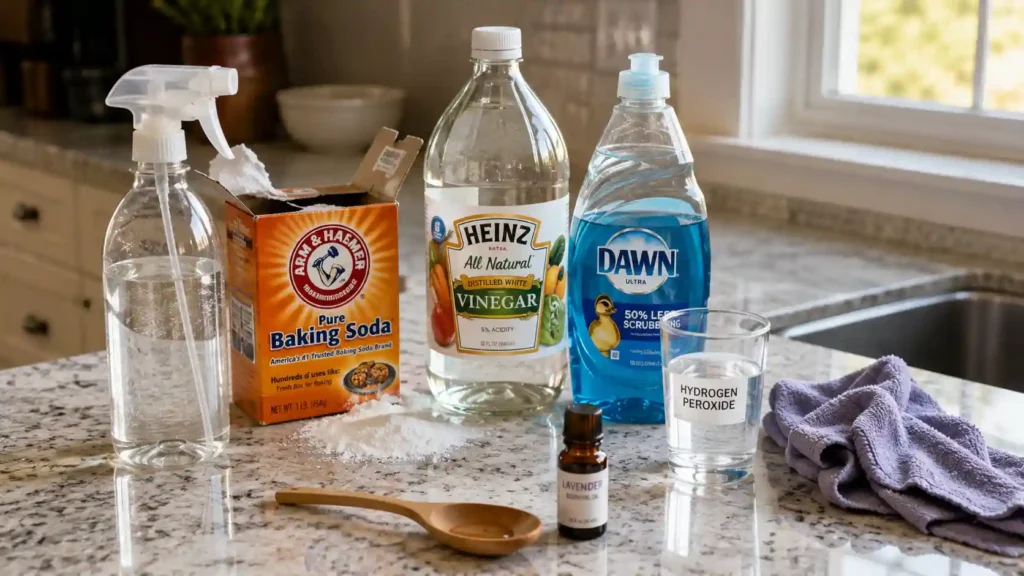
Most DIY carpet cleaner solution guides hand you a list of ingredients without explaining the chemistry behind them. That’s backwards. Once you understand what each ingredient does, you stop following recipes blindly and start solving actual problems.
White vinegar
White vinegar specifically distilled white vinegar carries acetic acid. Acetic acid dissolves mineral-based deposits, breaks down many stain compounds, and neutralizes alkaline odors without leaving residue behind. That’s why a 50-50 mix of vinegar and warm water handles routine carpet cleaning on synthetic fiber so reliably. Regular white vinegar works too, but distilled has more consistent acidity batch to batch.
Baking soda
Baking soda does two separate jobs depending on how you use it. Used dry, it absorbs odor sprinkle it on a pet stain area, let it sit ten minutes, then vacuum. The organic odor compounds bind to the sodium bicarbonate and come up with it. Mixed with vinegar into a paste consistency, it adds mild abrasive action on a set-in stain. The fizzing when you combine them is carbon dioxide escaping harmless. The cleaning comes from the baking soda and acetic acid, not the bubbles.
Liquid dish soap
Liquid dish soap Dawn dish soap specifically is a surfactant. It reduces surface tension between the stain molecule and the carpet fiber. That’s what lets water actually lift the stain rather than push it sideways. One teaspoon per cup of water is enough. Go heavier and you leave a residue that attracts new dirt fast. I’ve made this mistake more than once. The carpet looked worse two weeks later than it did before I cleaned it.
Hydrogen peroxide
Hydrogen peroxide works through oxidation it chemically breaks stain compounds apart. Sodium percarbonate, the active ingredient in OxiClean, releases hydrogen peroxide when mixed with water and does the same thing. Both carry real hydrogen peroxide bleaching risk on dark or colored carpet. Always test on a small area nobody sees before treating the full stain. On light synthetic fiber carpet, 2/3 cup hydrogen peroxide plus 1 tablespoon dish soap handles stubborn stains that vinegar leaves behind.
Borax
Borax is a naturally occurring mineral that boosts cleaning power in a homemade carpet shampoo for machine use. Mix it with baking soda and hot water as a pre-treatment on heavily soiled nylon carpet or high-traffic carpet areas. Keep it away from young children and pets until fully rinsed and dried it’s a natural mineral, but it’s not harmless in quantity.
Alcohol
Rubbing alcohol evaporates fast. That’s exactly what makes it useful on ink stain and grease stain it lifts the compound without soaking down into the carpet backing. Dab it on with a clean white cloth, never a colored one. Color transfer from a damp cloth onto wet carpet happens faster than you’d expect.
Cornstarch
Cornstarch is the right first move on a fresh oil stain or butter stain. Sprinkle it straight on the spot. Give it fifteen minutes to absorb the grease. Vacuum it up. Whatever grease remains responds well to a light rubbing alcohol carpet stain hack afterward. This cornstarch grease stain carpet method works on car interior carpet just as well one of those less-discussed DIY carpet cleaner for car interior applications that outperforms most dedicated auto products.
Club soda
Club soda has earned its reputation on red wine stain and coffee stain. The carbonation physically lifts the stain compound toward the surface where you can blot it off. Pour on, blot immediately, then follow with a vinegar and water spray.
Salt
Salt poured on a fresh wine spill absorbs the liquid before it fully bonds with the fiber. It’s not a cleaner. It’s a sixty-second emergency move that buys you time before the real treatment.
Essential oils
Essential oils add natural fragrance and varying antibacterial properties to any spray bottle solution. Lavender oil is mild and broadly safe. Tea tree oil has the strongest antibacterial properties of the group. Lemon essential oil and peppermint oil both work well. Ten to fifteen drops is enough in any solution. More doesn’t clean better it just smells louder.
Fabric softener
Fabric softener in a machine formula acts as a conditioning ingredient that leaves fibers soft after deep cleaning. Half a cup per gallon works well in both a Bissell machine and a Rug Doctor solution.
The Recipes, Each Matched to a Specific Problem
Everyday synthetic carpet — spray bottle solution:
One cup white vinegar, one cup warm water, one teaspoon dish soap, ten to fifteen drops lavender oil. Shake before each use. This all natural carpet cleaning solution handles food stain, dirt stain, mud stain, and mystery stain on nylon carpet, polyester carpet, and olefin carpet. Spray it on, let it sit five to ten minutes, then blot.
Pet stain, dog urine stain, cat urine stain:
Two-thirds cup hydrogen peroxide, one tablespoon dish soap, two tablespoons baking soda. Apply directly to the stain area. Ten minutes minimum dwell time. Blot, rinse with clean water. After the carpet dries, sprinkle baking soda powder over the spot to neutralize any remaining organic odor. Vacuum after thirty minutes. This is the stronger cousin to the simple two-ingredient carpet odor remover approach.
Oil stain, butter stain, grease stain:
Cornstarch directly onto the spot. Fifteen minutes to absorb. Vacuum it up. Dab remaining mark with rubbing alcohol on a microfiber cloth. Done. This cornstarch grease stain carpet method transfers directly to car interior carpet — same process, same result.
Odor without a visible stain — carpet freshener powder:
Equal parts baking soda and cornstarch powder mixed together. Add fifteen drops peppermint oil or lemon essential oil. Transfer to a container with small holes in the lid. Sprinkle over the whole area rug or hallway carpet. Ten minutes for routine freshening, longer for a musty carpet smell or urine odor situation. Vacuum thoroughly. This DIY carpet freshener powder needs no liquid, no machine, no drying time.
Deep clean in a carpet cleaning machine:
Into a one-gallon jug: one cup hydrogen peroxide, one-eighth cup dish liquid, one tablespoon OxiClean, half a cup fabric softener. Fill the rest with hot water. Use one-quarter cup of this concentrated solution per gallon of machine water, or two ounces per reservoir. Add it in small amounts — this is a concentrated machine solution, not a free-pour formula. I’ve run this homemade carpet shampoo for Rug Doctor rentals and through my Bissell machine for years without any problem. That said check your machine warranty terms before switching off branded solution. Some manufacturers are specific about this and will void coverage.
Applying It Right — Technique Matters as Much as the Recipe
Vacuum before anything else touches the carpet. Dry dirt and debris grind deeper into fiber when wet. This single step changes how well any carpet cleaner recipe performs.
On a vomit stain or feces stain, scoop solids out first with a spoon. Then blot the liquid press straight down and lift, don’t drag the cloth across. Dragging turns a wine spot into a wine smear that covers three times the original area.
Spray the solution on the stained area. Don’t pour it. Avoid over-wetting at every step carpet delamination happens when the backing layer gets saturated repeatedly. The layers separate from each other. That damage doesn’t reverse.
Let it sit. Five minutes for a fresh stain. Ten for stubborn stain. Fifteen for a set-in stain or old grease stain. Blot excess liquid with a microfiber cloth after dwell time, then rinse with plain water to flush soap residue out of the fiber. Any surfactant left behind draws dirt back to that exact spot within a week. I’ve cleaned the same patch three times in a month because I skipped this step.
Air dry completely before walking on the area. Let dry thirty minutes before vacuuming if you used a deodorizing powder. A fan running across the surface cuts drying time significantly on plush carpet or thick wall-to-wall carpet.
For machine cleaning on Berber carpet or low-pile carpet: fill the machine reservoir, add the concentrated machine solution at the correct ratio, run per manufacturer instructions. A second pass with plain water pulls out remaining solution and prevents residue buildup optional, but worth the extra ten minutes.
The patch test on a new recipe is not optional. Under a piece of furniture, inside a closet corner apply the solution, wait ten minutes, check for color bleed, discoloration, fiber damage. Nothing changes? The rest of the carpet is safe. Something changes? You just saved the whole room.
Homemade solutions carry no preservatives nothing like what keeps Folex carpet cleaner, Zep carpet shampoo, or Resolve carpet cleaner shelf-stable for months. Mix a small batch recipe fresh when you need it. The as-needed batch approach keeps active ingredients working at full strength and prevents bacterial growth in a stored solution.
Where Homemade Works and Where It Doesn’t
A DIY carpet cleaner solution handles fresh stain, pet stains, food stain, coffee stain, and ground-in dirt on synthetic fiber carpet with results that match most store-bought options. The household ingredients cost a fraction of a $20 commercial solution. That frugal carpet care math holds up over a full year of use.
Blood stain that dried completely, or a set-in stain from months back these need enzyme cleaner action that most homemade formulas can’t replicate consistently. Enzyme carpet cleaner home made versions exist, but the enzymes need to be active, fresh, and matched to the specific organic compound in the stain. Commercial enzyme products are formulated precisely for this. For shag rug or plush carpet with a deep old stain, a professional clean or dedicated enzyme product is the honest answer.
The color bleed risk from hydrogen peroxide on dark carpet is real. The fiber damage risk from vinegar on wool carpet is real I have the rug to prove it. The warranty void risk on a carpet cleaning machine from non-approved solution is real too. None of these are reasons to avoid the homemade route. They’re reasons to check the fiber type first, run the patch test, and match the recipe to what’s actually in front of you.
Conclusion
A good DIY carpet cleaner solution doesn’t need a long ingredient list or expensive equipment. White vinegar, baking soda, dish soap, and warm water handle the majority of everyday carpet stains on synthetic fiber. Hydrogen peroxide steps in for the tougher jobs. Borax and fabric softener round out a solid concentrated machine formula. Rubbing alcohol and cornstarch take grease and oil stains cleanly. The dry deodorizing powder handles odor without any liquid at all. Get the fiber right, match the ingredient to the stain, blot instead of scrub, rinse out the soap residue, and test anything new on a hidden patch first. People spending $20 a bottle on commercial cleaners for a nylon carpet in a suburban living room are solving a problem that baking soda and distilled white vinegar already solved a long time ago.
Frequently Asked Questions (FAQ’s)
For nylon, polyester, and most other synthetic carpets, a mild mix of warm water, a small amount of dish soap, and white vinegar can handle many everyday stains. Always check the carpet label and test the solution on a hidden area before treating a visible section.
No, vinegar is a poor choice for wool because acidic solutions can weaken the protein-based fibers and affect color. Use a wool-safe detergent in lukewarm water and avoid aggressive homemade cleaners on wool, sisal, and jute.
Baking soda works best for absorbing odors and helping with dry treatments, while vinegar is more useful for breaking down certain stains on compatible synthetic fibers. They solve different problems, so the better choice depends on the carpet material and the type of stain.
On a compatible synthetic carpet, blot the area first, then use a carefully tested hydrogen peroxide, dish soap, and baking soda treatment. Rinse away any remaining cleaner, allow the carpet to dry fully, and finish with dry baking soda if odor remains.
Commercial enzyme cleaners or professional cleaning are better choices for old organic stains, dried blood, deep contamination, or stains buried in thick carpet fibers. They are also safer when the carpet material is delicate or you are unsure how a homemade formula will react.

1 thought on “The DIY Carpet Cleaner Solution Guide Nobody Tells You About — Until After You Ruin a Rug”