

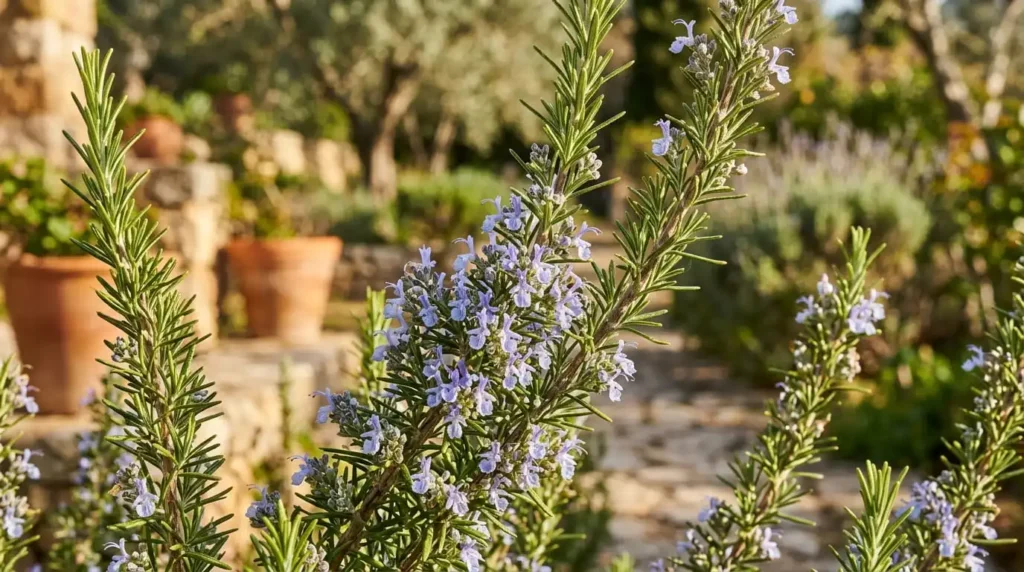
The scientific name of rosmarinus is Salvia rosmarinus while the botanical name is Rosmarinus officinalis. This plant has been classified over many years as being Rosmarinus officinalis. The truth of the matter is that rosmarinus belongs to a family of herbs referred to as Lamiaceae or the mint family of plants. The evergreen, fragrant shrub produces leaves which are characteristic to its Mediterranean habitat. The other close relative of rosmary known as Salvia jordanii has previously been named Rosmarinus eriocalyx, both being native to Africa, Europe, Western Asia, and the Mediterranean.
I first met rosmary when it was growing wildly on seacoast cliffs of Spain. What I remember about it is the place where it grew – it could only survive in dry and rocky soil, provided that it had enough moisture from the seawater mist. Therefore, it is no coincidence that the ancient Romans named it ros and marinus, which respectively mean dew and sea in Latin. Moreover, the very name of the plant genus – Salvia – comes from salvo, an ancient Latin word meaning “to heal” or “to save.”.
The native habitat ranges from Albania to Algeria, from Baleares, Bosnia, Croatia, Cyprus, France, Greece, Italy, Libya, Montenegro, Morocco, Portugal, Serbia, Sicily, Slovenia, Spain, Tunisia, and Turkey to an amazing extent. Rosemary has also been imported to Great Britain, Mexico, Bermuda, Azores, Bulgaria, and the USA for hundreds of years past through commerce and travel.
The Fascinating History behind This Ancient Herb
According to historical accounts, rosemary was viewed as a holy plant to the ancient Egyptians, Romans, and Greeks well before the emergence of contemporary horticulture. Linnaeus was the first person to scientifically describe the plant in 1753, using Species Plantarum. Which referred to the works of Gaspard Bauhin dating back to 1671. The discovery of molecular phylogeny studies in 2017 made scientists change their perspective on rosemary. Placing it under the genus Salvia, which was replaced by Salvia rosmarinus. The name was previously used by Fridolin Karl Leopold Spenner in 1835 because Salvia officinalis had adopted the name officinalis beforehand.
This plant was naturalized in China even before 220 CE in the period of late Han dynasty, spreading impressively along trade paths in Asia. It is believed that the Romans might have introduced this plant to England when they invaded Britain in 43 CE, although no written documents are found until the 8th century onwards. Even Charlemagne propagated this plant and ordered planting in the monasteries and farms of his empire. It was brought to Queen Philippa in 1338 by her mother Countess Joan of Hainault in the form of cuttings, which were planted in the Palace of Westminster. According to Elizabeth Kent in her Flora Domestica in 1823, the meaning of rosmarinus was sea-dew, which is as true now as it was then. This plant came to the Americas with Europeans in the 17th century, followed by South America.
Plant Characteristics and Botanical Description
It is an upright shrub that attains a height of between four and five feet with a spread of three to four feet. Rosemary stems have a square shape. This feature is characteristic of most of the species of plants belonging to the family Lamiaceae due to the fact that as they mature, their stems continue to become more firm. The young stems of rosemary are green in color while the older stems attain a brown metallic color. The foliage of rosemary is needle-like resembling that of the Tsuga genus.
Each leaf ranges in size from two to four centimeters in length and from two to five millimeters in width meaning that it cannot go beyond one inch at either length or width. The upper surface of the leaf is green while the under surface is white and woolly with fine hair that gives it the appearance of a silver surface.
They are leathery to touch, herbaceous in nature, and can be utilized both raw and dried or as cut flowers. They have small two-lipped flowers, which form whorls around the square stems in an axillary raceme arising from the shoots grown in the previous season. The colors of the flowers may be blue, lavender, purple, or pink; white also exists, and in terms of corolla, it is 2-lipped, with the upper part being concave and 2-lobed, whereas the lower is 3-lobed.
Understanding the Root System and Growth Habit
The rosemary has a fibrous root system which makes it grow well in dry, rocky, or loamy soil. The upright varieties may grow up to 1.2 to 1.8 meters high, whereas the trailing varieties will spread along the ground. The varieties available include the columnar and upright varieties, arched, spreading, and even prostrate. The ground cover varieties are suitable for growing on slopes and in challenging dry areas because they spread out and have a tough texture. They have a moderate growth habit and can live up to 35 years before they become senescent.
It is able to bloom all year round in warm weather conditions, but it flowers mostly during spring and summer periods in temperate conditions. It can be observed that the plant may bloom even in December or February in the Northern Hemisphere during favorable weather. The species has the capacity to become invasive due to its aggressive roots and propagation under outdoor conditions. The seeds of the plant require a long time to germinate, which makes it difficult to cultivate, and only a few seeds succeed in doing so. Moreover, the plant creates toxic soil for the growth of other plants within the vicinity, leaving sandy patches around itself.
How to Grow Rosemary: Soil, Sun, and Conditions
Rosemary grows well in soil that receives plenty of light with good drainage, and is somewhat dry to moderately moist in character with an acidic pH level. Growth demands at least six or more hours of sunshine per day. The plant is one that thrives under full sun exposure, and it is also tolerant of drought, frost, and salt but must be acclimated to its environment before exhibiting such traits. The plant is able to withstand some shade exposure, pruning, and all types of soils except for clay soils due to their retention capacity of water near the roots of the plant. Overwatering of the plant will easily lead to its death.
In the case of ground planting, it would be sensible to plant rosemary in an area where there is well-drained heavy soil; however, in cases where this is not possible, you could improve your soil by adding grit while ensuring that there is a space of about 45 centimeters or 18 inches between each plant. It is also essential to note that hardening is vital for seedlings grown indoors, and they should reach a height of about 10 centimeters or 4 inches before transplanting them outdoors. On the other hand, when planting rosemary in pots, it would be wise to plant them in a pot with a minimum diameter of 30 centimeters or 1 foot.
Propagating Rosemary: Seeds, Cuttings, and Layering
However, despite the fact that seeds are another means of propagating plants, the technique is very time-consuming and barely provides satisfactory results. It follows that the gardener should propagate rosemary through stem cutting, layering, division, among many other techniques. Rosemary seed propagation can be undertaken in the comfort of your home during spring. This enables a gardener to propagate more than 128 plants from one plant. Cuttings from rosemary branches can be successfully propagated during the spring or summer periods.
The semi-ripe cuttings obtained from the plant can also be used during the summer season.. Division is also practical for spreading varieties, allowing one established plant to become several without purchasing additional stock from a nursery.
Plug plants, which refer to young plants in pots of 3 inches or the usual litre pots that have just been rooted from cuttings, are abundantly found throughout the year in garden centers and specialist herbarium nurseries. Since time immemorial, rosemary has been considered one of the high-risk plants for the bacterial infection called Xylella fastidiosa. Using British grown rosemary plants reduces the risk associated with importing such plants. Mountain Valley Growers is a US based nursery which was founded way back in 1985, and it is organically certified to sell rosemary plants organically. In my experience, the cuttings from semi-ripened shoots work well in summer months.
Watering, Feeding, and General Plant Care
It is a carefree shrub that is economical with its water needs and requires very little maintenance after being planted in a bright environment. In the initial year of planting, the young rosemary should be watered anytime there is no rainfall. This will help the plants grow fast. Once grown in the garden, they do not need to be watered if they get rainwater. Potted rosemary will require some extra water during dry weather because the compost gets dry easily when there is sun and heat The rosemary plant that is planted in the garden should not be fed because it grows well even in poor soil conditions without the need to give it anything On the other hand, if the plant in the pot has existed in there for over a year, then it will welcome the inclusion of a few granules of fertilizer.
Over fertilizing must be prevented as too much nutrition leads to strong but delicate growth that is highly susceptible to attacks from pests and diseases. In my experience, plants that are allowed to fend for themselves in the proper setting will always thrive more than those which are overly pampered. The structure and fragrance of rosemary emerge perfectly when the plant is somewhat stressed through dry and poor soil as opposed to being coddled through moist and fertile soil.
Winter Protection for Rosemary Plants
It is also very resilient, as it survives even in all regions of the UK, resisting frost and being capable of tolerating temperatures as low as -8°C (-18°F). However, the plant suffers from frost in case of extreme conditions and frost winds, which may even result in death of the entire Rosemary plant. This can be prevented by covering the Rosemary plants with organic material like fleece and even an old fabric, particularly during freezing nights.
This can be done by placing all the pots together, wrapping them in old blankets or bubble wraps, and putting them in a greenhouse or even on a porch.. Pots of plants can also be moved under a wall as a means of providing some shelter against the worst weather during winter months. While coldness is bad enough for these plants, it is actually water-soaked soil that does more damage since it leads to rotting of their roots without the visible signs appearing from above ground level. If winters happen to be mild but with excessive rainfall, then plants should be moved to some area protected from rain by a nearby building acting as a barrier. It has been found that the Arp cultivar is most resistant to cold and therefore should be chosen for use in colder climates.
Pruning, Training, and Keeping Rosemary Tidy
To ensure that the rosemary retains its attractive appearance, it has to be trimmed lightly only once a year following the flowering season, although it should not be pruned into the wood. In case one would like to make use of erect-growing varieties, then they can be grown as hedges by keeping their shape through trimming. Hard pruning, after the flowering period, is beneficial for ensuring foliage growth in established plants that have developed an undesirable spread.. Without pruning, rosemary will become very leggy and woody.
Overgrown and straggly bushes, which are beyond salvaging, should be removed as rosemary will not easily regenerate after being cut back into old wood. If you need a well-manicured rosemary bush hedge next to your driveway or along other borders or foundations, this plant will take well to being sheared. It will root easily when stems are allowed to lie upon the soil surface. No matter how often the rosemary may be trimmed, it is advisable to replace old, worn out plants at least once every seven to eight years with fresh, young plants. In my experience, younger plants give more flavour and life to your cooking than old and tired bushes. Always prune the plants using clean and sharp pruning scissors to prevent any bacteria and fungus infections to enter your plants through cuts.
Conclusion
The rosemary plant is more than just another common herb growing peacefully in your window garden. Each leaf holds centuries of history and culture behind it, which is associated with the healing properties of the plant, along with its culinary applications. Whether you decide to grow this wonderful plant for cooking, aesthetic value, or its pleasant aroma alone, it will not disappoint you.. No other plant can match up with it when it comes to offering you so much – from drought resistance, wildlife appeal, medicinal uses, to evergreen growth. The only thing required to keep your rosemary plant thriving is well-drained soil, plenty of sunlight, and regular pruning. You get flavor, fragrance, and beauty in all seasons with this plant. Once you have your rosemary plant in place, you would never want to do without it.
Frequently Asked Questions (FAQ’s)
Rosemary (Salvia rosmarinus) is an evergreen, aromatic shrub from the mint family that naturally suits warm, dry Mediterranean-style conditions. It grows best with at least six hours of direct sunlight, well-drained soil, and careful watering because consistently wet roots can damage the plant.
Ground-grown rosemary needs little maintenance once established in a sunny, well-drained location, while potted rosemary requires closer attention to watering and occasional feeding. Pots are especially useful where winter conditions make it helpful to move the plant into a sheltered location.
Stem cuttings are generally more practical than seeds because rosemary seeds germinate slowly and have limited success. Spring and summer cuttings, layering, and division of spreading varieties are all propagation methods covered in the article.
The article identifies ‘Arp’ as the most cold-resistant cultivar mentioned, making it a sensible choice where winters are harsher. Even hardy rosemary benefits from protection against severe frost, cold winds, and waterlogged winter soil.
Lightly prune rosemary after flowering to maintain a compact shape and prevent it from becoming woody or leggy. Avoid cutting deeply into old wood because mature rosemary may struggle to produce fresh growth from those sections.

6 thoughts on “What Is the Rosemary Plant? Everything You Need to Know About Growing and Using It”