

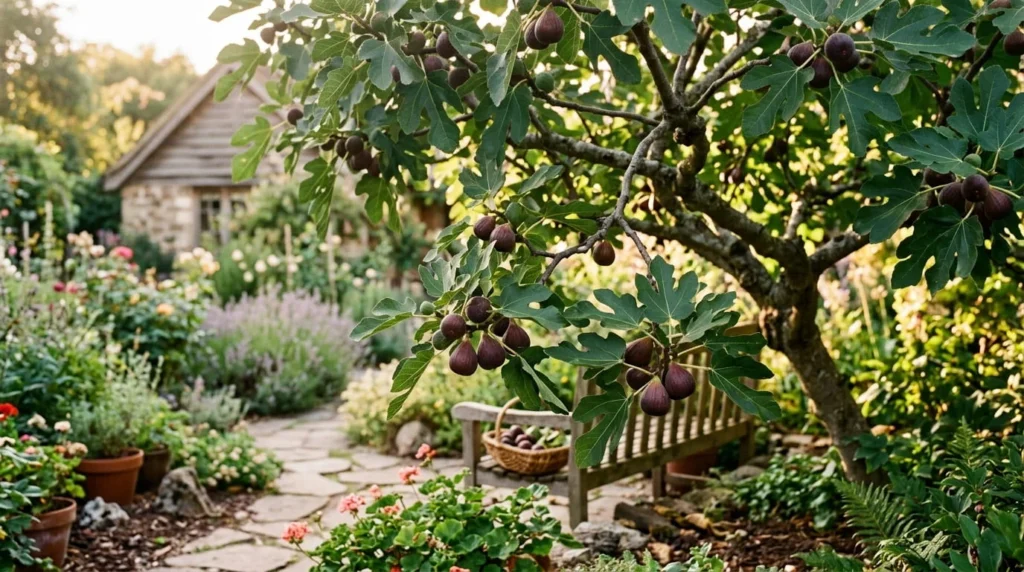
If you think that growing your own edible fig tree is an interesting endeavor. Then you are not alone because I have been doing the exact same thing myself for many years now. Twelve years ago, I planted a Brown Turkey tree in a pot. Not fully convinced that it could actually survive in Pennsylvania weather. To my surprise, the fig tree survived and has been giving me good harvests each late summer. The common fig tree Ficus carica is among the oldest known fruit-bearing tree species in the history of man and has been grown since ancient times in places such as Mesopotamia, Persia, and even throughout the Mediterranean.
Why Is Ficus Carica Unique?
Common fig differs botanically from all other plants grown around the home. The edible part we call fruit is actually known as a synconium; that is, a flower structure inside of which there is a very small cluster of flowers referred to as inflorescence. When eating a fig, a person consumes the hidden flowers of this plant. An ostiole, or fig’s eye, is an opening through which pollen gets into the flower structure in the wild plants of this species. This feature is important for the gardener due to the fact that common figs of this species are parthenocarpic plants, thus requiring no pollination process.
There are four types of edible figs: Caprifigs, Smyrna, San Pedro, and Common. For home garden growing across most of North America, Common varieties are by far the best choice. Look for cultivars with a closed eye or tight ostiole and a long peduncle. This allows the fig to droop naturally and shed moisture, which significantly reduces the risk of fruit rot.
The tree itself is genuinely beautiful. Mature specimens develop a striking smooth grey bark that turns almost silver-grey in winter. The lobed foliage typically with 3 to 5 lobes is large, architectural, and slightly sandpapery on top with fuzzy leaves underneath. As a shade tree and an ornamental value plant, it earns its space in any edible landscape even before a single fig appears.
Selecting the Right Cultivar
Cultivar selection is the most crucial step when taking care of your edible fig trees. Make the wrong choice, and you’ll spend many years battling your climate. Make the right choice, and your tree practically grows itself.
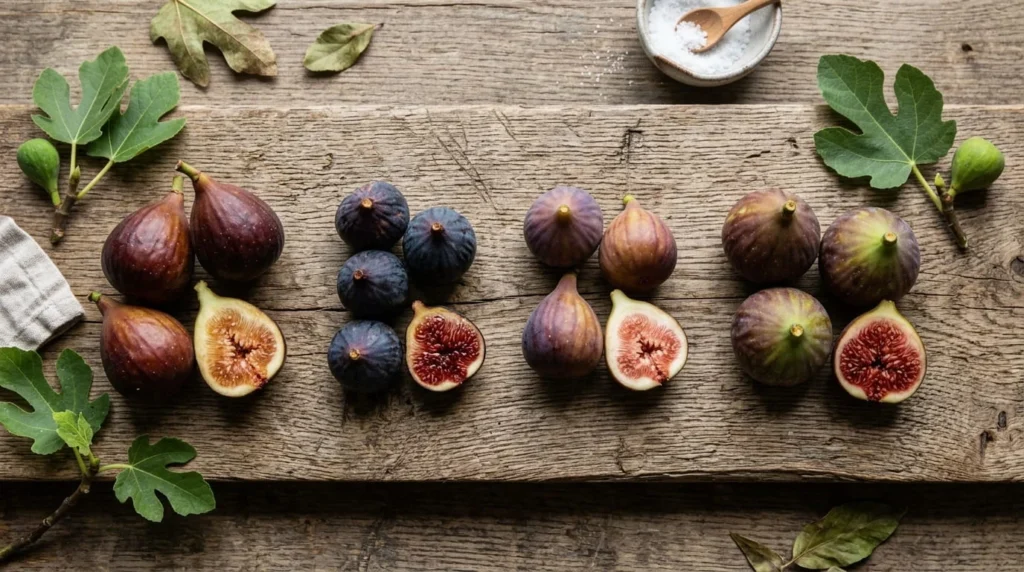
‘Brown Turkey’ is one of the most popularly cultivated varieties in North America. It bears medium to large reddish-brown figs with bronze-amber pink flesh. This variety fruits reliably even if the winter kill occurs since it bears fruit on new wood. For home gardeners in zones 6 and 7, this cultivar is among the easiest choices to grow. Another option is the ‘Celeste.’ It has a small light brown to violet color and whitish pink amber flesh. It is early maturing, cold tolerant, and fruits without a breba crop, yet produces a huge second crop.
The first fig for any northern grower would be ‘Chicago Hardy’. It is extremely cold-hardy at 10°F and will survive into zone 5 with little protection. It remains compact, ideal for containers, bears a dependable crop of medium purple figs, and has attractive, large dark green leaves that look like they have three fingers each. The fruit of the ‘Black Mission’ fig is very large with purplish-black skin and red-violet pulp. They are profuse on the breba crop and lack cold hardiness, making them an excellent fig for indoor containers.
‘Olympia’ is an orange-sized striped purple-green fig with red-violet pulp and extremely delicious. It is hardy up to zone 6. ‘Violette de Bordeaux’, which is also known as ‘Negronne’, has a small to medium-sized purple-black skin and deep red flesh inside. It is an extremely flavorful variety that tastes amazing when eaten fresh or dried and profuse, perfect for containers.
Planting Your Edible Fig Tree
Choosing the Right Site
The edible fig tree requires full sun exposure of up to 6-8 hours of direct sun exposure on a daily basis, with 8 or more being preferable. It is best to plant the tree where the sun shines from the south, especially when planting outdoors in zone 6 and zone 7, since reflection from a structure will greatly increase its growing season. It is not recommended to plant fig trees on sandy soils as these contain root knot nematodes; instead, one should go for fertile and well-drained loamy soil with pH between 6.0 – 6.5.
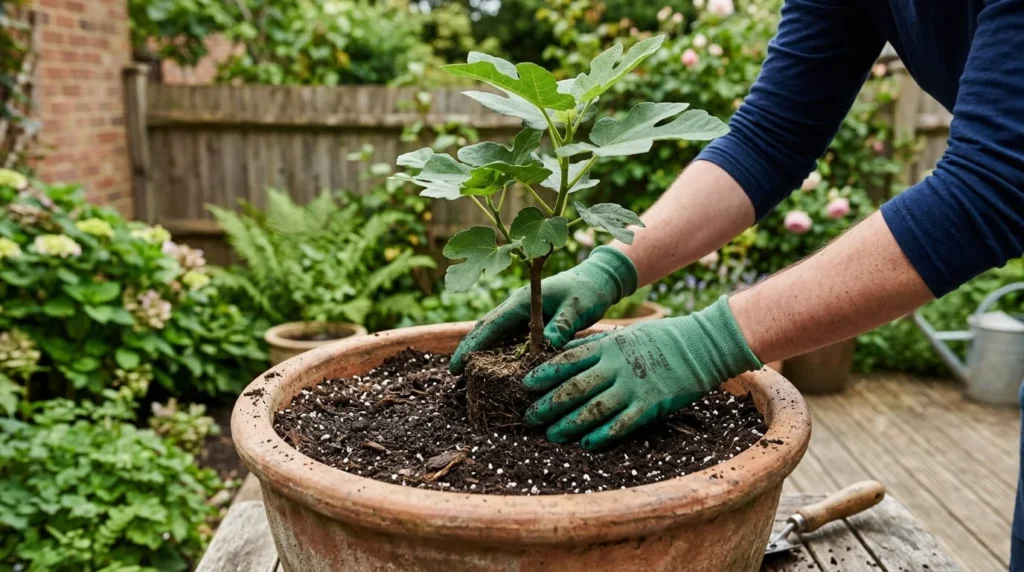
While planting, dig a hole that is twice the width of the root ball but equal to its depth. Make a mound of soil and place the roots over it. Add backfill with the same soil without making any additions at the time of planting. Water the roots thoroughly once you have filled the hole halfway. Then, continue filling the rest of the hole and tap lightly while staking the tree during its first year. Planting trees should be done while maintaining a distance of 10 feet from each other to ensure there is enough space for the roots to grow.
Avoid fertilizing while planting trees. Instead, use organic mulch such as straw, bark pieces, or compost, leaving some space between the mulch and the trunk. Mulch helps retain moisture, control weeds, and regulate the soil temperature, which ideally should be 78°F.
Watering
The most common mistake when growing a new fig tree is usually over or under watering, depending on the period. When young, a tree must be regularly supplied with adequate water. In the first season of growth, supply the plant with 1 to 1.5 inches of water per week.
Once established, Ficus carica is truly drought tolerant. Drought stress during its fruit-bearing season results in fruit dropping, which is considered one of the most exasperating moments when growing an edible fig tree. Water every 1 to 2 weeks in case of dryness, depending on rain, humidity, and soil. Check the moisture content by probing your fingers three inches deep in the ground in case it’s dry, then water thoroughly.
Keep an eye on the leaves. Yellowing falling leaves indicate over-watering or root rot. Drying up or crispy falling leaves accompanied by fruit drop indicate under-watering. In case of fig trees grown in containers, moisture needs to be checked often because the soil inside pots dries up much quicker than outside in the ground.
Fertilizing
It is generally unnecessary to feed most in-ground edible figs planted in fertile loam soil with healthy organic matter content. Most of what the Ficus carica needs can be provided by the soil ecosystem. If you notice less than 12 inches of annual growth, then feeding is recommended.
To fertilize in-ground edible figs, apply small amounts of balanced fertilizers such as 8-8-8 or 10-10-10 at the beginning of spring as the fig tree begins to grow again. After the appearance of figlets, a fertilizer of high phosphorus content such as 5-10-5 or 5-10-10 should be used to promote fruiting. Too much nitrogen fertilizer when the figs are fruiting should be avoided because the nitrogen will produce more lobed leaves rather than fruits.
However, for container figs, fertilization is important. The soil in containers only contains the nutrients that you put into them, and rain and regular watering cause the nutrients to drain away rapidly. During springtime, you can use a high nitrogen soluble fertilizer such as Alaska Fish Emulsion 5-1-1 to promote branch growth and leaf formation. You can combine it with another form of fertilizer that is organic and slow-acting, such as Blood Meal 12-0-0. Once figlets appear, use 5-10-5 or 5-10-10 for fruit development.
Pruning
Pruning is one of the most crucial abilities that can be employed in the cultivation of fig trees, and at the same time, the least understood skill. The main principle: figs bear fruits on the new growth. Everything that stimulates the development of new branches helps fruits to grow.
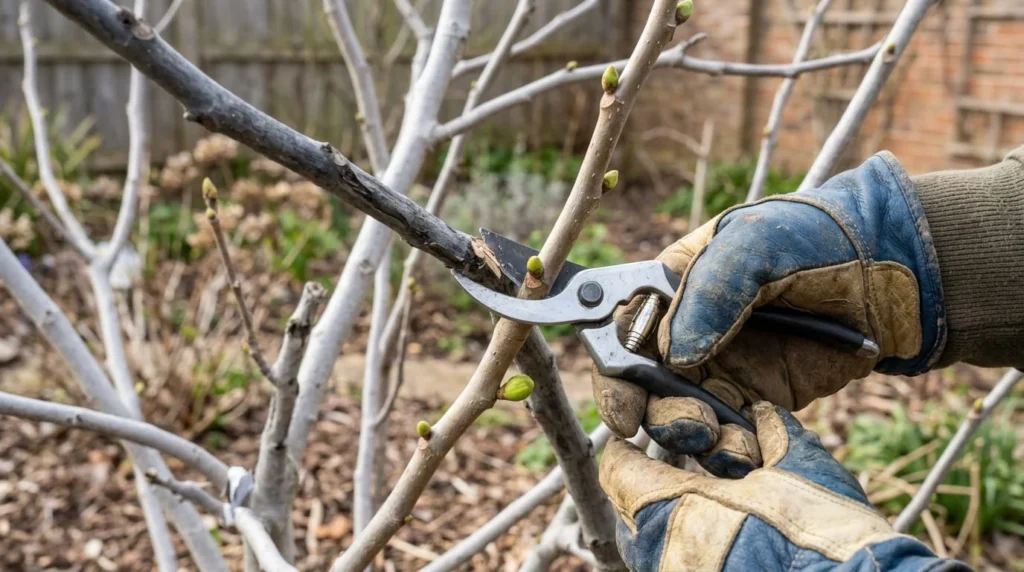
The best period to do serious pruning is late winter or early spring when the tree is fully dormant before any sprouting starts. In case of young trees not exceeding 3 years old, three or five scaffold branches should be chosen and shaped to create a form of an open vase. All other branches should be cut off in order to redirect nutrients to the desired structure. Mature trees should have overlength branches cut off by one third.
Summer pruning by simply removing the growing tips or apical buds from vigorous stems results in branching and quicker ripening. By implementing this practice, along with correct feeding and watering, you will be able to significantly boost your crop yields. Be sure always to cut close to the branch collar when the weather conditions are dry.
In case of your planting in containers, prune back your Ficus to a central leader at a height of about 18 inches. Alternatively, if you wish to grow them as a bush, ensure that you retain between 3 to 5 stems, all of which must have equal heights. Prune roots periodically to avoid making your plants pot-bound.
One of the best ways to train your Ficus carica is through making an espalier out of it against a southern wall. Not only does it offer the highest levels of sunlight, but it also shields against strong, cold winds. In addition, it serves as a beautiful ornamental landscape feature that actually bears fruit as well.
Container Gardening and Winter Protection
Edible fig trees grown in containers become available to home gardeners in zone 5, zone 6, and even cooler areas of zone 7, who are unable to winterize in-ground planted fig trees. Select pots that measure 18 to 24 inches in width, with several holes for water drainage. Pots made of clay or ceramics help maintain optimal moisture levels and keep plants upright. Add a sterile potting soil and bark or perlite.
Plant the container figs in direct sunlight when it is hot outside. In cases where temperatures fall below 50°F, transfer the fig plants indoors to a sunny location. Decrease the frequency of watering during winter because the container will only be watered enough to stop the soil from completely drying up. No fertilization should take place until you notice the first signs of new growth in spring.
The fig plants need to be potted in stages, starting small and gradually increasing the size of the pot over several years rather than going directly for a large one. The plant generally starts to bear fruits in about 2 or 3 years after being planted.
Pests and Diseases
Common Pests
The pests attacking edible fig trees include lanternflies, wasps, beetles, stink bugs, and vinegar flies which invade through the ostiole. The SWD (spotted wing drosophila) and Z. indianus Gupta (African fig fly) should be checked in areas experiencing such attacks. Scale insects (Parthenolecanium corni), red spider mites (Tetranychus urticae), and mealybugs (Pseudococcus obscurus) are the main culprits in greenhouses or indoor settings. They can be controlled using neem oil, insecticidal soap, and horticultural oil.
Root-knot nematodes are very destructive in sandy soils. Avoid growing edible fig trees in such soils.
Fig Rust
The Fig Rust disease is caused by the spores of fungi and is characterized by the formation of tiny yellow spots on lobed leaves, which then become reddish brown as they grow larger. The leaves will fall off prematurely, but the fruit is usually spared from any effects.
Fig Leaf Spot
Fig leaf spot is caused by a fungus from infested seed and crop debris. Symptoms are seen as angular lesions with reddish-brown coloration having yellow border resulting in leaf loss, sunken dark lesions on fruit. Management mirrors fig rust: collect and destroy leaf debris and maintain dry foliage through careful watering practices.
Fig Mosaic Virus
FMV is RNA type virus spread by eriophyid mites. The symptoms include yellow spots, diffused margin, chlorosis, deformation, and leaf loss. Fruit develops yellow spots leading to fruit drop and low yield. There are no effective chemical controls choose disease-free trees from the start, avoid grafting from affected stock, and control fig mites with horticultural oil as a preventive measure.
Fig Coral Spot
Fig coral spot is a fungus that most commonly attacks dying trees or those experiencing other stress. Small coral-colored pustules appear on branches following cankers and dieback. Actinovate SP biological fungicide shows promise for management. Prune only at the branch collar during dry weather and dispose of all diseased plant material immediately.
Harvesting Your Edible Figs
Figs stop ripening once they are harvested and this is probably the most critical piece of advice regarding edible fig tree care. Only harvest ripe figs. Ripe figs feel soft to the touch, their stems are bent down, their ostiole is opened slightly, and the skin changes color to its proper color. Figs ripen late in summer or early in autumn approximately 90 days after figlets develop.
An edible fig tree can yield one or two crops a year. The first one, known as the breba crop, yields fewer but bigger fruits which taste less sweet than the fruits from the second crop. The breba crop forms on the old wood, and ripens in mid-summer. In contrast, the second crop ripens later and provides a bigger yield of tastier figs.
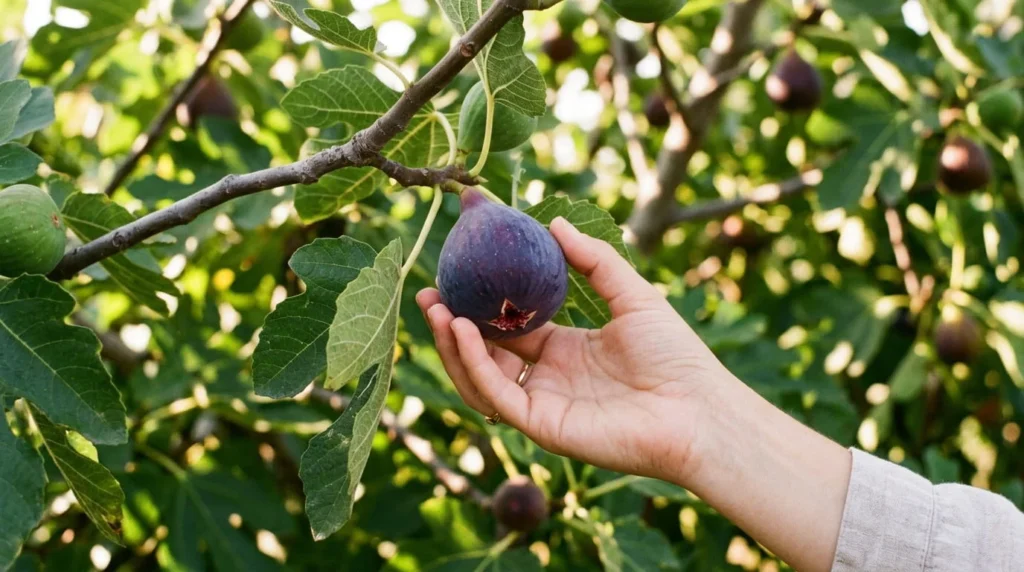
Fresh figs taste delicious when eaten raw, made into jam, used as a barbecue addition, or even in salads. Figs are rich in fiber, antioxidants, natural sugar, calcium, and potassium, making them both tasty and highly nutritious. Dry excess figs to preserve them. Dried figs remain as nutritious as fresh ones and keep for several months at room temperature.
Final Thoughts
Raising a fruiting fig tree can be one of those home gardening choices. That provides quiet but steady satisfaction for decades to come. The common fig is a plant with surprisingly few demands. Once it has been planted and has matured: proper selection of a variety suitable for your hardiness zone. A southern exposure with plenty of sun, periodic deep waterings, fertilizer, and yearly dormant pruning in late winter. Do all those things properly, and the common fig takes care of the rest.
If you are cultivating a container-grown Chicago Hardy through the winter months in cold Pennsylvania, planting a Brown Turkey fig in an espalier form on a sunny south-facing wall, or reaping a bumper harvest of second-crop Celeste figs from late August to early October, there is not much that compares to the enjoyment of plucking a perfectly ripe fig straight off your tree soft, succulent, and delicious. Start by planting just one fig tree. Provide it with the right environment and sufficient time, and within 2-3 years you will be enjoying more fresh figs than you can possibly use!
Frequently Asked Questions (FAQ’s)
The edible fig tree, or Ficus carica, produces a structure called a syconium, which contains tiny flowers inside what we commonly call the fruit. Most Common fig varieties grown in home gardens are parthenocarpic, so they can produce figs without pollination.
In-ground figs work well where winters are suitable and there is a sunny, well-drained planting site. Containers are a practical choice in colder areas because the tree can be moved indoors when temperatures fall and its winter conditions can be controlled more easily.
Give the tree at least 6–8 hours of direct sunlight, water it deeply when the soil becomes dry, and avoid excessive nitrogen once fruit begins forming. Dormant-season pruning and light summer tip pruning can also encourage productive new growth.
‘Chicago Hardy’ is one of the strongest choices for northern growers because it is described as highly cold-hardy and suitable for container growing. ‘Brown Turkey’ and ‘Celeste’ are also practical options for gardeners in zones 6 and 7 because of their reliable fruiting and cold tolerance.
A ripe fig should feel soft, hang slightly downward on its stem, show its mature skin color, and have an ostiole that has begun to open. Harvest only fully ripe fruit because figs do not continue ripening after they are picked.

3 thoughts on “Edible Fig Tree Care by Middle Class Homes: The Complete Guide to Growing Ficus Carica”