

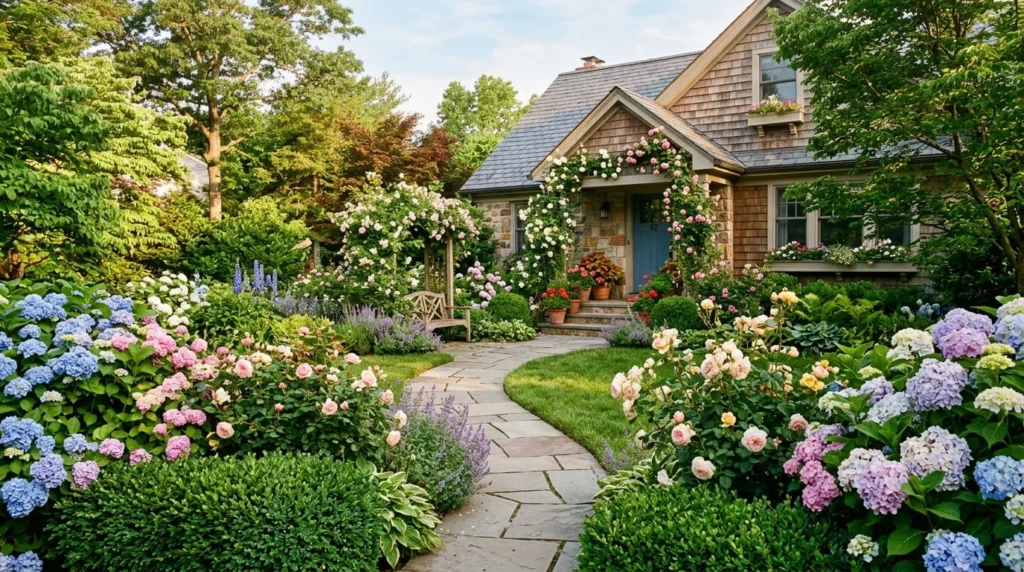
Just look at any well-done home garden design, and you will see something obvious straight away. What holds the entire space together? It’s the shrubs. Not trees. Not even flowers. It’s shrubs. These plants do all the hard work quietly to create an atmosphere that feels complete, dimensional, and alive. I have been dealing with garden shrubs throughout my career. I can assure you without reservation that there is not anything like this in the whole plant kingdom.
In this guide, we are going to cover everything from the basics of shrubs to the best varieties and care instructions.
What Actually is a Shrub?
A shrub which may be known as bush refers to a perennial woody plant. Having more than one stem growing out of the or close to the ground. Unlike trees, shrubs grow in many stems or wood stems which always remain on the ground regardless of the season. Shrubs are available in different sizes starting from very small subshrubs. Which grow up to 4 feet in maturity. Then 8 feet to 12 feet, 12 feet to 20 feet and even more like 20 feet to 40 feet.
The first type of shrubs is deciduous. Since these plants drop their leaves in autumn and start producing new ones in spring. While the other group is known as evergreen because their structure and foliage remain intact throughout the year. The way shrubs look like plays a major role in determining their application within landscape design.
A shrub can survive for 5 years in bad conditions to more than 70 years in good situations. Generally, a shrub survives for an estimated 8 years if left alone. However, with proper care, shrubs can live much longer than this estimation.
The Importance of Shrubs in Every Garden
There is nothing more versatile than shrubs for gardening purposes. Shrubs act as foundation shrubs to anchor a home’s exterior design. It act as privacy shrubs and hedge shrubs to create barriers against views and noise pollution. Shrubs act as border shrubs that define the boundaries of beds and paths. Even ground cover shrubs that grow on slopes and other tricky places are possible thanks to shrubs.
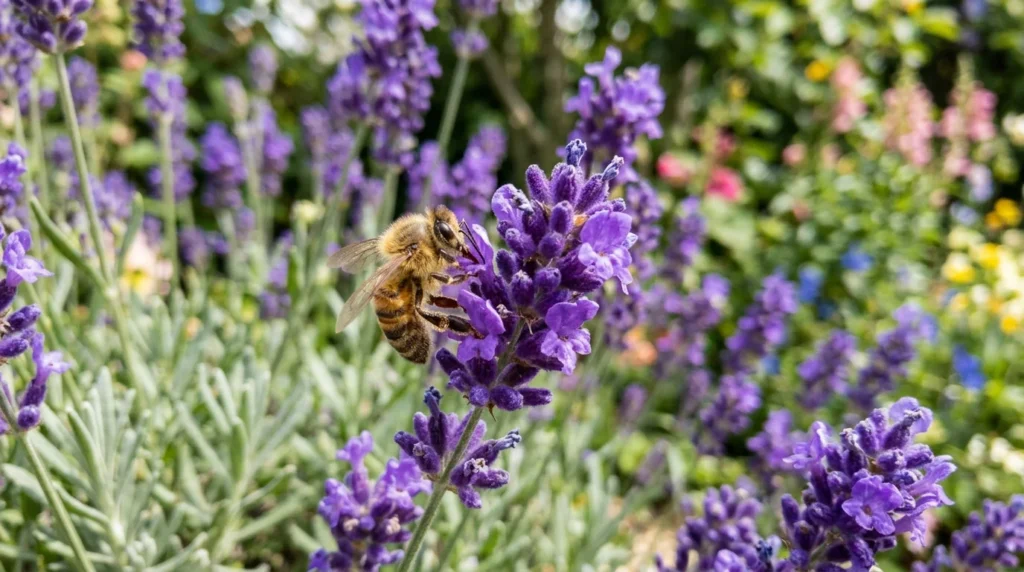
However, shrubs do not only offer structural benefits but also ecological advantages. Fruit-producing shrubs provide food for birds throughout the winter. Species like lavender, buddleja, and ceanothus attract pollinators by offering nectar and seeds from spring to autumn. Meanwhile, scented shrubs including gardenia, lilac, and mock orange perfume the air without the need for artificial products.
Based on my personal experience planting shrubs in various climates and growing zones. The most significant blunder that people make is picking based on appearance alone. Consistent year-round interest becomes equally important to blooms. For example, when considering pink flowers, white flowers, red flowers, purple flowers, yellow flowers, blue flowers, and orange flowers that change with the seasons, take into account fall color, winter interest, bark interest, and variegated leaves.
Growing Zones for Shrubs – What You Need to Know
There is a shrub that suits every climate. For zone 2 up to zone 10, there is the perfect choice. Determining which growing zones you live in is key to successful planting.
Varieties that are cold tolerant do well in zones 2 through 5. Some include forsythia shrubs, lilac bushes, dogwood, viburnum, enkianthus, fothergilla, and spicebush shrubs. Moving on to zone 4 and zone 5, rhododendron bushes, azalea shrubs, and hydrangeas. Some of the most popular flowering shrubs across North America – come into play.
As we move into zones 6 and 7, there are an incredible amount of varieties that thrive here. This includes rose bushes, boxwood shrubs, holly bushes, camellia shrubs, pieris, mahonia, nandina, itea, physocarpus, commonly known as ninebark shrubs, spiraea and weigela bushes. The burning bush and smoke tree also provide outstanding autumn colors in zones 6 to 9.
When we go up to zone 8 through zone 10, there are more varieties of heat tolerant shrubs. Some include gardenia shrubs, laurel bushes, loropetalum, pittosporum, oleander bushes, bottlebrush, photinia, distylium, indian hawthorn, wax myrtle, crape myrtle, bougainvillea, hibiscus, and leucothoe.
The Most Popular Shrub Categories
Flowering Shrubs
Flowering shrubs are a must-have in any garden during their growing season. If you’re thinking about planting something to flower during springtime, consider planting forsythia, lilac, azalea, rhododendron, deutzia, kerria, pieris, and magnolia. The flowering shrubs add a bright spot in your garden during the first few weeks. When everything else is just getting up from hibernation.
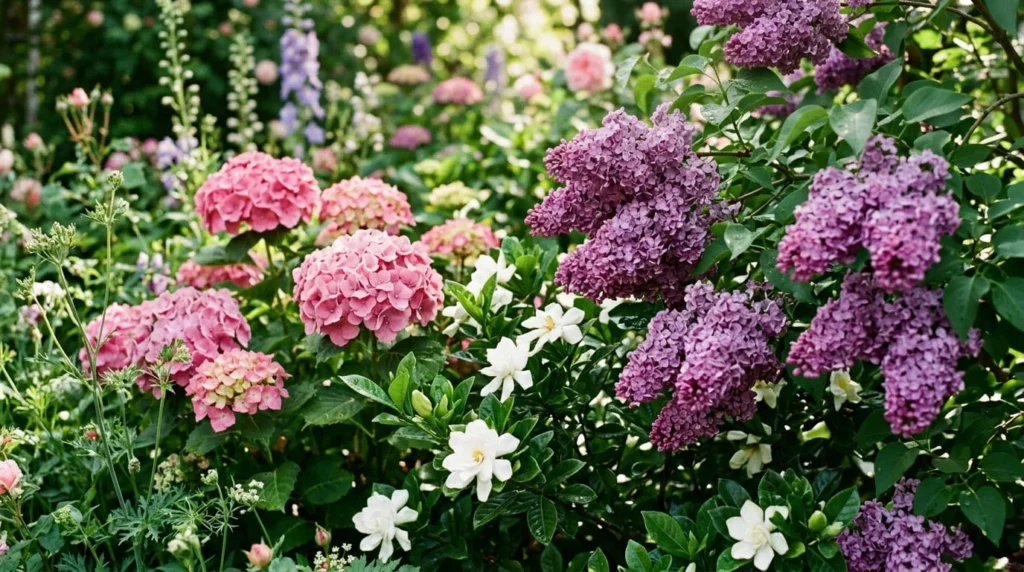
For summer time, choose hydrangeas such as endless summer hydrangea that keep blooming the entire growing season. Other great flowering shrubs you might want to think about are rose bushes, particularly knockout roses and David Austin roses. Butterfly bushes (buddleja), weigela, rose of sharon, clethra, sweetspire, and hibiscus are other good summer-time shrubs.
Fall blooming and even winter blooming shrubs, such as enkianthus, witch hazel, and some camellia shrubs can brighten your garden long after other flowering shrubs including water loving species like lotus and flower varieties.
Evergreen Shrubs
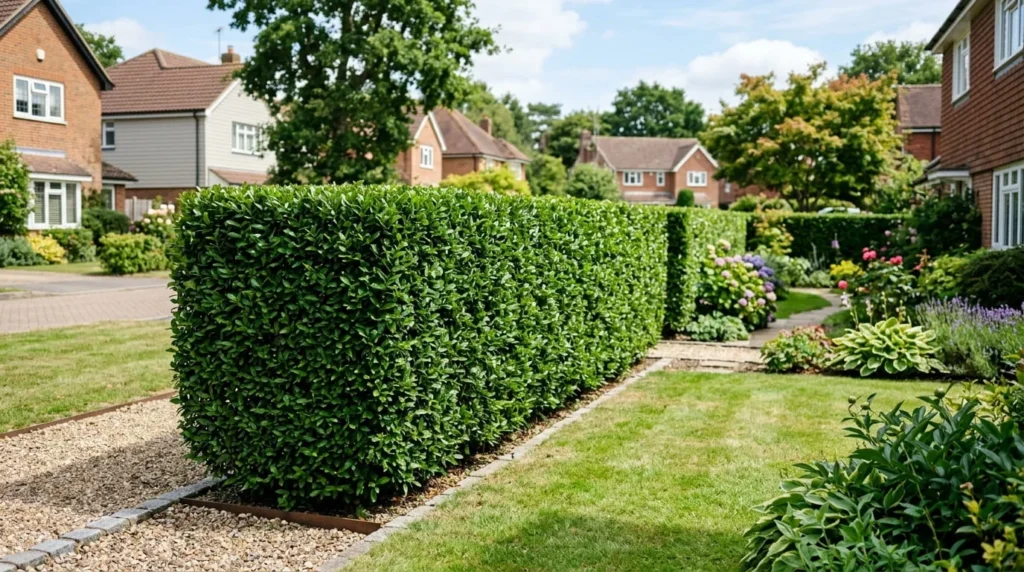
They are ideal for providing structure and privacy that cannot be provided by any other type of shrub. Evergreen shrubs such as boxwoods are ideally suited for topiary and formal hedge shrubs. The evergreen holly shrubs are ideal as they have lush foliage, berries for birds, and also provide winter interest.
Skip laurels, privet, yews, euonymus, pittosporum, photinia, nandinas, mahonia, and viburnums are great evergreen shrubs for the garden. They are ideally suited as foundation shrubs, border shrubs, and also as privacy shrubs. Junipers are unique as they are somewhere between broad-leafed plants and conifers.
Indigenous and Low Maintenance Shrubs
Indigenous plants are not given the attention that they deserve. Native shrubs include the spicebush, chokeberry, sweetspire, fothergilla, itea, clethra, enkianthus, potentilla, snowberry, and physocarpus. These shrubs are less thirsty, less greedy in terms of fertilizer and are generally easier to maintain compared to non-indigenous types.
In addition, these indigenous shrubs provide more nectar, berries, and seeds to attract birds and other insects throughout the seasons of the year. From a landscaping point of view, indigenous shrubs also have superior fall colors and interesting barks compared to non-indigenous shrubs which can be labor-intensive in their maintenance.
Abelia, forsythia, barberry, cotoneaster, dogwood, pyracantha, spiraea, syringa, and kerria are just a few examples of shrubs that grow easily and only require occasional prunings.
Choosing the Best Shrub for Your Landscaping Project
Consider Mature Height First
TThe number one landscaping problem I see is when people plant a shrub without thinking about maximum height. Any shrub designated 4 to 8 feet high is going to get big enough eventually to block out windows, narrow pathways, and overshadow nearby flora if planted too close to a building. It’s the solution to the problem in confined areas such as patio shrubs and container shrubs.
In an open area where you need more structure and privacy to create your landscape environment, go with taller specimens, such as 8 to 12 feet, 12 to 20 feet, and 20 to 40 feet shrubs. The last category blurs the line between shrub and small tree.
Match Sun Exposure to Plant Needs
Sun is not negotiable. Plants that love full sun such as roses, lavender, knock out roses, forsythia, butterfly bush, spirea, potentilla, barberry, pyracantha, crepe myrtle, and bougainvillea should receive at least six hours of direct sunlight per day. Putting them in partial shade will result in poor flowering, poor foliage quality, and increased disease pressure.
Plants that require partial shade include hydrangeas, azaleas, rhododendrons, camellias, pieris, leucothoe, enkianthus, fothergilla, itea, clethra, sweetspire, spicebush, and mahonia. These are the plants that bring beauty to the northern and shady areas of the garden.
Shade tolerance is uncommon among plants. Holly shrubs, yew, euonymus, nandina, sarcococca (sweet box), and some viburnums can do well in low light conditions.
Soil Type and Soil pH are Important Factors
Generally, the preferred soil type for shrubs is one that is well-draining with a slightly acid to neutral soil pH level. Acidic shrubs such as azalea shrubs, rhododendron shrubs, hydrangeas, camellia shrubs, pieris, enkianthus, blueberries thrive in soil with a pH range of 4.5 to 6.0 in order to facilitate proper nutrient absorption. Without the correct soil pH, all other factors notwithstanding, you will have stunted growth and yellow leaves.
Heavy clay soils and compacted soils require improvement before planting shrubs since such types of soils do not provide suitable growing conditions for shrubs.
Pruning and Care Over Time
Renewal Pruning Versus Selective Pruning
Pruning is the technique which distinguishes a lush and healthy shrubbery from one which looks unkempt. Renewal or hard cutting-back pruning involves pruning away the bulk of the foliage down to stool level. The technique works marvelously on forsythia, lilac, cornus or dogwood, spicebush, clethra, weigela, and spiraea. Vigorous new canes sprout from the ground up, the shrub essentially rejuvenates itself and may flower and produce greener leaves compared to previous years.
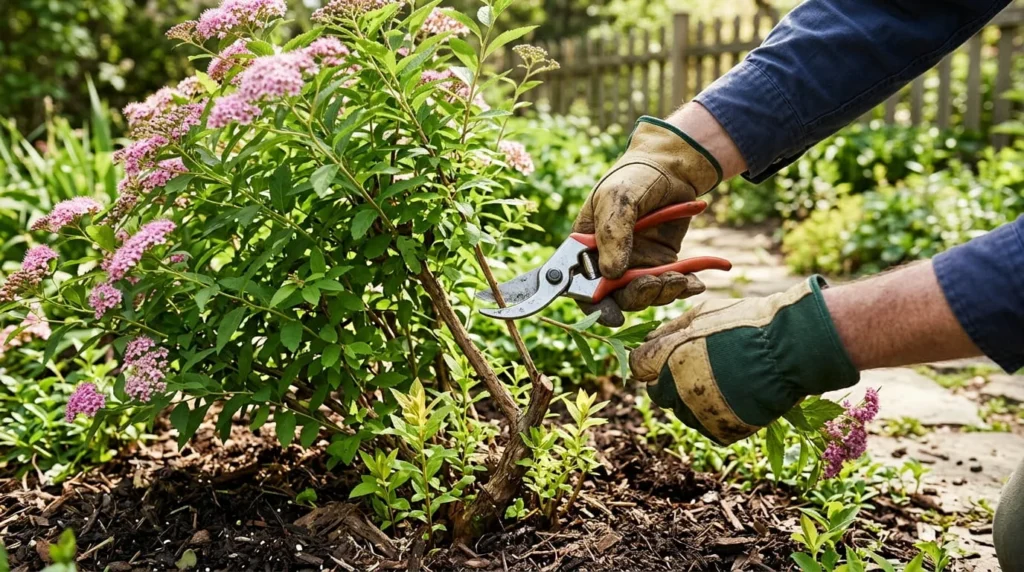
Selective pruning is more appropriate on structured shrubs whose form you wish to maintain – camellia shrubs, rhododendron shrubs, magnolia, holly shrubs, yew, boxwood shrubs and various hedge shrubs. Dead branches, diseased parts and crossing branches are all pruned off to reveal the true nature of the shrub while maintaining its form.
Forming topiary shapes from your shrubs requires varieties with dense foliage like boxwood shrubs, yew, privet and holly shrubs which respond well to regular trimming. It is labor-intensive but done properly can give rise to a formal shrubbery garden worthy of generations of admiration.
Watering, Fertilizing, and Establishment
Plants require regular watering during their first year of growth. The root system requires time to develop beyond the initial planting pit. Deep watering either weekly or twice weekly depending on factors such as soil type, amount of sunlight, and rainfall is much more efficient compared to daily light watering.
A single fertilization in early spring using an equal blend of granular fertilizer encourages growth in foliage and enhances seed production and flowers in ornamental shrubs. Species which prefer acidic soil, including azalea shrubs, rhododendron shrubs, and camellia shrubs, should receive an ericaceous fertilizer.
The Role of Shrubs within the Larger Ecosystem
Shrubs are remarkable plants within natural ecosystems because of their unique roles in them. They dominate the landscape wherever tree growth is impossible, such as in the shrublands that exist from alpine zones all the way to coastal scrubs. In recent decades, the ecological transition known as arctic shrubification has been extensively recorded and is causing dramatic changes in carbon cycles and vegetation dynamics on a global scale.
In garden ecosystems, shrubs bring this adaptability to life through hardiness. Because they have developed a survival mechanism, shrubs are resilient plants. The multiplicity of stems means that even when one branch of the shrub is destroyed, the entire shrub does not die out. The capability of shrubs to carry out photosynthesis by means of several stems, including the bark surface, ensures that they have energy reserves that are unavailable to single-stemmed plants.
Trusted Brand Names and Locations to Buy
The source should be considered when purchasing shrubs. Some trusted brands that are recommended when looking for shrubs include fast-growing trees, Monrovia, and Proven Winners. The three companies supply their customers with disease-resistant, deer-resistant, and regionally-tested shrubs that come with quality guarantees.
The Encore Azaleas produce flowers in the autumn season, which is something that other types of azalea shrubs fail to do. The Endless Summer Hydrangeas can be expected to have repeated bloomings during spring and up until frost occurs. Similarly, knock out roses and David Austin roses are some of the roses available in the market today that are disease-resistant and fragrant.
A number of reputable online nurseries provide free shipping services to their customers after purchases exceed $99. Also, all the plants bought from the websites come with a one-year guarantee. Thus, it would be safe to order new types of shrubs or increase existing shrub borders and gardens with columnar, dwarf, fast-growing, moderate-growing, or slow-growing shrubs.
Final Thoughts
Shrubs are those plants which pay dividends without expecting much from you. If you prefer the scent of gardenia on a warm summer evening, the fall colors of burning bush, the constant blooming of endless summer hydrangeas, or even the year-round greenness of boxwoods, there is a shrub which fits your needs perfectly. For me, the key point about gardens based upon shrubs is the fact that such a garden looks after itself more than almost any other garden you can imagine.
Simply determine your growing zone, select suitable varieties with regards to sunlight, and choose some plants which will provide you with something throughout all seasons of the year. Just do this, and you will be able to enjoy a garden which looks beautiful all year round something else which is truly exceptional in gardening.
Frequently Asked Questions (FAQ’s)
A shrub is a perennial woody plant that usually develops several stems from or near ground level. Unlike most trees, which grow around a dominant trunk, shrubs maintain a multi-stemmed structure and can range from compact plants to specimens more than 20 feet tall.
Evergreen shrubs are better when year-round foliage, privacy, or permanent garden structure is the priority. Deciduous shrubs lose their leaves seasonally but can provide stronger flowering displays, autumn color, and other seasonal interest, so the best choice depends on what you want from the landscape.
Start with your growing zone, then check the plant’s mature height, sunlight requirements, soil conditions, and available space. Choosing a shrub that naturally suits the site is more reliable than selecting one for flowers or appearance alone.
Native and naturally resilient shrubs such as spicebush, fothergilla, sweetspire, potentilla, snowberry, and ninebark can require less water and fertilizer once established. The article also identifies plants such as forsythia, spiraea, dogwood, and kerria as relatively easy-care choices that generally need only occasional pruning.
Renewal pruning suits vigorous shrubs such as forsythia, lilac, dogwood, weigela, and spiraea because removing older growth encourages fresh stems from the base. More structured shrubs such as boxwood, holly, camellia, and rhododendron are better maintained with selective pruning that removes dead, diseased, or crossing branches while preserving their natural form.

5 thoughts on “Shrubs by Middle Class Homes: The Complete Guide to Choosing and Growing Beautiful Garden Shrubs”